A vibration plate can look like a shortcut: stand on a moving platform for a few minutes and expect stronger legs, better circulation, or easier weight loss. But are vibration plates effective enough to earn floor space in a home gym? The honest answer is yes for some goals, with clear limits. They can make basic exercises more demanding and may support balance, mobility, and lower-body training. They are not a replacement for strength work, regular cardio, or a nutrition plan.
For most home exercisers, the value comes down to how you will actually use the plate. If it helps you move more consistently, warm up comfortably, or add challenge to simple exercises, it can be useful equipment. If you expect it to produce major body-composition changes while you stand still, it is likely to disappoint.
How vibration plates work
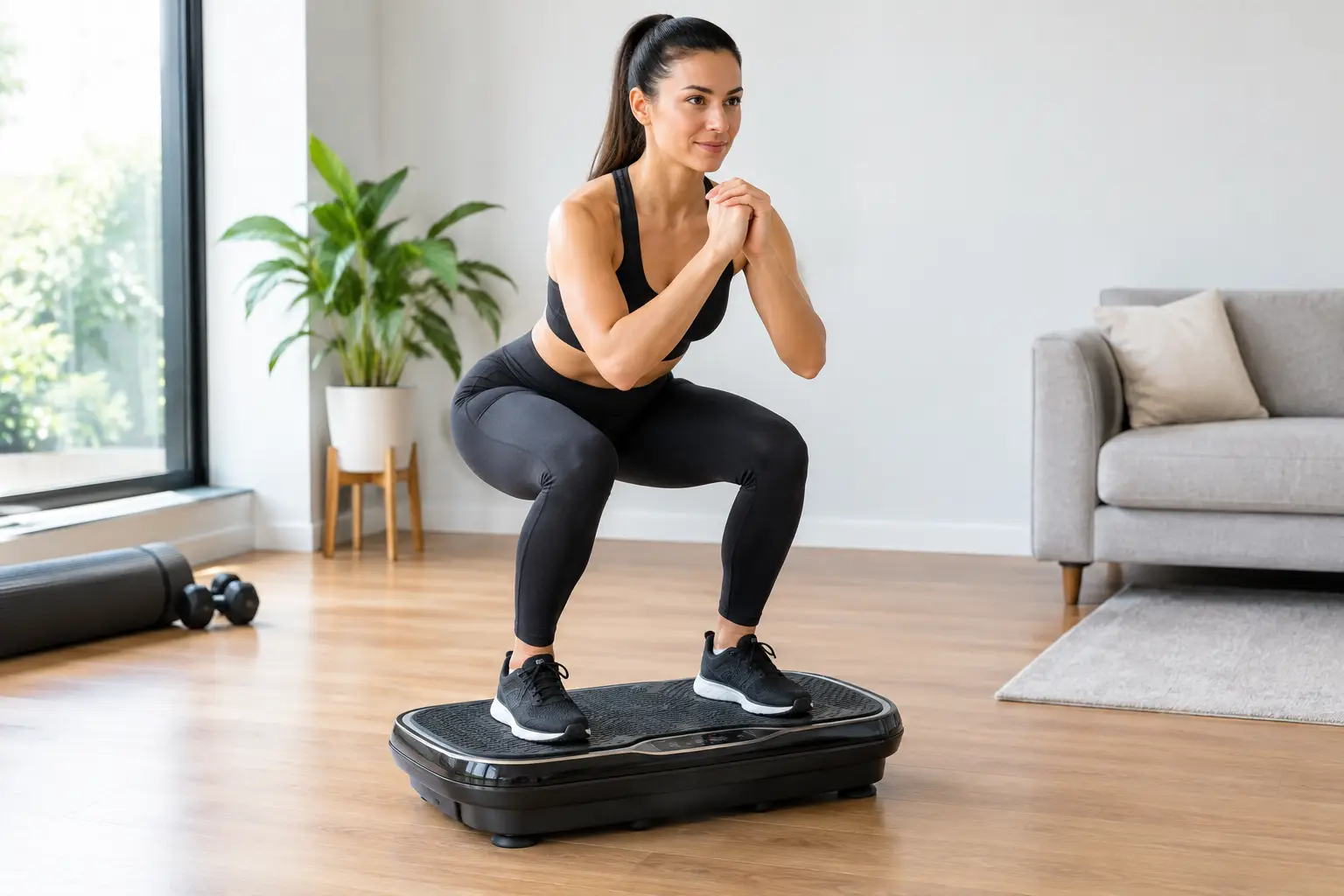
Also called whole-body vibration platforms, these machines create rapid, small movements under your feet. Your muscles respond to stay stable, especially through the calves, thighs, hips, and core. Depending on the machine, you may stand, hold a partial squat, perform calf raises, do push-ups with your hands on the platform, or use it for gentle mobility work.
Most consumer models let you adjust speed, and some offer amplitude, which is how far the platform moves with each cycle. Those settings matter because a low, comfortable vibration feels very different from a higher-intensity setting used in a bent-knee stance. Marketing often focuses on high speed counts, but more settings do not automatically mean a better workout. Stable construction, a usable platform size, clear controls, and settings you can tolerate consistently matter more.
Are vibration plates effective for fitness goals?
Research on whole-body vibration is promising in specific situations, but it is not one clean, universal answer. Studies use different frequencies, vibration amplitudes, exercise plans, and participant groups. That makes it hard to say every plate will deliver the same result in a living room.
Strength and muscle activation
A plate can increase muscle activation during familiar movements such as squats, split squats, glute bridges, or planks. For beginners, older adults, or people returning to exercise, that added instability may make bodyweight training feel more challenging without adding a barbell.
The trade-off is that vibration alone is usually not enough progressive overload to build substantial strength. Your body adapts when resistance, reps, range of motion, or training difficulty gradually increase. Adjustable dumbbells, resistance bands, kettlebells, and a stable bench provide more direct ways to do that.
Think of a vibration plate as an accessory rather than the foundation of a strength setup. Use it for short sets of controlled bodyweight work, then rely on traditional resistance training for your main strength progress.
Balance, mobility, and everyday movement
This is where a vibration plate may be most practical. The platform requires small stabilizing responses from your body, which can complement balance practice. A gentle session paired with ankle mobility, calf raises, supported squats, or light stretching may help you feel more prepared to move.
That does not mean the plate fixes mobility on its own. Long-lasting mobility gains still come from regularly moving through comfortable ranges of motion and building strength in those positions. If tight ankles make squats difficult, for example, use the plate briefly as a warm-up tool, then practice ankle mobility and squats with good form.
Older adults may find the low-impact format appealing, particularly when jumping or running is not comfortable. Still, anyone with poor balance should use a stable support nearby, begin at the lowest setting, and consider guidance from a qualified health professional or trainer.
Weight loss and calorie burn
A vibration plate does burn some energy, particularly when you actively exercise on it. But it does not create the calorie demand of brisk walking, cycling, rowing, or a full resistance workout. Claims that a few passive minutes can melt fat are not realistic.
For weight loss, the basics remain the basics: an eating pattern you can maintain, enough daily movement, resistance training to preserve muscle, and cardio that fits your schedule. A plate can support that plan if it makes short movement breaks more appealing. It cannot carry the plan by itself.
Recovery and soreness
Many people enjoy a low-intensity vibration session after a workout because it feels relaxing and may temporarily reduce stiffness. That is a reasonable use if it helps you transition into gentle movement. Just keep expectations grounded. Better recovery also depends on sleep, training volume, hydration, nutrition, and rest days.
Avoid treating vibration as a solution for sharp pain, swelling, numbness, or an injury that changes how you walk or train. Those symptoms call for medical advice, not another recovery gadget.
Who gets the most value from a vibration plate?
A vibration plate makes the most sense for someone who wants a compact, low-impact tool they will use several times a week. It can suit beginners who need variety beyond walking, apartment dwellers without room for a cardio machine, or established home gym users who want a warm-up and mobility station.
It can also be a good fit when joint comfort limits high-impact exercise. You can perform supported holds, shallow squats, and gentle calf work without pounding on the floor. However, low impact does not mean risk-free. Start conservatively, especially if you are deconditioned or new to exercise.
It may be a poor first purchase if your budget is tight and you do not yet own versatile basics. A supportive pair of walking shoes, exercise mat, resistance bands, and adjustable dumbbells usually cover more training needs. If your goal is serious lifting, prioritize weights, a bench, storage, and flooring before adding a plate.
What to compare before buying
Shopping by the biggest advertised speed number can lead to an expensive mistake. Compare the machine against your room, body size, and intended routine.
- Platform size and grip: You need enough usable standing area to hold a comfortable squat stance. A textured, non-slip surface is more valuable than flashy trim.
- Weight capacity and stability: Check the stated user weight limit, the unit's own weight, and whether it stays planted during use. A heavier, well-built base often feels safer than an ultra-light model.
- Adjustable settings: Look for gradual speed changes and controls that are easy to reach. Preset programs are convenient, but manual adjustment gives you more control.
- Noise and storage: Vibration can travel through floors. Consider a dense equipment mat, especially in an apartment or upstairs room, and measure where the platform will live when not in use.
- Useful extras: Resistance bands, a remote, and handles can be helpful, but only if they support exercises you will perform. Do not pay a premium for accessories that duplicate gear you already have.
Before choosing, measure both the storage spot and the open area around it. You need space to step on and off safely, not just enough room to slide the machine under a couch.
A realistic way to use one at home
Start with two or three 10-minute sessions per week. Spend the first few minutes standing with soft knees at a low setting, holding a counter or sturdy chair if needed. Then add two or three simple movements, such as a shallow squat hold, slow calf raises, or a hands-on-platform incline push-up. Keep your movements controlled rather than trying to fight the vibration with heavy, complicated exercises.
As you get comfortable, use the plate before a strength workout for a brief warm-up or after a walk for light mobility. Pairing it with an existing habit is more effective than hoping you will find a separate 30-minute block every day. For example, do five minutes of mobility on the plate before your dumbbell session, then move to your main lifts.
Do not use a vibration plate without medical clearance if you are pregnant, have a pacemaker or other implanted electronic device, have a recent surgery or fracture, have a history of blood clots, or manage a condition that affects balance or circulation. When in doubt, ask your clinician what movement is appropriate for you.
The best home gym gear solves a problem you actually have. If a vibration plate gives you a comfortable way to warm up, practice lower-body movement, or stay active on low-energy days, it can earn its place. If you need a foundation for getting stronger, begin with simple resistance equipment and add the plate later when it supports a routine you already enjoy.