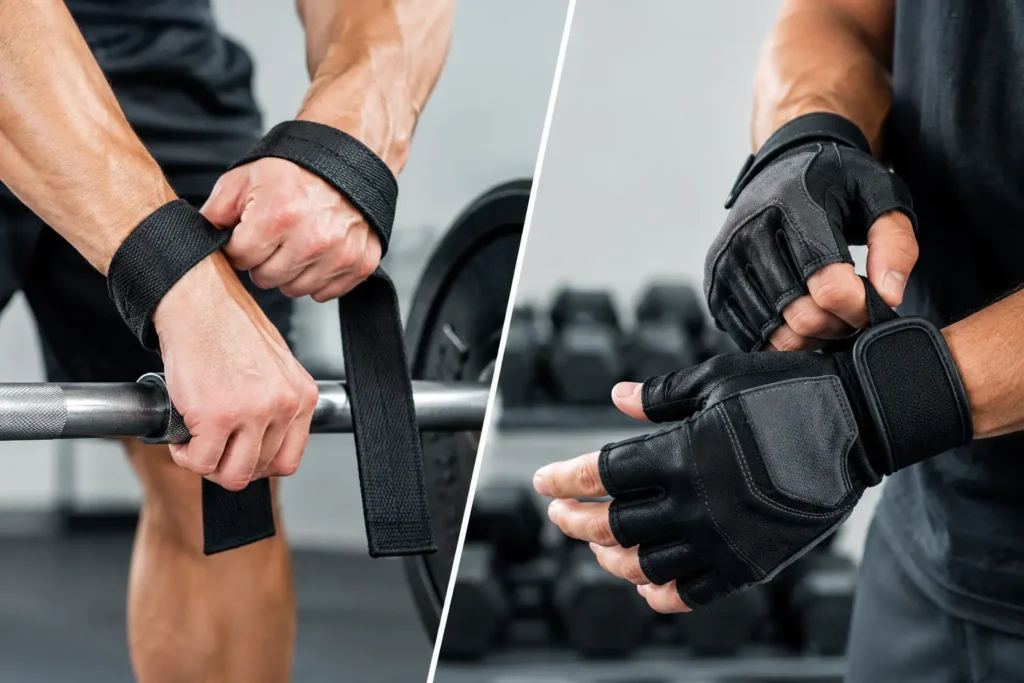
A barbell can feel solid in your hands while your wrists feel like the weak link. That often happens during pressing movements, front-rack work, or heavy dumbbell sets where the wrist bends back under load. The most useful wrist wraps benefits are simple: they add external support, help you maintain a more stable wrist position, and can make certain lifts feel more comfortable. They are not a shortcut around technique or pain, but they can be a smart, compact addition to a home strength setup.
What Wrist Wraps Actually Do
Wrist wraps are adjustable fabric straps that circle the wrist and fasten with Velcro. Most have a thumb loop that holds the wrap in place while you wind it, plus a closure that lets you choose the level of compression. Unlike lifting straps, which help your grip hold onto a bar, wrist wraps are designed to limit excessive wrist extension or flexion.
Their main job is to create a firmer base around the joint. During a bench press, overhead press, push-up variation, clean, or front squat, that support can make it easier to keep the knuckles, wrist, and forearm better aligned. Less unwanted movement can mean more confidence under a challenging load.
The key word is support, not immobilization. A good wrap should still let you set up, grip equipment, and move through the exercise. If it makes your fingers tingle, turns your hand cold, or causes sharp discomfort, it is too tight or positioned poorly.
Wrist Wraps Benefits That Matter in Home Training
For most home exercisers, wraps make the biggest difference in a small group of movements rather than every workout. Their value depends on your programming, current strength, wrist mobility, and whether you train with barbells, dumbbells, kettlebells, or body weight.
More stability during pressing
The clearest benefit shows up in heavy or higher-volume pressing. In a barbell bench press, a bent-back wrist can place the bar farther behind the forearm and make the position feel shaky. Wraps can provide a reminder and a physical boundary that helps keep the wrist closer to neutral.
The same can apply to standing dumbbell presses, floor presses, push presses, and handstand-focused work. They will not fix a bar path, shoulder position, or poorly chosen weight, but a stable wrist can make those skills easier to practice. This is especially helpful when you train alone at home and want every work set to feel controlled.
Greater comfort when wrists are sensitive
Some lifters feel mild, recurring wrist irritation after adding pressing volume, returning to training, or working around limited wrist mobility. A wrap can reduce the feeling that the joint is being pushed too far backward under load. That may allow a comfortable training session when the alternative is repeatedly adjusting your grip or avoiding a movement altogether.
There is an important limit here. Pain is information, not something to compress and ignore. New swelling, numbness, loss of strength, pain after a fall, or persistent pain that affects daily activities calls for evaluation by a qualified health professional. Wrist wraps can support training, but they do not treat an injury.
Better confidence with front-rack positions
Front squats, cleans, and thrusters require the wrist to tolerate an extended position while the bar rests across the front of the shoulders. Mobility restrictions in the wrists, elbows, shoulders, or upper back can make this position uncomfortable. Wraps may make the wrist component feel more secure, particularly as you build tolerance.
Still, wraps are only one piece of the setup. A proper front rack puts the bar on the shoulders, not in the hands. If your wrists are carrying the bar, changing your elbow position, grip width, or mobility work may deliver more benefit than tightening the wraps further.
Useful feedback for better positioning
A wrap does not coach you, but it can make poor wrist positions more noticeable. When a lifter lets the wrist collapse during a press, the wrap may feel uncomfortable or restrictive. Used this way, wraps become a reminder to stack the load over the forearm rather than a device that hides a weak setup.
That feedback has value for beginners building repeatable form with adjustable dumbbells or a basic barbell setup. It can also help experienced lifters stay consistent as weights climb. The goal is not to rely on the wrap for every rep. The goal is to learn the stable position and use support when it is useful.
When to Wear Wrist Wraps and When to Skip Them
Wrist wraps are most practical for your heaviest sets, demanding sets with multiple repetitions, or movements that consistently place your wrist in extension. Many lifters put them on before working sets of bench press or overhead press, then loosen or remove them for warm-ups and accessory work.
You may also choose them for front squats, cleans, kettlebell movements that bother the wrist, or demanding push-up progressions. If you train with a compact home gym that centers on dumbbells, a bench, and resistance bands, wraps can still earn their small storage footprint once your pressing gets challenging enough to expose wrist instability.
Skip them for exercises where they do not add a clear benefit. Wearing tight wraps for curls, easy machine work, walking, or every light warm-up set can be distracting and unnecessary. You still want your wrists to move, tolerate normal loading, and develop strength without constant external support.
A sensible middle ground is to warm up without wraps, use them on the exercises and sets where you know they help, and take them off after. That approach preserves the convenience without turning a simple accessory into a dependency.
How Tight Should Wrist Wraps Be?
Wraps should feel firm enough to resist the wrist bending into an uncomfortable end range, but not so tight that they cause numbness or throbbing. Start with moderate tension. Make a few open-and-close fist motions, grip a light dumbbell, and check whether your hand still feels warm and responsive.
Placement matters as much as tightness. For most pressing, position the wrap so it covers the wrist joint and overlaps slightly onto the lower palm and forearm. This creates support across the area that tends to bend backward. If it sits too low on the forearm, it may feel secure without doing much for the wrist itself.
You can adjust the wrap between exercises. A front squat setup may feel better with a slightly different placement than a bench press setup. Take the extra 20 seconds to test it instead of assuming one tightness works for every lift.
Choosing a Pair for Your Home Gym
Wrist wraps are inexpensive compared with bigger home gym purchases, but the wrong pair can still become clutter in a drawer. Focus on length, stiffness, closure quality, and how you plan to train.
Shorter wraps generally offer moderate support and are easy to manage for dumbbell training, body-weight work, and everyday strength sessions. Longer wraps give you more material to layer around the wrist, which can create firmer support for heavier barbell pressing or strength-focused training. More length is not automatically better - it can be bulky for smaller wrists or annoying when you need to move quickly between exercises.
Stiffer wraps usually feel more supportive but may be less comfortable and take more effort to position. More flexible wraps are easier to wear through varied workouts, though they may not feel substantial enough for a lifter pushing heavy sets. If your routine mixes dumbbells, kettlebells, functional training, and presses, a medium-stiff pair is often the most versatile starting point.
Check the Velcro before price alone. A secure closure and durable stitching matter because the wrap repeatedly works against tension. Thumb loops are useful for wrapping, but remember to slide them off your thumb before lifting if the design and movement make that more comfortable. The loop is an application aid, not the part providing wrist support.
Do Not Let Wraps Replace the Basics
The best way to get value from wrist wraps is to pair them with sound equipment choices and sensible progression. Use a weight you can control, grip the bar or dumbbell securely, and keep the load stacked over your forearm whenever possible. If a movement repeatedly irritates your wrist, try reducing load, changing the implement, adjusting your range of motion, or using neutral-grip dumbbells before assuming you need a tighter wrap.
For a home gym, wrist wraps are a low-cost accessory with a targeted job. They are worth considering if pressing, front-rack work, or wrist discomfort is holding back otherwise productive training. Choose a pair that fits your training style, use it selectively, and let good technique remain the foundation of every lift.