Quick answer: pick the bench that matches how you'll train, how much space you have, and how heavy you’ll lift
If you mostly do barbell presses and heavy compound work, choose a sturdy flat or Olympic bench with high weight capacity and a compatible rack. If you want versatility for dumbbell work, rows and presses, choose an adjustable incline/decline bench with good padding and a stable base. For tiny spaces, prioritize a foldable or compact bench that still meets your lifting needs.
What actually matters when you choose a weight bench
Most buying mistakes come from focusing on brand or price before clarifying three real constraints: training goals, space/placement, and load capacity. Address those first, then compare features such as adjustability, build and comfort.
1. Match the bench type to your primary workouts
Decide what percentage of your sessions use the bench and what movements matter:
- If you mainly use a barbell (bench press), prioritize a flat/olympic bench that pairs with a rack or has an included barbell cradle and high stability.
- If you alternate dumbbell presses, incline work, flyes, rows and core exercises, an adjustable bench (incline-flat-decline) is more useful.
- If you only need a surface for dumbbells or as a spot for accessory work, a simple flat bench is cheaper and more compact.
2. Capacity and frame strength are safety essentials
Check two numbers: bench weight capacity (often listed as user + bar/dumbbells) and the frame’s construction (steel gauge, welds, base width). If you plan to bench press heavy or use an Olympic bar with plates, aim for a bench with at least 1.25–1.5× the combined maximum load you expect to lift. For most home lifters that means 600–1000+ lb capacity for serious barbell users; 300–600 lb is common for moderate dumbbell use.
3. Stability, footprint and floor protection
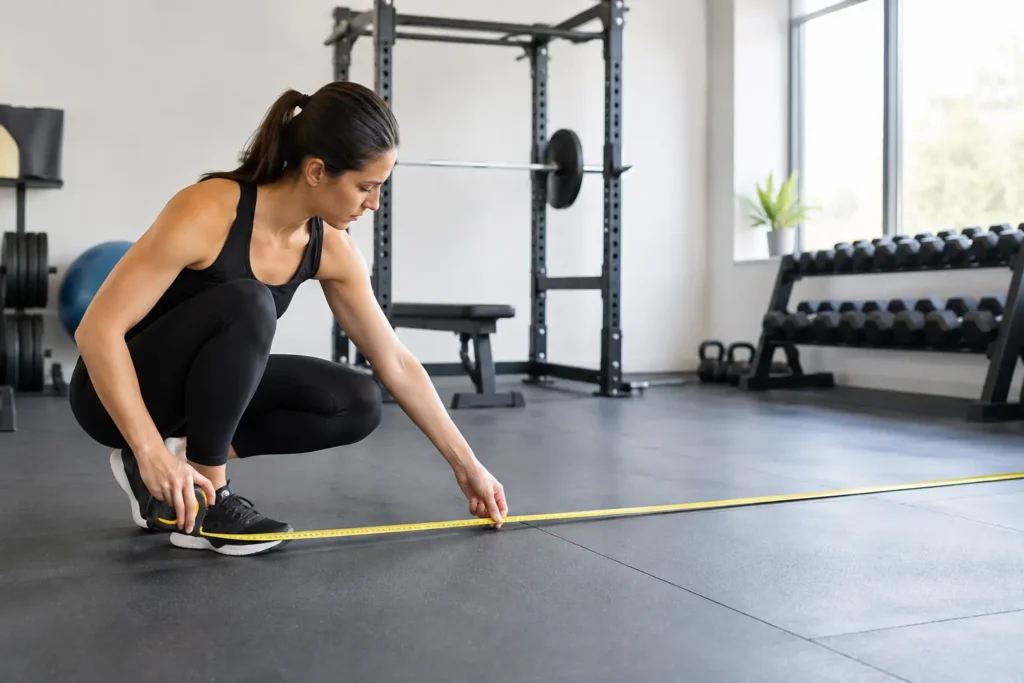
A bench can feel solid on a gym floor but wobble on thin concrete or tile. Look for a wide base, rubber feet, and cross-bracing that prevents rocking. Measure the footprint (length × width × height) and account for barbell clearance and a spotter’s space if you’ll lift heavy. Use gym flooring tiles or a mat when placing the bench on hard surfaces; this reduces slippage and protects floors.
4. Adjustability: how many angles do you actually need?
Not all adjustable benches are equal. Common types:
- 3–4 position benches (flat, 1–2 inclines, decline): cheap and sufficient for most.
- Multi-angle benches with fine increments: better for serious lifters and varied programs.
- Flat-to-fully-upright benches: useful if you also want shoulder presses seated.
For most home users, an adjustable bench that inclines to 60–75° and declines at least once is ideal. Avoid benches with flimsy pin systems—look for solid ladder-type or locking mechanisms.
5. Seat and pad comfort matter more than you think
Thicker padding (2–3 inches) reduces pressure during heavy presses; denser foam holds shape longer. Consider upholstery material—synthetic leather wipes clean and resists sweat but check seam quality. Also test the width: narrow benches can feel unstable for larger-framed users; too wide can interfere with arm path on presses.
6. Portability and storage for small spaces
If space is limited, look for folding benches or models that stand upright when folded. Consider weight and handles/wheels for moving. But don’t sacrifice structural strength—many foldable benches are fine for dumbbell work but not built for heavy Olympic benching.

When to choose a flat bench versus an adjustable bench
If you're certain you'll focus on heavy barbell bench press and already own or plan to buy a rack, a high-capacity flat bench (paired with a rack) is often the most durable option. If variety, unilateral work, and incline/decline presses are important, pick an adjustable bench.
Practical examples
- Strength-focused lifter who trains bench press 2–4×/week: flat or Olympic bench rated 900+ lb and used with a power rack.
- General fitness user doing full-body workouts with dumbbells: 6–8 position adjustable bench with solid padding.
- Small apartment owner who does bodyweight and light dumbbell work: compact foldable bench that stores vertically.
Key features to compare in product listings
- Max load rating (and whether it includes the user weight).
- Frame gauge and warranty—heavier gauge steel and multi-year warranties suggest better durability.
- Adjustment mechanism: pin vs ladder vs pop‑pin; ladder systems are more secure for heavier loads.
- Dimensions (length/height/bench width) and folded size if applicable.
- Accessory compatibility: leg holders for decline, preacher curl attachments, wheels/handles for transport.
Product recommendations based on likely use cases
The catalog's top-ranked benches fit different priorities. Below are options tied to specific needs.

For a complete Olympic-style bench suited to heavy pressing and barbell work, consider a professional-style bench that pairs with a rack:
If you want a versatile, space-friendly adjustable bench for dumbbells, presses and incline work, a foldable multi-position bench is a strong all-rounder:
Small detail that helps
- Measure available floor space and ceiling clearance for bench + barbell arc.
- Decide primary use: barbell pressing, dumbbell training, or general fitness.
- Confirm max load rating and choose at least 25% safety margin above expected load.
- Check adjustment mechanism and padding thickness in photos or specs.
- Ensure portability or folding size fits your storage plan.
- Plan for floor protection (rubber tiles or mat) under the bench.
If you bench press heavy, buy a high-capacity flat/Olympic bench and pair it with a rack; if you want variety in a limited space, buy a well-built adjustable bench with solid locking positions and 2–3 inches of dense padding. Match capacity to expected loads, confirm footprint and storage, and choose the product that fits those real constraints rather than the cheapest or flashiest option.
Do I need an Olympic bench for dumbbell workouts?
No—dumbbell workouts usually work fine on quality adjustable benches; Olympic benches are primarily for heavy barbell work and rack compatibility.
What is a safe weight capacity for home bench press?
For serious barbell users, aim for benches rated 900+ lb; recreational lifters using dumbbells can often be fine with 300–600 lb ratings. Always add a safety margin.
Are foldable benches less durable?
Some are less robust; many foldable benches are perfectly adequate for moderate dumbbell work but may not match the rigidity of fixed Olympic benches for heavy barbell pressing.
How much padding is enough on a bench?
Generally 2–3 inches of dense foam balances comfort and stability; overly soft padding can destabilize heavy lifts.
Should bench width vary by body type?
Yes—wider benches feel more supportive for larger-framed users, while narrow benches can aid arm path for some lifters; check the bench width in the specs.