As an Amazon Associate, HealthGearSpot earns from qualifying purchases made through links on this site. Purchases are made on Amazon, not from HealthGearSpot.
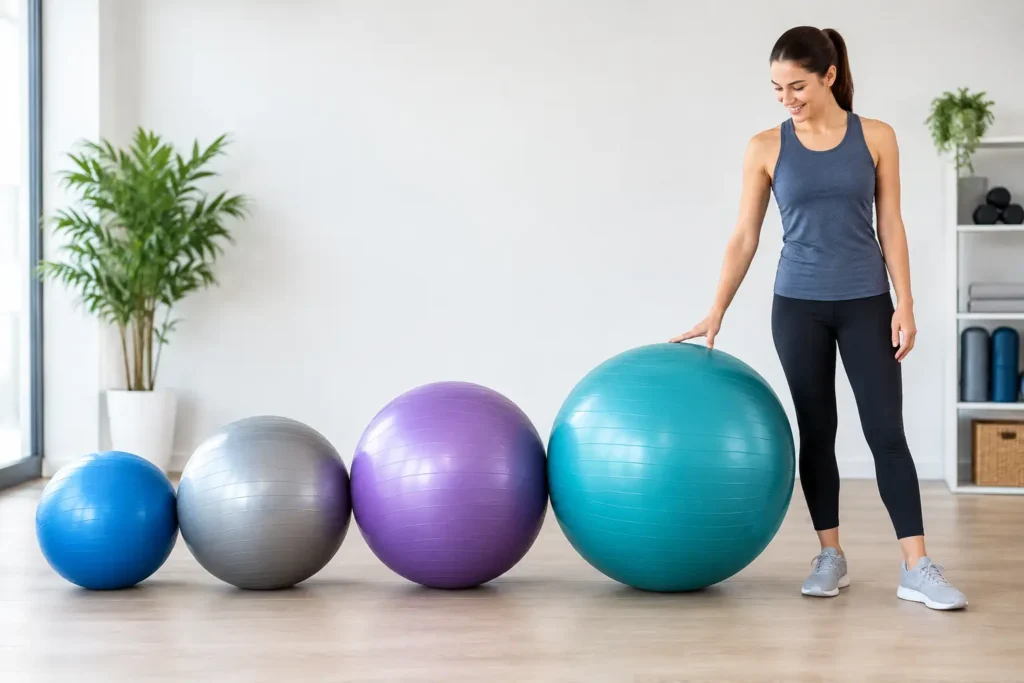
Three round training balls sit on the same shelf, and they are easy to confuse. Medicine balls, slam balls, and wall balls all add weight to throws, carries, and core work, but they are built differently, they behave differently when they hit the floor, and they suit different workouts. Buying the wrong one usually means a ball that bounces when you wanted a dead drop, or one that splits after a few hard slams.
This guide compares the three types on construction, bounce, weight, and use cases, so you can buy the one that matches the training you actually do.
The Short Answer
If you want one ball for general strength and core work, a medicine ball is usually the right starting point. If your training centres on hard overhead slams, buy a slam ball — it is built to absorb impact without bouncing back at you. If you train wall-ball throws as part of conditioning workouts, a wall ball is the right tool, because its size and soft shell are designed for catching against a wall.
Many home gyms eventually own two of the three. Few people need all three at once, and buying in stages is the smarter move — start with the one your current routine needs, and add the second only when a new movement demands it.
Medicine Balls: The General-Purpose Option
A medicine ball is the oldest of the three and the most versatile. Traditional versions are firm, round, and roughly the size of a basketball, though sizes vary. They are designed to be held, thrown to a partner, pressed, and carried — not slammed into concrete at full force.
Medicine balls suit a wide range of work: rotational throws for core strength, overhead passes, chest passes with a partner, squats and lunges holding the ball at chest height, and core exercises such as sit-ups and Russian twists. Because they keep some bounce and a firm shape, they are also useful for catching and rebounding drills.
The main limit is impact. A standard medicine ball is not built for repeated hard slams onto a hard floor. Slamming it that way can split seams, damage the filling, and send the ball bouncing unpredictably. If slams are a core part of your training, a medicine ball is the wrong tool for that job.
Slam Balls: Built for Impact
A slam ball looks like a medicine ball but behaves very differently. It is heavier for its size, its shell is thicker and more durable, and — most importantly — it is designed not to bounce. Drop it or slam it, and it stays where it lands.
That dead-drop behaviour is a safety feature as much as a design choice. When you slam a ball overhead at full effort, the last thing you want is a rebound toward your face or shins. Slam balls let you train explosive power — overhead slams, rotational slams, and slam-to-squat combinations — without chasing a bouncing ball across the room.
Slam balls are less comfortable for catching and partner passing than medicine balls, and their dead weight makes them poor choices for wall-ball throws, where you need a ball that comes back to you. They are a specialist tool, and they are excellent at their specialty.
Wall Balls: Built for the Wall
A wall ball is the largest and softest of the three. It is designed for one signature movement: the wall-ball throw, where you squat holding the ball, stand explosively, and throw it to a target on the wall, then catch it as it returns and repeat.
Wall balls are bigger in diameter than most medicine balls, which makes them easier to catch at chest height, and their soft shell is forgiving on the hands and chest during high-repetition sets. They are a conditioning tool first and a strength tool second — most wall-ball workouts use moderate weight for many repetitions, not heavy weight for few.
Wall balls are not made for slamming. Their soft shell and larger size absorb impact poorly, and slamming one repeatedly will shorten its life. They are also awkward for rotational throws and partner passing compared with a smaller, firmer medicine ball.
Construction Compared
The differences come down to shell, filling, and bounce:
- Medicine ball: firm shell, moderate bounce, built for holding, throwing, and catching. Not rated for hard slams.
- Slam ball: thick, durable shell, almost no bounce, built to absorb repeated impact. Poor for catching and wall throws.
- Wall ball: large, soft shell, gentle bounce, built for catching against a wall at chest height. Not built for slams.
Check the product description before buying any of the three. Manufacturers use these names loosely, and a ball labelled as a medicine ball may in fact be a slam ball, or vice versa. The construction details — shell material, whether it is described as non-bouncing, and the intended use — matter more than the name on the listing.
Choosing a Weight
Weight choice depends on the movement, not on your maximum strength. For wall balls, most people start with a moderate weight they can throw for many repetitions with good form — if your squat depth collapses or your throws fall short after a few reps, the ball is too heavy. For slam balls, choose a weight you can slam with full effort and control; a ball so heavy that your slam slows to a controlled drop defeats the purpose. For medicine balls, pick a weight that challenges your core and rotational work without breaking your form on throws and carries.
A useful rule: buy the weight you can use well today, not the weight you hope to use in six months. Good form with a moderate ball builds more strength than poor form with a heavy one, and you can always add a heavier ball later.
Floor and Space Considerations
Slam balls need a floor that can take impact. A concrete garage floor, a rubber gym floor, or a thick mat works; a tiled floor or a floor above a neighbour's ceiling does not. If you train in an apartment, slams may not be practical at all — quieter medicine-ball and wall-ball work fits shared walls far better. See our guide to apartment home gym equipment for quiet-training ideas, and our home gym safety checklist for floor and storage basics.
Wall balls need wall space and clearance. You need a clear wall, a target height you can reach, and enough room to squat and catch without hitting furniture. Measure before you buy — a wall ball's larger diameter makes it harder to store than the other two, and it needs a clear corner or rack spot.
Safety Basics
All three balls demand respect for the same reason: a weighted ball in motion carries real force. Warm up before throwing or slamming, start with lighter weights and fewer repetitions, and stop if your form breaks down. Never slam a ball that is not rated for slams, and never throw a ball toward a wall, a partner, or a surface that could send it back unpredictably.
For core and rotational work, controlled movement matters more than speed. If you are new to weighted-ball training, a short session with good form teaches more than a long session with sloppy throws. General information only: this guide is not medical advice. If you are new to exercise or managing a health condition, get qualified advice before starting a new routine, and stop on sharp pain, dizziness, or unusual discomfort.
Which Ball for Which Goal
- General strength and core work, partner drills, carries: medicine ball.
- Explosive power, overhead and rotational slams: slam ball.
- Conditioning, wall-ball throws, high-repetition workouts: wall ball.
- Small space or apartment training: medicine ball or wall ball, depending on wall space — skip slams.
- One ball only, undecided: medicine ball, because it covers the widest range of movements.
If you already own one type and your training has moved on, the second purchase should follow the movement, not the marketing. A slam ball earns its place when slams enter your routine; a wall ball earns its place when wall throws do.
Building Around Your Ball
A weighted ball works well alongside other simple home gym tools. Pair it with resistance bands for warm-ups, kettlebells for loaded carries and swings, and grip strength equipment if holding and catching is your weak point. If you are starting from scratch, our first home gym guide helps you prioritise, and adjustable dumbbells vs resistance bands covers the other first-purchase decision most beginners face.
The Bottom Line
Medicine balls, slam balls, and wall balls are three tools, not three names for the same thing. A medicine ball is the versatile all-rounder, a slam ball is the impact specialist, and a wall ball is the conditioning specialist for wall throws. Match the ball to the movement you actually train, check the construction before you buy, choose a weight you can control, and respect your floor and your neighbours. Done that way, one well-chosen ball will serve your training far better than three wrong ones.