As an Amazon Associate, HealthGearSpot earns from qualifying purchases made through links on this site. Purchases are made on Amazon, not from HealthGearSpot.
Balance training has a simple appeal: stand on something unstable, and your body learns to stay steady. The equipment aisle, though, is full of overlapping tools — balance boards, wobble boards, stability balls, balance pads, half-dome trainers, and more — and they are not interchangeable. Some build genuine stability, some are mostly novelty, and some belong only in a rehabilitation setting with professional guidance.
This guide sorts the main categories by what they actually do, who they suit, and what to skip.
Why Balance Training Matters
Balance is not a single skill. It combines ankle strength, core control, coordination, and the ability to recover when you are pushed off centre. Everyday life tests it constantly — stepping off a kerb, carrying a load on uneven ground, changing direction quickly. Training it can help general coordination and confidence in movement, and it complements strength training rather than replacing it.
That said, balance work is not magic. Standing on an unstable surface does not automatically make you stronger, and it does not replace progressive strength training. The best balance equipment is the kind you will use regularly, with good form, as part of a balanced routine.
Balance Boards and Wobble Boards
A balance board is a flat platform that rocks on a pivot — a roller, a ball, or a curved base. A wobble board is similar but tilts in every direction from a central dome. Both challenge your ankles and core to keep the board level.
These boards suit people who want a compact, low-cost stability tool for short sessions: a few minutes of controlled balancing before or after a workout, single-leg stands, and gentle squats on the board once basic balance is solid. They store easily and need almost no space.
Their limits matter. Boards are not a substitute for strength work, and they can be risky if you jump straight to advanced moves. Start beside a wall or sturdy support, keep sessions short, and progress slowly. If you have an ankle injury, a vestibular condition, or any condition affecting balance, get professional advice before using one — this guide is general information, not medical advice.
Stability Balls
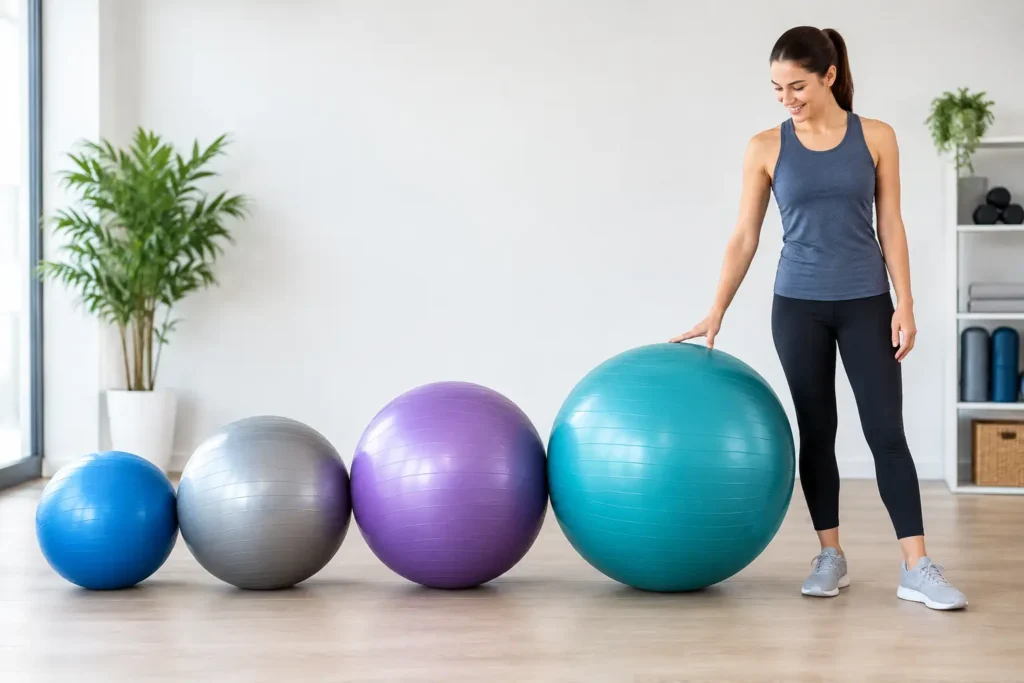
A stability ball — the large inflatable ball found in most gyms — is the most versatile balance tool of all. Used as a seat, it encourages active sitting posture. Used in exercise, it supports core work, back extensions, wall squats, and stretching.
Stability balls suit beginners well because the difficulty scales easily: sitting on the ball is gentle, while kneeling or standing exercises on it are advanced. They are also inexpensive and useful beyond balance work, which makes them good value for a home gym.
The main drawback is size and durability. A stability ball needs storage space, it needs inflating to the right firmness, and a puncture ends its use. Buy the size that matches your height, check the weight rating in the product description, and keep it away from sharp objects.
Half-Dome Balance Trainers
A half-dome trainer is a flat platform on one side and an inflated dome on the other, so you can train on either surface. Dome-side-up work challenges balance; platform-side-up work adds an unstable base to squats, lunges, and push-ups.
These trainers suit people who already have basic balance and want to add instability to familiar strength movements. They are a step up from a balance board, not a starting point, and they cost more than a board or a ball.
They are also bulky to store and heavier than they look. If space is tight, a board or a ball may serve you better. And as with any unstable-surface training, form comes first: an unstable squat with poor knee tracking teaches bad habits, not better balance.
Balance Pads and Cushions
A balance pad is a thick foam pad that creates a soft, unstable surface. Standing on it challenges ankle stability gently, which makes it useful for beginners and for anyone returning to balance work cautiously.
Pads are cheap, light, and easy to store, and they pair well with other training — standing on a pad during single-leg work, for example. Their challenge level is modest, though: experienced trainers will outgrow a pad quickly, and it adds little to advanced balance training.
What to Skip
Skip balance equipment that promises dramatic results — better posture overnight, a stronger core from sitting alone, or injury prevention guarantees. No balance tool guarantees any outcome, and marketing that suggests otherwise should be treated with scepticism.
Skip also any tool you will not use. A balance board gathering dust in a corner helps no one, while a stability ball you sit on daily and use twice a week earns its place. And skip advanced unstable-surface exercises — jumping onto a board, heavy squats on a dome — until your basic balance and strength are solid. The risk rises faster than the benefit.
Choosing Your First Balance Tool
If you are new to balance training, start with a stability ball or a balance pad. Both are gentle, affordable, and useful beyond balance work. If you already train regularly and want a dedicated stability challenge, a balance board or wobble board is the next step. Add a half-dome trainer only when basic board work feels easy and your strength training is already consistent.
Whatever you choose, build the habit first: a few minutes, several times a week, with a support nearby, beats an occasional ambitious session. Pair balance work with strength training — resistance bands for warm-ups, kettlebells for loaded carries and swings, and grip strength equipment if holding and catching is your weak point — and keep your home gym safe with our home gym safety checklist. If you are building from scratch, our first home gym guide helps you prioritise.
The Bottom Line
Balance equipment works best when it matches your level and your routine. Start gentle, progress slowly, keep a support nearby, and treat balance as one part of training — alongside strength, mobility, and consistency — rather than a shortcut. The right tool is the one you will actually use, with good form, week after week.