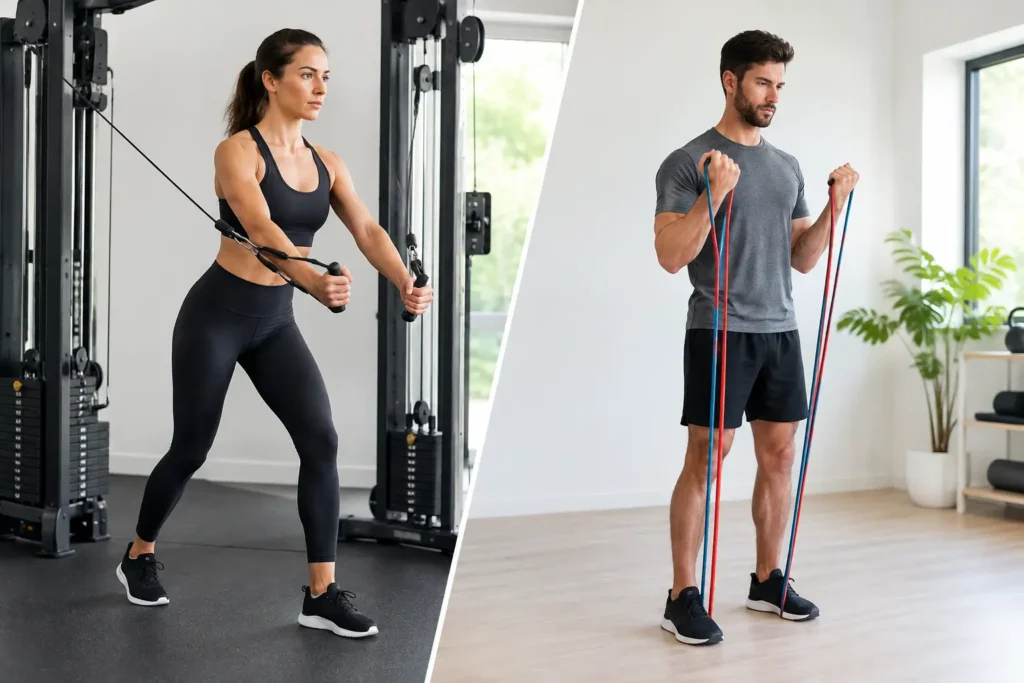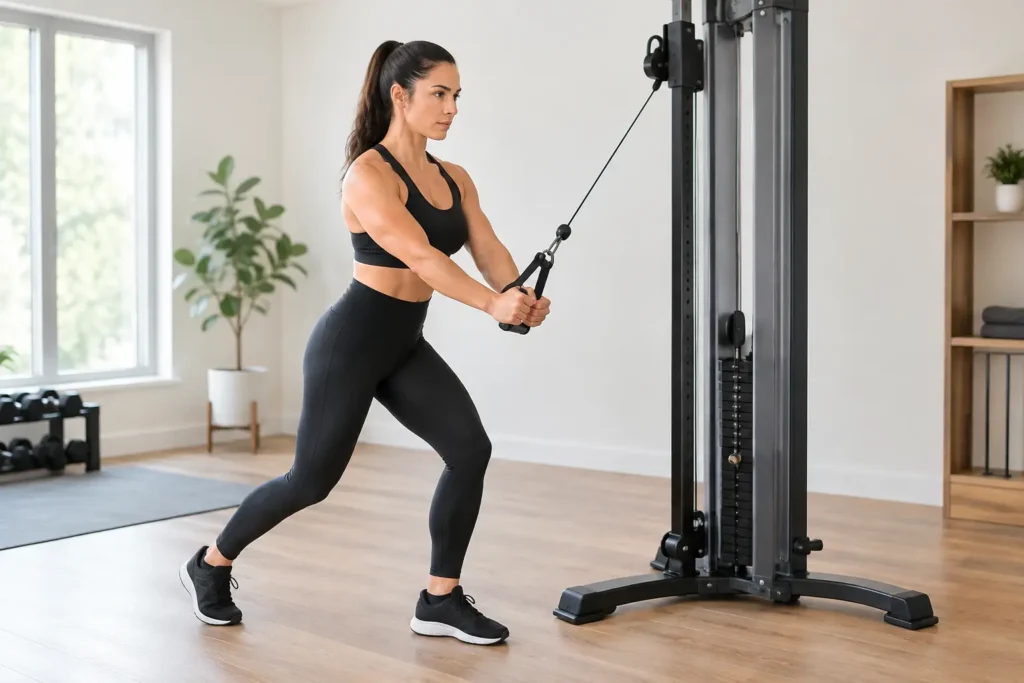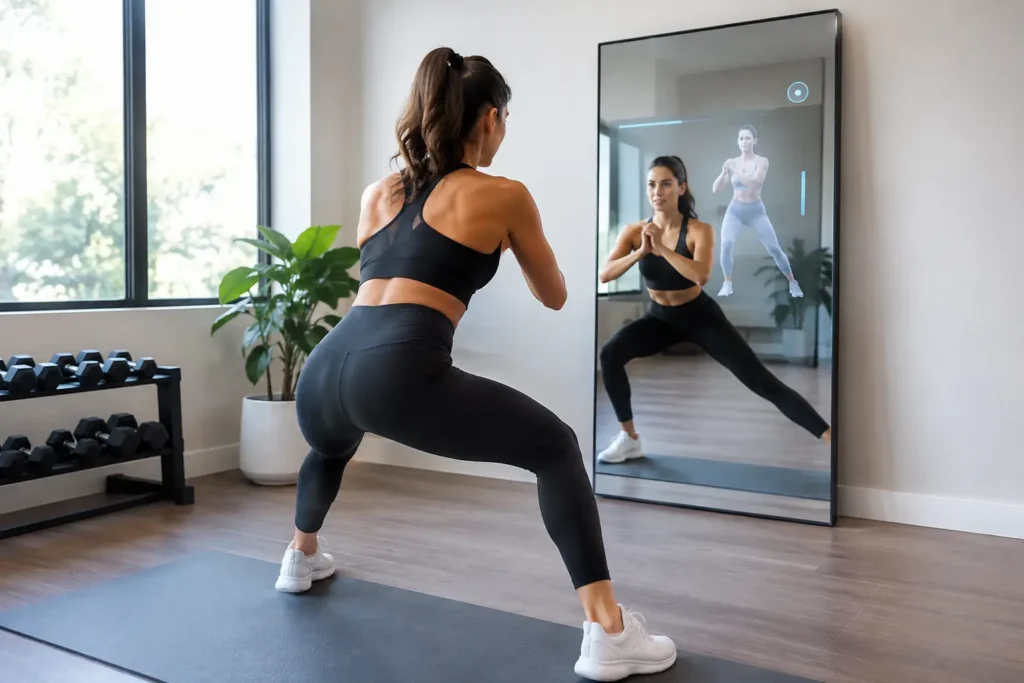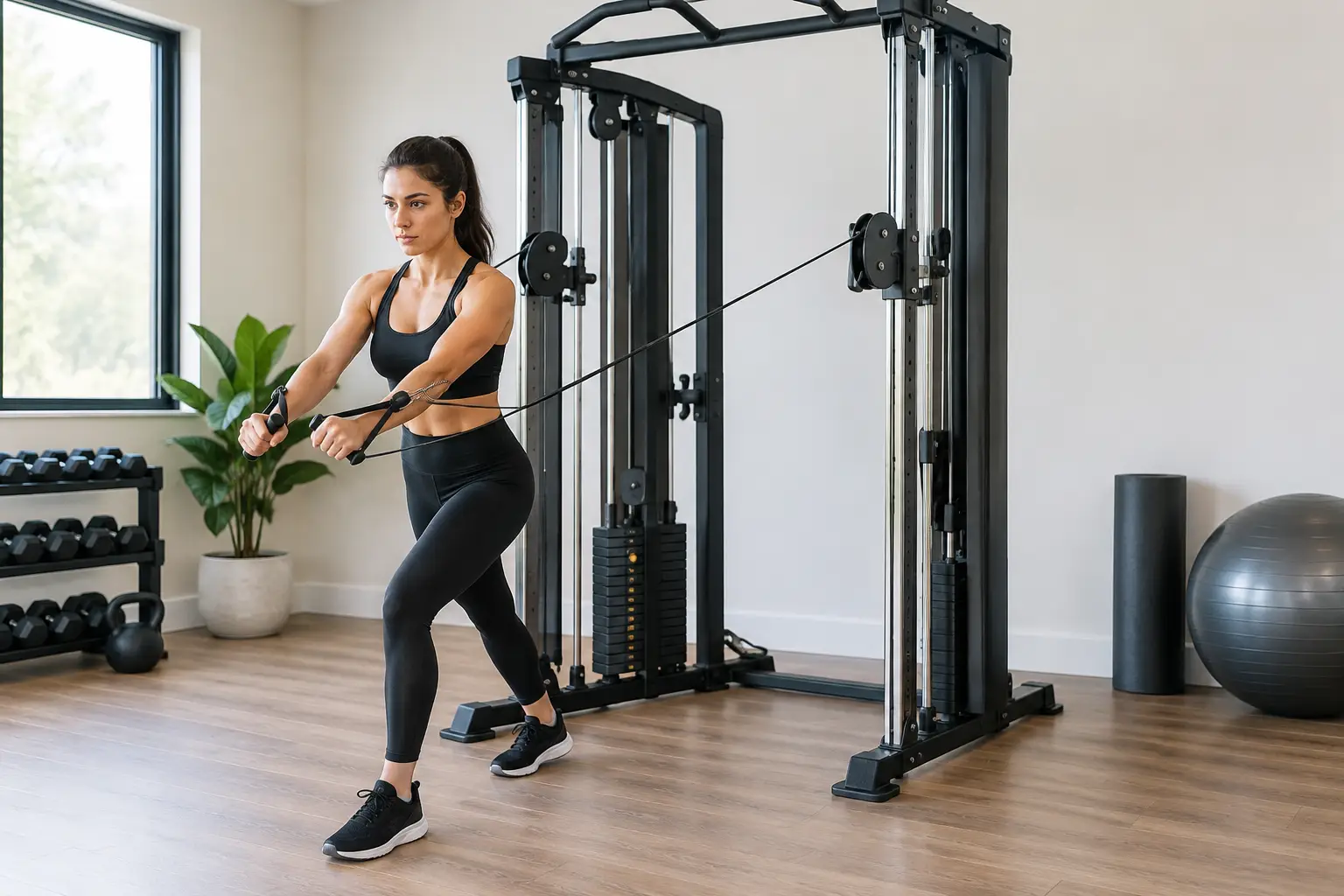
A cable machine can replace a surprising amount of single-purpose gear, but only if it fits the way you actually train. The best compact cable machines give you adjustable resistance for presses, rows, pulldowns, curls, core work, and lower-body training without taking over the room where you sleep, work, or park your car.
For a small home gym, the right pick is rarely the biggest machine with the most attachments. It is the one that fits your ceiling height and floor plan, offers enough resistance for your current and next-stage workouts, and makes you want to use it several times a week. Here are eight strong options to compare, from traditional cable towers to digital resistance systems.
1. REP Fitness Arcadia Functional Trainer
The REP Arcadia is a polished choice for shoppers who want the feel of a commercial functional trainer in a relatively modest footprint. Its dual adjustable pulleys support the exercises most people expect from a cable station: chest presses, flyes, rows, face pulls, lateral raises, triceps pressdowns, and assisted mobility work.
What separates it from a basic tower is the range of cable positions and the ability to train both sides independently. That makes it a good fit for couples, athletes doing unilateral work, and lifters who prefer cable training over a large dumbbell collection. It is still a substantial piece of equipment, though. Measure both its floor space and the clearance needed to step, reach, and perform flyes comfortably.
2. Bells of Steel Cable Tower
A cable tower is often the practical answer when a full functional trainer feels too large or too expensive. The Bells of Steel Cable Tower has a narrow profile and can handle a broad mix of upper-body and lower-body exercises with the right attachments.
This style of machine works especially well along a wall or as part of a rack-based setup. You get pulldowns, low rows, curls, pressdowns, pull-throughs, and plenty of single-arm movements without dedicating the center of the room to one machine. The trade-off is simple: one pulley is less convenient for bilateral exercises such as cable flyes or dual-handle presses. If you mostly train alone and do not mind setting up one side at a time, that compromise can save meaningful space and money.
3. Torque Fitness F9 Fold-Away Functional Trainer
The Torque F9 is built for the home gym that has to share its space. Its wall-mounted, fold-away design lets you open the arms for training and fold them back when you need the garage bay, spare room, or basement floor back.
This is one of the best compact cable machines for people who need a true two-pulley training experience but cannot leave a large frame permanently extending into the room. It makes sense for frequent cable users who want presses, rows, rotational work, and athletic movements without building a dedicated gym room.
Installation is the major consideration. A fold-away wall unit needs a suitable wall, secure mounting, and accurate measurements before purchase. It can be an excellent long-term solution, but it is not the simplest option for renters or anyone who wants to avoid drilling into structural framing.
4. MAXPRO SmartConnect Cable Machine
The MAXPRO SmartConnect takes a very different approach. Instead of weight stacks and tall uprights, it uses a compact resistance unit and cables that can be anchored to a door or paired with a portable bench and accessories. It stores far more easily than a conventional cable machine, which is its biggest advantage.
For apartment dwellers, travelers, and beginners who do not have room for a rack or tower, this design can create a useful full-body routine from a closet-sized storage footprint. You can do presses, rows, pulldown variations, squats, curls, and rehab-style work with minimal setup.
The limitation is that portable resistance does not feel exactly like a selectorized weight stack. Heavy, advanced lifters may outgrow it for big pulling and pressing movements, and secure anchoring matters every time. Still, for consistency in a very small space, portability can be more valuable than maximum load.
5. Beyond Power VOLTRA I
The VOLTRA I is a compact digital cable trainer designed for people who want modern resistance technology without a large machine. It can mount to compatible racks or be used with other mounting options, providing electronically controlled resistance in a package much smaller than a traditional stack system.
Its appeal is precision. Digital resistance settings, training modes, and a compact form factor can make it useful for controlled strength work, warmups, accessory training, and progressive home programs. It is also easier to place in a finished basement or multipurpose room where a large black steel machine would feel out of place.
This is a premium route, not a budget shortcut. Electronic cable systems cost more per pound of resistance than conventional equipment, and they rely on charging, software, and proper setup. Choose it for its compact technology and training flexibility, not because you simply need the lowest-cost cable option.
6. Speediance Gym Monster 2
An all-in-one smart gym like the Speediance Gym Monster 2 can make sense when you are starting from close to zero. It combines digital resistance, cables, a display, and guided workout options in a foldable format that is easier to live with than a power rack, barbell, plates, and separate cable station.
This option is best for households that value guided training and want one central machine for general strength workouts. The cable-based design supports common movement patterns, while the compact storage profile helps keep a living space from feeling like a commercial gym.
It is less appealing for lifters who already own a well-equipped rack and prefer traditional free weights. Smart gyms are convenient, but their closed ecosystems can limit attachment choices and long-term repair flexibility. Consider whether guided programming is something you will use weekly, not just during the first month.
7. Major Fitness F22 Power Rack With Cable System
If you need a rack, pull-up station, and cable setup in one purchase, a compact all-in-one rack can offer better value than buying each component separately. The Major Fitness F22 is the type of setup that appeals to home lifters who want barbell training along with lat pulldowns, low rows, and accessory cable work.
Compared with a standalone functional trainer, this route gives you more ways to train heavy. You can squat, bench, pull up, and use the cable system in the same footprint. That is a strong value proposition for a garage gym or dedicated basement corner.
The word “compact” needs context here. A rack may be space-efficient because it replaces several machines, but it is not small. You will need room for the rack, a bench, plates, barbell loading, and safe walkways. It is best for people who genuinely plan to use barbell movements, not shoppers who only want cable workouts.
8. Rogue CTM-1 Cable Tower
The Rogue CTM-1 Cable Tower is a straightforward, heavy-duty option for shoppers who value build quality and a traditional cable feel. A single tower can be an excellent long-term addition beside a rack, bench, and adjustable dumbbells, especially if you want to fill gaps in your training rather than buy an all-in-one machine.
A single-stack tower is not as flashy as a smart gym or a dual-pulley trainer, but it handles an enormous amount of useful work. Pulldowns, rows, pressdowns, curls, pull-throughs, Pallof presses, and single-arm variations can cover the accessory training that makes a home gym more complete.
It is a particularly sensible choice if you already have the basics. Instead of replacing gear you own, it adds the movement variety that barbells and dumbbells cannot always provide comfortably.
How to Choose a Compact Cable Machine
Start with the space you can use while training, not the machine's published footprint. A narrow tower may only occupy a few square feet against the wall, but cable flyes, split-stance rows, and rotational exercises need open floor space in front of it. Also check ceiling height before choosing a pulldown-capable machine or a tall rack.
Next, decide whether you need one cable or two. A single cable tower is efficient and usually more affordable. Dual adjustable pulleys are better for flyes, presses, bilateral rows, and faster exercise transitions. Neither is automatically better - the right answer depends on whether you want maximum versatility or the smallest possible setup.
Resistance is another point where shopping specs can mislead. Look for the usable resistance at the handle, the cable ratio, and whether the system allows add-on weight. A 2:1 pulley ratio generally feels lighter at the handle but gives a longer cable travel, which can be great for smooth presses and rows. A 1:1 system provides more direct loading but may have less travel.
Finally, price the complete setup. A low advertised machine price can grow once you add a bench, handles, ankle straps, a straight bar, a rope, mounting hardware, and weight plates. Compare gear as a training system, not as a single product photo.
A compact cable machine should make your home gym more useful, not more crowded. Choose the model that supports the exercises you will repeat, leaves enough room to move safely, and fits the training space you can realistically maintain.