A compact cable machine can be one of the highest-use pieces in a home gym - but only when its design matches your space and the way you actually train. It can handle rows, presses, pulldowns, curls, triceps work, and plenty of core exercises from a relatively small footprint. The catch is that “compact” does not always mean small in every direction, easy to move, or capable of replacing a full commercial cable station.
For most home exercisers, the best choice comes down to a few practical questions: What exercises matter most to you? How much clear floor space do you have while training, not just while the machine is stored? And will the resistance system feel challenging enough six months from now?
What a Compact Cable Machine Does Well
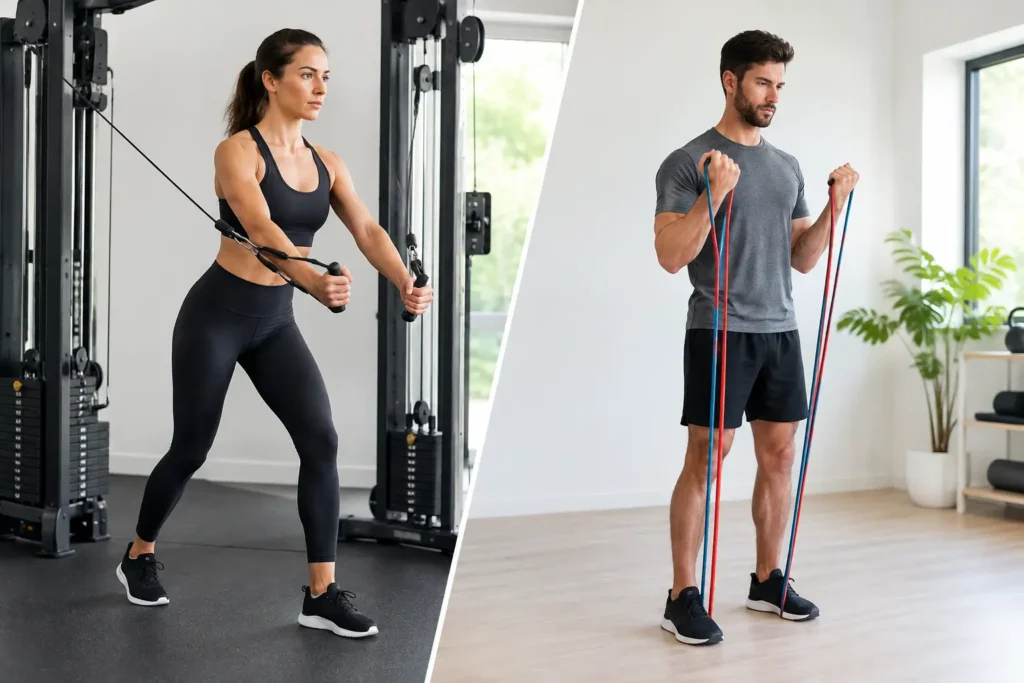
Cable training earns its place because it gives you resistance through a more natural range of motion than many fixed-path machines. You can pull from high, low, or chest-height positions and change your angle with a small adjustment. That makes one machine useful for upper-body strength, accessory work, balance training, and full-body circuits.
A compact cable machine is especially useful for people who want more variety than adjustable dumbbells alone can provide. Dumbbells are excellent for presses, squats, lunges, and rows, but cables make it easier to train movements such as face pulls, lat pulldowns, cable flyes, Pallof presses, and triceps pushdowns. Those exercises can round out a simple home program without filling the room with specialty benches and single-purpose machines.
They also work well for households with multiple users. One person may use light resistance for shoulder stability or physical therapy-style movements, while another uses heavier settings for rows and pulldowns. Quick weight changes and adjustable pulley heights make that shared use more practical.
Still, a compact unit is not automatically the best answer for every goal. If your priority is building maximum lower-body strength with heavy squats, deadlifts, and barbell presses, a rack, barbell, and plates will usually deliver more load for the money. Cables are best viewed as a flexible training hub or a valuable complement to free weights.
Compact Cable Machine Types to Compare
The word “compact” covers several very different equipment designs. Looking beyond the product photos will help you avoid buying a machine that does not fit your routine.
Wall-mounted functional trainers
Wall-mounted units keep the floor clearer than freestanding machines and can be a smart fit for a garage gym, basement, or dedicated workout corner. Many use dual adjustable pulleys, allowing you to train each side independently for presses, rows, flyes, rotations, and unilateral work.
Check the required wall structure before ordering. A unit may need secure mounting into studs or masonry, and installation can be more involved than assembling a bench. You also need open space in front of it to step back for cable flyes, rows, and rotational exercises.
Freestanding functional trainers
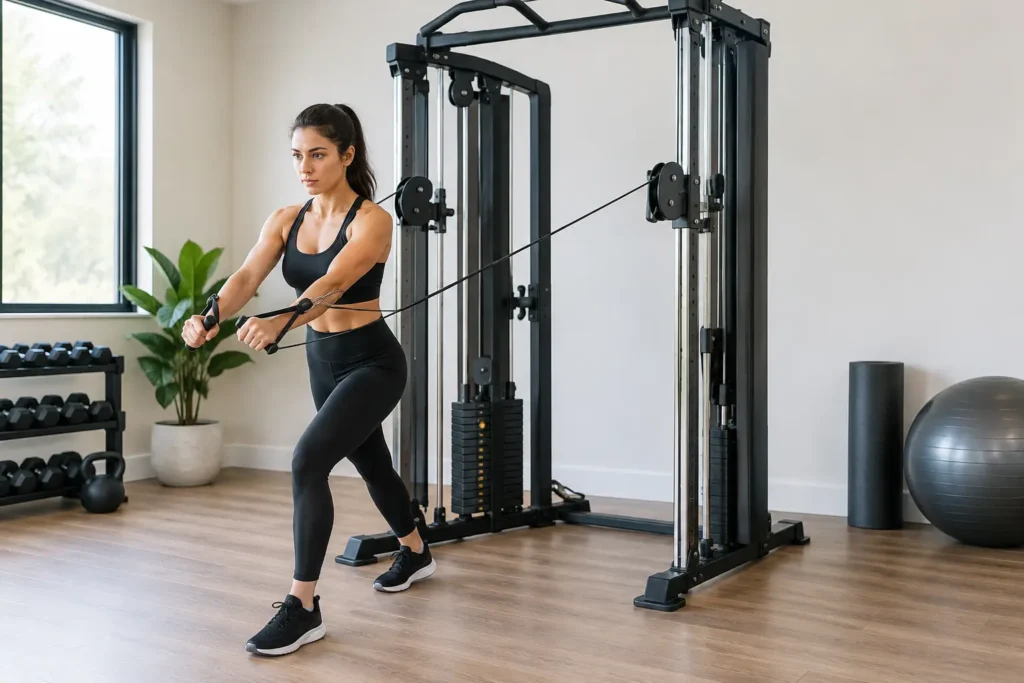
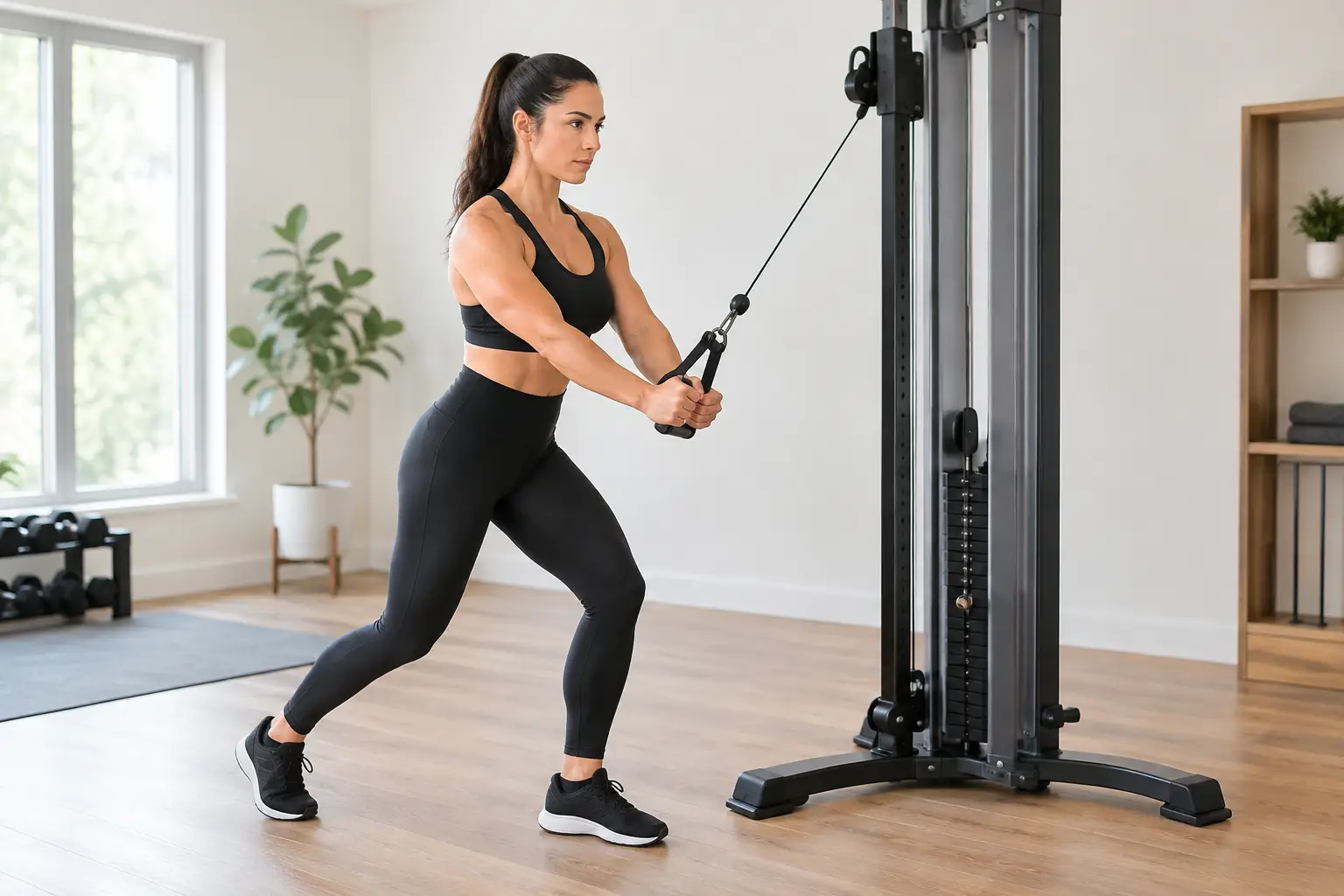
A freestanding functional trainer is often the most versatile choice for a home gym because it usually includes two adjustable pulleys and built-in weight stacks. It does take up more floor space, but it avoids wall-mounting requirements and tends to feel more stable during regular use.
Look closely at the full dimensions, including the width of the arms or pulley columns. A narrow frame may fit against one wall, yet you still need enough side-to-side room to move comfortably during flyes and lateral cable work.
Plate-loaded cable towers
Plate-loaded towers can offer strong value if you already own weight plates. They are commonly slimmer and less expensive than selectorized stack machines, and some include a high pulley, low pulley, and pull-up bar.
The trade-off is convenience. You must manually load and unload plates between exercises, and some models require a fairly long plate-loading horn behind the frame. That rear clearance matters in a tight room. If your workouts involve frequent supersets or several users, a weight stack is usually faster and less frustrating.
All-in-one trainers
Some compact systems combine cable pulleys with a Smith machine, rack uprights, pull-up station, or lever arms. These can be a practical centerpiece for a serious home gym, especially if you want one footprint to cover barbell and cable training.
They are not necessarily compact in the everyday sense. They may be tall, heavy, and demanding to assemble. Compare their usable cable travel and included attachments, not just the long list of features. A crowded frame with limited adjustment positions may not perform as well as a simpler functional trainer.
Measure the Room for Movement, Not Just Storage
The machine’s listed footprint is only the starting point. You need clearance to stand, reach, step, and pull without hitting a wall, couch, storage shelf, or another person’s equipment.
For a cable tower or wall-mounted system, measure the space in front of the unit. Rows and pulldowns may work close to the machine, but flyes, split-stance presses, and anti-rotation exercises often need several feet of open floor. For a dual-pulley trainer, consider the space on both sides as well.
Ceiling height deserves equal attention. Many cable machines are around seven feet tall or more, and a pull-up bar may require additional headroom. If your ceiling is low, verify whether you can perform pull-ups, kneeling pulldowns, or overhead cable work comfortably. A machine that technically fits can still feel restrictive.
Also plan for flooring. A rubber mat can protect hard floors, reduce vibration, and keep a heavy machine from shifting. If you rent or use an upstairs room, think about both floor protection and noise from weight stacks or plates.
Specs That Matter More Than Marketing Claims
Start with resistance. A listed stack weight does not always equal the resistance you feel at the handle. Many functional trainers use a 2:1 pulley ratio, meaning a 200-pound stack provides up to about 100 pounds of resistance per handle while giving you more cable travel and smoother movement. A 1:1 ratio feels heavier but offers less travel.
Neither ratio is universally better. A 2:1 system is often excellent for controlled accessory work, athletic movements, and long ranges of motion. A stronger lifter who wants heavy cable rows, pulldowns, or presses may prefer a 1:1 setup or a machine with a larger stack and upgrade options.
Next, check pulley height adjustments. More positions usually mean more useful exercise angles, particularly for people of different heights or families sharing the equipment. Make sure the adjustment mechanism is simple enough that you will actually use it between movements.
Cable travel is another overlooked detail. Short cables can limit flyes, walking lunges, and movements where you stand farther from the frame. Review the maximum usable cable length and how far the handles travel before the weight stack reaches its limit.
Finally, inspect the included attachments. Basic handles, a straight bar, a rope, and an ankle strap cover a lot of training. Specialty attachments can be added later, so do not overpay for a large bundle of items you may never use. Prioritize a solid frame, smooth pulleys, secure adjustment points, and a realistic resistance range first.
Build Workouts Around the Machine You Buy
A cable machine delivers better value when it supports a repeatable routine, not just occasional exercise variety. For a straightforward three-day plan, use it for a horizontal pull such as seated or standing rows, a vertical pull such as pulldowns, a press, a chest fly or rear-delt movement, and a core exercise. Add dumbbells or a bench for heavier pressing, lower-body work, and movements that need more load.
Beginners do not need every attachment or every cable variation. Start with a few movements you can perform with control and progress by adding repetitions, resistance, or an extra set over time. Experienced lifters can use cables to add volume without placing the same joint stress on every session that heavy barbell work can create.
Pay attention to maintenance, too. Keep cables clear of kinks, periodically check bolts and pulley connections, and follow the manufacturer’s stated weight limits. If a cable frays or the carriage moves unevenly, stop using the unit until it is repaired.
The right machine is the one that fits your room, supports your preferred exercises, and makes training easier to repeat. Choose with that standard in mind, and a compact cable setup can earn far more use than a larger machine that looks impressive but crowds your life.