A cable machine can make a spare room feel like a serious training space. Resistance bands can fit in a drawer and still deliver a demanding workout before work. That is the real decision behind cable machine versus resistance bands: not which tool is universally better, but which one you will use consistently in the space, budget, and routine you actually have.
For many home exercisers, bands are the smarter first purchase. For others, a cable machine becomes the centerpiece that makes strength training easier to progress and more enjoyable to repeat. Here is how to choose with confidence.
Cable Machine Versus Resistance Bands: The Core Difference
Both tools create resistance without requiring a full rack of barbells and plates. The experience, however, is very different.
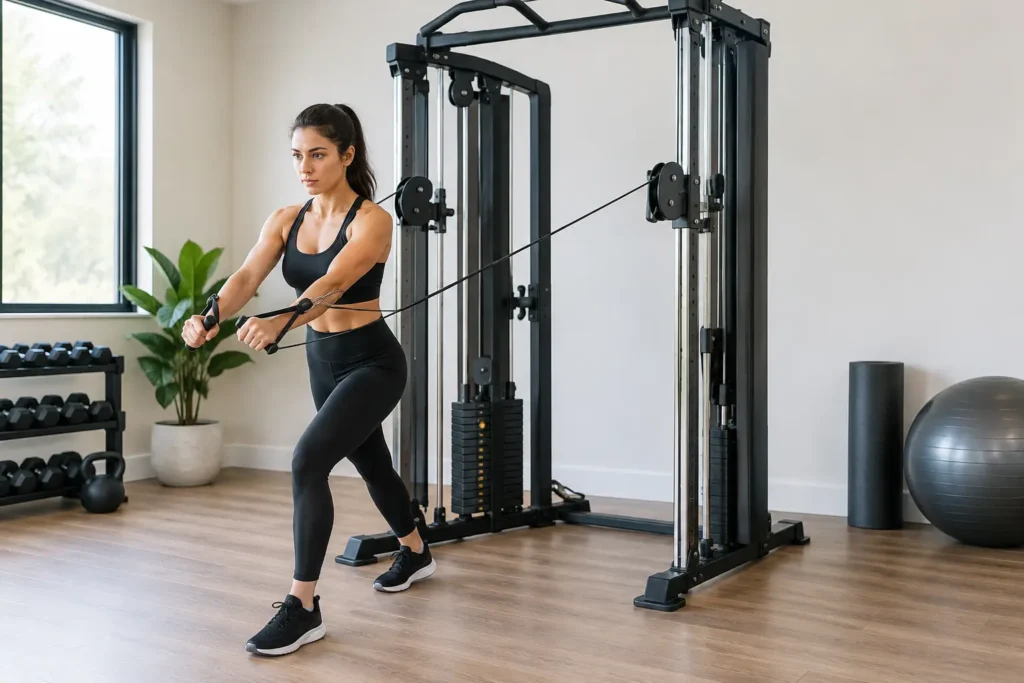
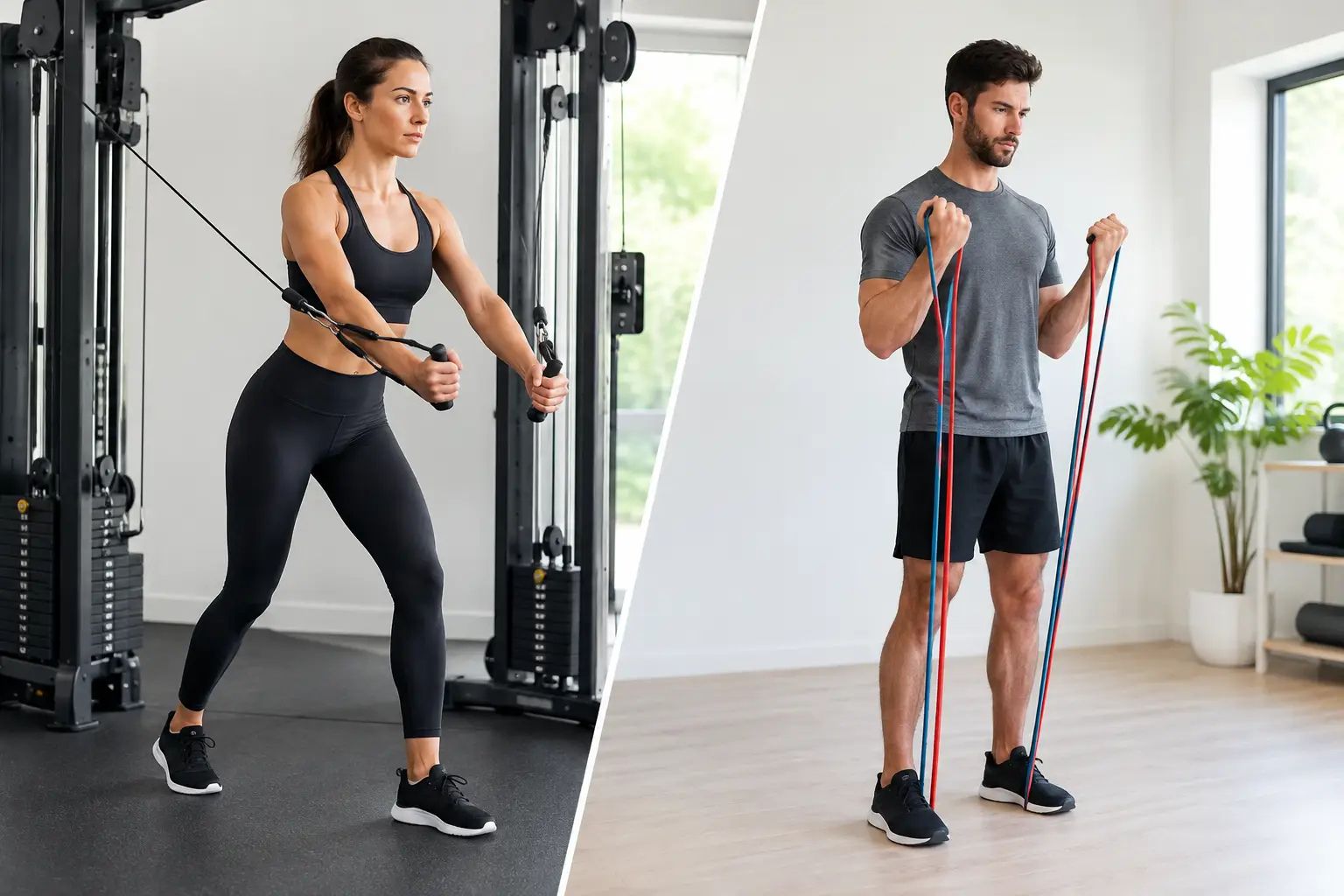
A cable machine uses a pulley system connected to a weight stack, weight plates, or another resistance mechanism. You pull an attachment through a smooth path, often from multiple height settings. Exercises such as rows, pulldowns, chest presses, triceps pressdowns, face pulls, and cable curls are easy to set up and repeat.
Resistance bands use elastic tension. As the band stretches, resistance increases. A compact loop band may work well for glute exercises and warmups, while tube bands with handles can cover presses, rows, curls, and more. Long bands anchored to a door, wall, rack, or sturdy post expand exercise options considerably.
That increasing tension is the biggest training distinction. Cables usually provide fairly consistent resistance through the range of motion. Bands are lightest near the start and hardest near the end. Neither is automatically superior, but they can make the same exercise feel noticeably different.
Choose Bands When Space, Budget, and Portability Lead
Resistance bands are hard to beat for a first home-gym purchase. A useful set costs far less than a quality cable machine, takes almost no floor space, and travels easily. If you live in an apartment, train in a shared room, or need equipment that disappears after each session, that convenience matters.
Bands also make sense for people who want to add variety to dumbbell workouts without filling a room with more gear. Use them for assisted pull-ups, glute kickbacks, lateral walks, chest presses, rows, and high-rep arm work. They are also practical for mobility drills, warmups, and recovery-focused sessions.
The trade-off is setup. To get the most from bands, you need a secure anchor point and enough clear space to step back safely. Door anchors are convenient, but the door must close securely and open away from you so tension cannot pull it open. A wall-mounted anchor or sturdy power rack can offer more dependable positioning if your home setup allows it.
Band resistance is also less exact. A label may say medium or heavy, but actual tension varies by brand, band length, and how far you stretch it. Tracking progress takes more attention. You might move farther from the anchor, use a thicker band, combine bands, slow the tempo, or add repetitions. That can work very well, but it is less straightforward than moving a selector pin from 50 to 60 pounds.
Bands are especially useful for
Beginners building a consistent habit, travelers, apartment dwellers, and anyone who needs an inexpensive way to train the whole body will get substantial value from bands. They are also a smart companion to a larger setup because they handle warmups, accessory work, and quick sessions without requiring machine adjustments.
Choose a Cable Machine When You Want Repeatable Progress
A cable machine asks for more money and more room, but it can remove friction from strength training. Once the machine is in place, you can select a weight, adjust the pulley height, attach a handle, and start your set. That repeatability is valuable if you train several days per week and want a clear path for progressive overload.
Cables are particularly strong for upper-body training. A functional trainer with two adjustable pulleys can support unilateral presses and rows, fly variations, lat-focused pulls, rear-delt work, and a long list of arm and core exercises. The independent handles also let each side work separately, which can help expose and address side-to-side strength differences.
For people who find free weights awkward or intimidating, cables can feel more controlled. The pulley path gives you freedom to find a comfortable angle while keeping the load manageable. That does not make cable training risk-free, but it can be a friendly option for learning movements with steady, predictable resistance.
The main compromise is footprint. Even compact cable systems require clearance for the machine itself, your body position, and the movement path. Check ceiling height for pulldowns, wall clearance for a plate-loaded unit, and the manufacturer’s full dimensions rather than judging only from product photos. A machine that technically fits but leaves no room for a bench, attachment changes, or safe movement is not a good fit.
What to compare before buying a cable machine
Start with the resistance type. Selectorized machines use an integrated weight stack and are usually the easiest to adjust. Plate-loaded models may cost less or offer higher loading potential, but you need compatible plates and must change them between exercises.
Next, look at pulley ratio. A 2:1 ratio means the handle moves twice as far as the weight stack and the resistance at the handle is roughly half the selected stack weight. This can create a smoother, longer range of motion, but do not compare stack numbers alone across machines. A 150-pound stack on one unit may not feel like 150 pounds at the handle.
Finally, evaluate pulley height range, included attachments, stated user capacity, frame stability, and whether installation is realistic for your room. A well-built single-stack cable tower can be a better buy than a larger functional trainer with limited adjustment positions or poor clearance.
Resistance and Muscle Building: Can Both Work?
Yes. Muscles respond to sufficient effort, sensible exercise selection, enough weekly training volume, and gradual progression. You can build strength and muscle with cables or bands, especially if you train close to fatigue with good form.
Cables make loading easier to measure. If you completed three sets of 10 cable rows at a given setting last week and can perform 12 solid reps this week, your next adjustment is obvious. That clarity is useful for intermediate and experienced lifters, or anyone who enjoys tracking training numbers.
Bands can still create hard sets, particularly for presses, rows, squats, hip hinges, curls, triceps extensions, and glute work. The key is choosing a band that becomes challenging in the target range of motion and controlling the return. If the band is too light at the start of an exercise, try a different setup, combine it with body weight or dumbbells, or select another movement that better matches the band’s tension curve.
Lower-body training is where the gap can matter more. Bands are excellent for glutes, hip stability, and high-rep leg work, but heavy, measurable loading for squats, deadlifts, and split squats can become limiting over time. A cable machine can add meaningful lower-body options, though it may still not replace a barbell, adjustable dumbbells, or a leg machine for someone pursuing maximum lower-body strength.
The Best Choice for Common Home Gym Setups
If you are starting from zero, buy a quality set of loop and long resistance bands first. You will learn which movements you enjoy, establish a routine, and avoid committing hundreds or thousands of dollars before your training habits are settled.
If you already use dumbbells, a bench, and bands regularly, a cable machine can be a logical upgrade. It adds exercise variety without duplicating every movement you already have, and it often makes accessory work more convenient than repeatedly rearranging dumbbells or anchors.
If your room is small, prioritize equipment that earns its footprint. Bands are the obvious answer for very limited space. In a dedicated garage gym or basement, a functional trainer may justify its size because it can replace several single-purpose machines. Measure first, including room entrances and the path the equipment must take during delivery.
There is also a strong middle ground: keep bands even if you buy cables. Bands are useful for travel, warmups, mobility work, assisted exercises, and training around the house when your main room is unavailable. A cable machine provides the consistent load; bands provide the flexibility.
Make the Purchase Fit Your Routine
Do not buy a cable machine because it looks complete, and do not dismiss bands because they look simple. The better tool is the one that supports the training you can repeat next week, next month, and next year.
Choose bands if you need low cost, small storage, and flexible workouts. Choose a cable machine if you have dedicated space, train often, and want precise, repeatable resistance across a wide range of exercises. Build from there with the gear that solves your next real training problem, not the gear that merely takes up more room.