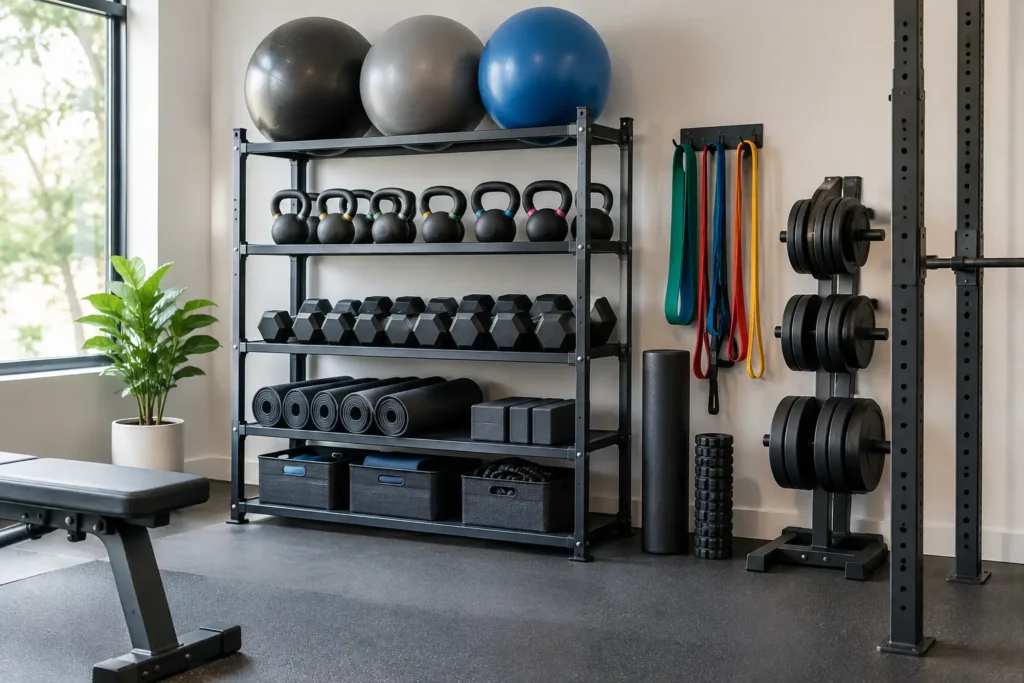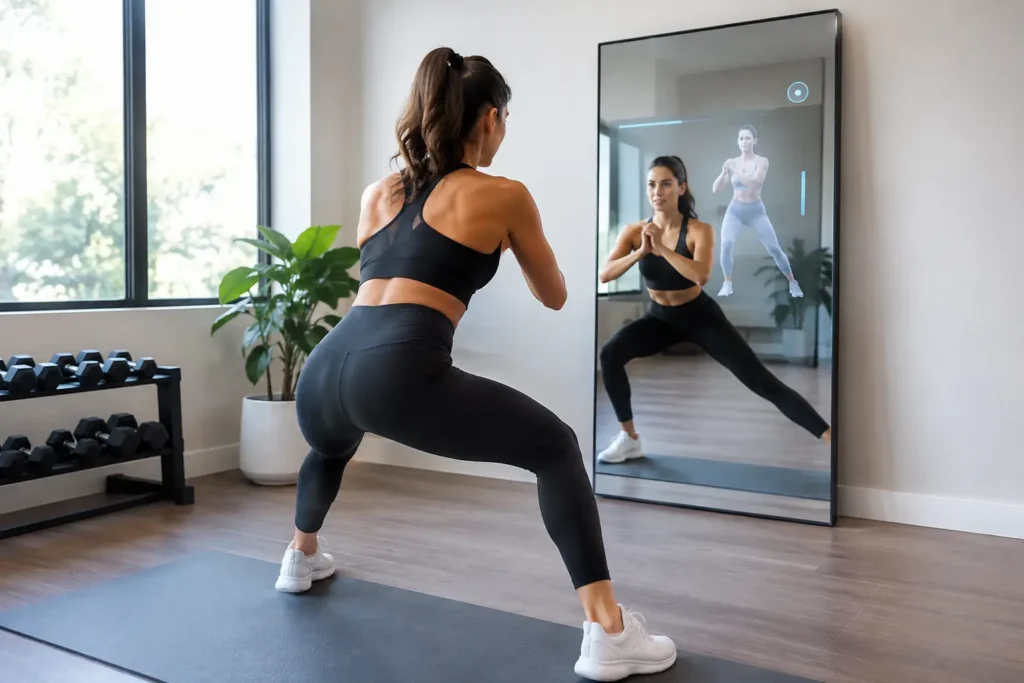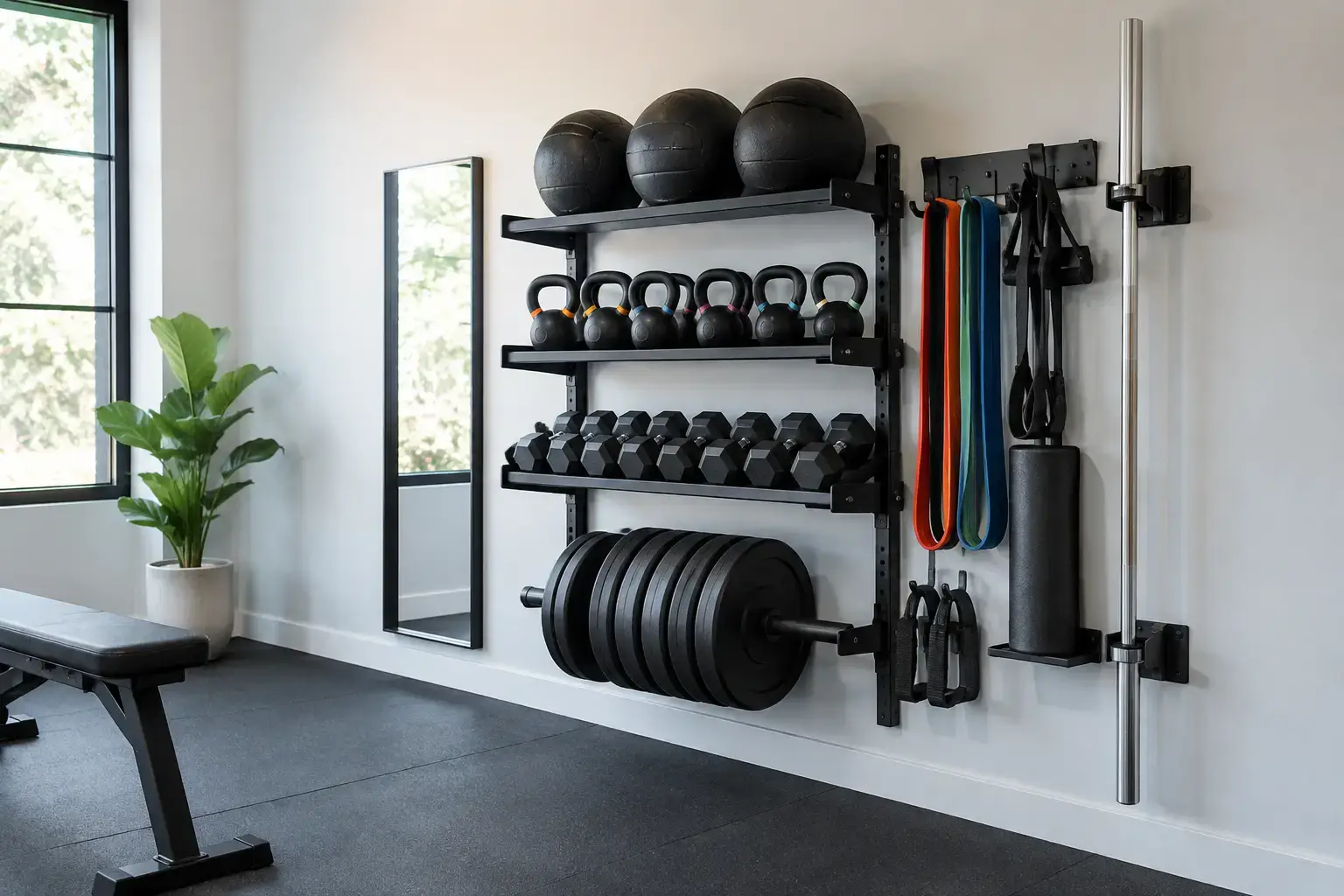
A pair of dumbbells, resistance bands, a jump rope, and a few plates can make a home gym more useful than a room full of neglected machines. But when that gear ends up underfoot, workouts get harder to start and the room stops working for the rest of your life. The best wall mounted gym storage solves that problem by putting frequently used equipment within reach while keeping the training floor clear.
Wall storage is not automatically the right answer for every piece of gear. It needs a wall that can safely support the load, enough clearance to remove equipment comfortably, and a layout that does not interfere with squats, presses, or walking paths. Choose it well, though, and a single wall can organize the gear that usually creates the most clutter.
What Makes the Best Wall Mounted Gym Storage?
The right system matches the equipment you actually own, not the equipment you might buy someday. A compact setup with bands, mats, and a few accessories may need only a rail with hooks and a shelf. A lifter storing iron plates, barbells, and heavy dumbbells needs a higher-capacity, securely mounted system designed for serious loads.
Start with the wall itself. In most US homes, storage should be attached directly to wall studs, concrete, or another structural surface specified by the manufacturer. Drywall alone is not a safe anchor for loaded plate pegs, heavy kettlebells, or dumbbell racks. If you rent, have metal studs, or are unsure what is behind the wall, confirm the mounting approach before ordering a rack.
Capacity matters, but so does load placement. A rack rated for 300 pounds is only useful if its brackets, fasteners, wall material, and installation method all support that rating. Keep the heaviest gear low and close to the wall when possible. It is safer to lift a plate from a low peg than to pull a heavy kettlebell off a high shelf at shoulder level.
Finally, think about access. Storage should make setup faster, not create a new obstacle course. If you use resistance bands for every warm-up, hang them near your open workout area. If a barbell is used once a week, it can occupy a less central part of the wall.
Match Wall Storage to Your Gear
A good storage plan is usually a mix of dedicated holders rather than one oversized catch-all rack. Different gear has different shapes, weights, and handling needs.
Dumbbells and kettlebells
Wall-mounted dumbbell shelves can save valuable floor space, especially in small garages, spare bedrooms, and basement gyms. They work best for fixed dumbbells or compact adjustable dumbbells with a stable cradle. Look for a shelf with a front lip or individual saddles that prevent weights from rolling forward.
Kettlebells are often better on a deep, heavy-duty shelf than on narrow pegs. Measure the bell base and handle height before buying. A shelf that technically holds the weight but leaves no hand clearance makes every pickup awkward.
For a collection of very heavy dumbbells, a floor rack may still be the better purchase. Wall-mounted systems reduce clutter, but they put concentrated stress on the wall. This is one of those cases where saving a few square feet is not worth exceeding the structure or installation limits.
Weight plates and barbells
Plate storage pegs are among the most effective wall-mounted options for strength-focused home gyms. They keep Olympic plates off the floor, make loading easier, and prevent stacks of plates from becoming trip hazards. Choose pegs long enough for your current plates with room for modest growth, but do not overextend them. Longer pegs can place more leverage on the wall bracket.
Place 45-pound plates on lower pegs, then reserve higher positions for 25s, 10s, and smaller change plates. This arrangement cuts down on awkward overhead lifting and makes it easier to see what is available.
For barbells, horizontal wall holders keep the shaft protected and free up rack space. Vertical holders can use less wall width, but they require enough ceiling clearance and may be less convenient in rooms with low ceilings or fans. Either option should hold the bar securely enough that it cannot slide out if bumped.
Resistance bands, ropes, and small accessories
This is where wall storage delivers the biggest day-to-day payoff for many people. A simple rail with strong hooks can organize resistance bands, suspension trainers, lifting belts, jump ropes, collars, and handles. These items are easy to lose, easy to tangle, and often the reason a workout starts with five minutes of searching.
Use separate hooks for bands and ropes rather than piling everything on one hook. It takes a little more wall space, but it protects the equipment and keeps the setup quick. For small items such as collars, grips, sliders, and massage balls, a shallow bin or shelf near the hook rail works better than an open pegboard alone.
Mats, rollers, and mobility tools
Yoga mats and foam rollers are lightweight but bulky. Vertical wall cradles, wide hooks, or dedicated mat racks keep them from taking over a closet or corner. Before mounting, check the depth of the rack. A foam roller that sticks too far into a narrow room can become another shoulder-bumping hazard.
If your exercise area doubles as a guest room or living space, storing mats vertically in a tidy wall rack can make the entire room feel less like a permanent gym. That visual difference often matters as much as the extra floor space.
Plan the Wall Before You Buy
Measure more than the empty wall width. Account for baseboards, outlets, light switches, windows, door swing, ceiling height, and the space needed to grab equipment. A plate tree on the wall may fit physically, for example, but not if you need to stand directly in front of it to remove a 45-pound plate.
Mark the proposed rack footprint with painter's tape. Then mimic the movements you will make: reach for a band, remove a barbell, carry a dumbbell to the bench, and rerack a plate. This low-cost test quickly exposes layouts that look good on a product page but feel cramped in a real room.
Leave a clear training zone. Storage belongs at the perimeter, while the center of the room should support your main movements. If you deadlift, swing kettlebells, or use a rowing machine, protect the clearance those exercises require. In a tight space, prioritize storing gear vertically and choose folding equipment when it suits your routine.
Installation Details That Protect Your Gear and Walls
Always follow the manufacturer’s mounting instructions, including hardware requirements and stated weight limits. If a system calls for lag bolts into wood studs, do not substitute lightweight drywall anchors. Use a stud finder, verify the stud location, and use a level so shelves and rails sit square.
For concrete or masonry walls, use anchors rated for that material and the intended load. Garages can be excellent candidates for wall storage because they often have long open walls, but unfinished walls still need careful planning around studs, insulation, wiring, and garage-door hardware.
A wall-mounted rack can also scratch paint, leave dents, or transfer vibration. Spacers, backing boards, and rubber contact points can help, depending on the product and wall type. If you are building a larger strength setup, hiring a qualified installer is a reasonable expense. It is cheaper than repairing a damaged wall or replacing dropped equipment.
Choose Features You Will Actually Use
Modular systems are useful when your training is still evolving. Rails that accept interchangeable hooks, trays, shelves, and bar holders let you start with basic accessory storage and add components later. They are especially practical for beginners who know they want an organized home gym but have not settled on a final equipment list.
For experienced lifters, dedicated plate pegs and barbell holders often deliver more value than a flexible accessory rail. The gear is heavier, the load ratings matter more, and dedicated storage is quicker to use between sets. A hybrid wall that combines both can work well: heavy strength gear low, accessories and mobility tools higher up.
Avoid paying extra for features that create complexity without solving a problem. Locking drawers are helpful if children have access to the space or you need to secure small items. They are less useful if your priority is fast access to bands and collars during a circuit. Compare capacity, dimensions, mounting requirements, and expansion options before focusing on appearance.
The best setup is one you will keep using. Start with the equipment that crowds your floor or delays your workouts most, mount it safely, and leave room for the routine you want to build next.