A pair of dumbbells on the floor can be easy to ignore. Add resistance bands, a yoga mat, kettlebells, a foam roller, and a bench, and the same corner becomes a tripping hazard that makes workouts harder to start. Smart gym storage is not about making a home gym look like a commercial facility. It is about giving the gear you actually use a dependable place, so your room stays safe, functional, and ready when you have 30 minutes to train.
For most home exercisers, the best storage setup begins with an honest look at the room and the routine. The right answer for a spare bedroom is rarely the right answer for a garage gym or a living-room workout zone.
Start Gym Storage With Your Training Routine
Before measuring shelves or shopping for racks, take inventory of what you own and how often you use it. Put equipment into three groups: gear used in nearly every workout, gear used weekly, and gear used occasionally. Your most-used items deserve the easiest access.
If you strength train four days a week, adjustable dumbbells, plates, collars, and a bench should not live in separate rooms or behind a stack of rarely used accessories. If your routine centers on yoga, Pilates, and mobility work, keeping a mat, blocks, straps, and recovery tools together will make more sense than buying a heavy-duty weight tree.
This step also exposes duplicate purchases. Three sets of light bands, multiple half-used massage balls, and several mats may not need separate homes. Keep the best versions, donate what you no longer use, and build storage around the equipment that supports your current goals.
Match the Storage Type to the Gear
Storage works best when it controls the specific problem each item creates: weight, bulk, rolling, tangling, or frequent handling. A general shelving unit can help, but it is not automatically the safest choice for every category.
Free weights need low, stable storage
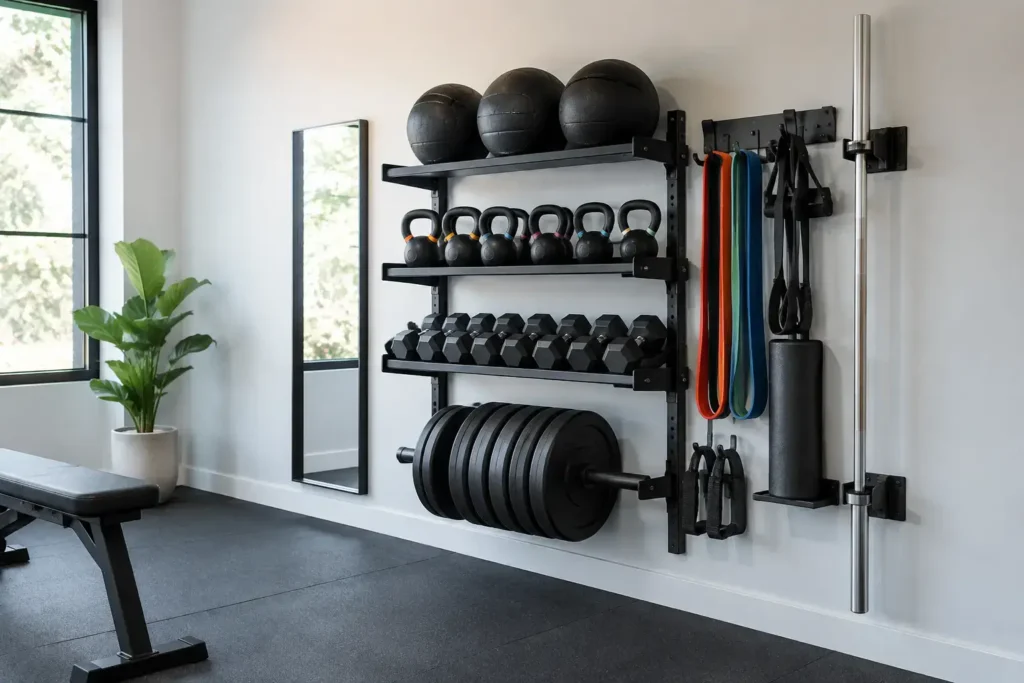
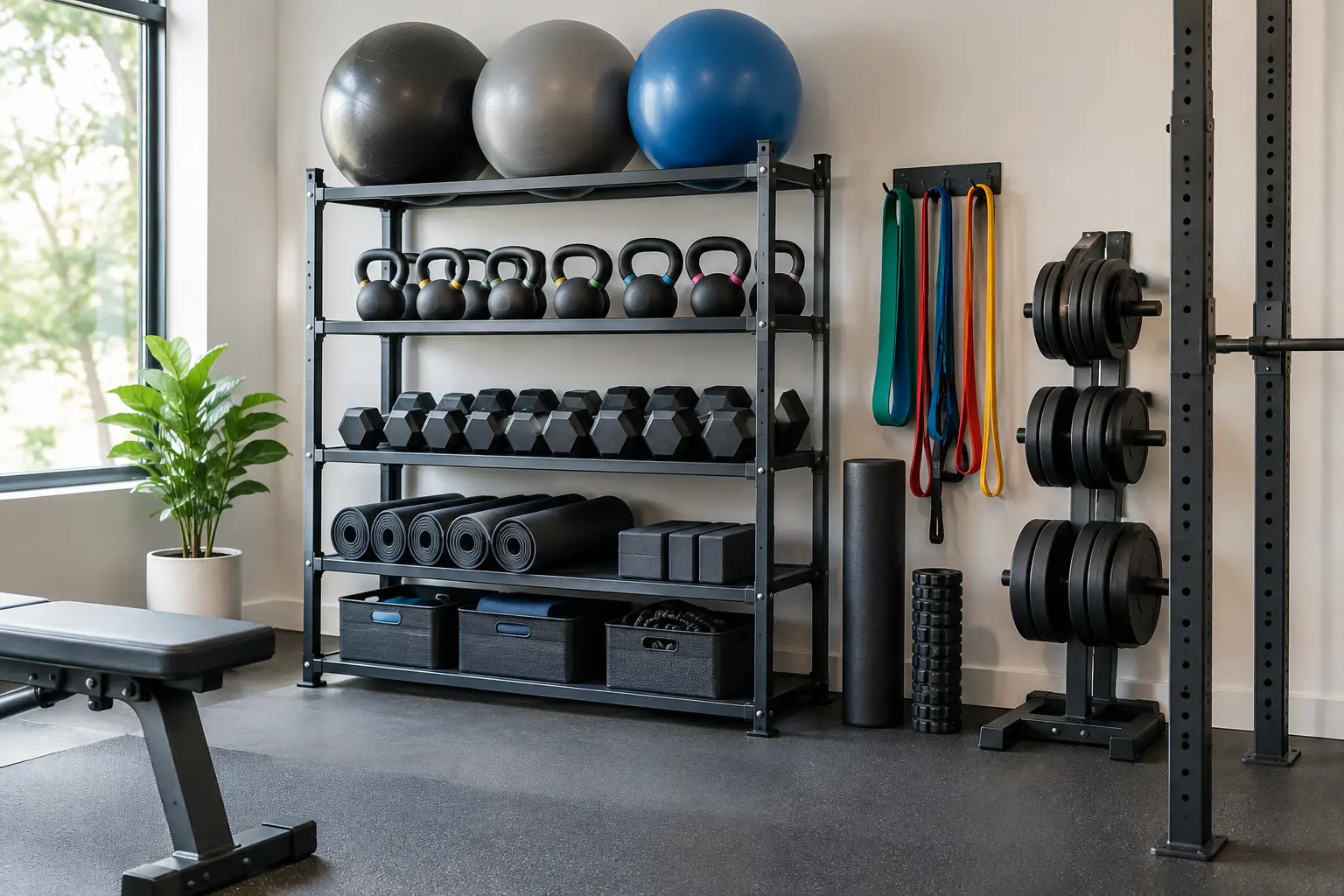
Dumbbells, kettlebells, and weight plates are dense. Store them low to the ground on a rack rated for the load, with heavier pieces on the bottom tier. This limits lifting strain and reduces the consequences if an item shifts during storage.
A compact horizontal dumbbell rack is often enough for a small adjustable set or a limited range of fixed weights. For larger collections, a three-tier rack keeps handles visible and makes it easier to return weights in order. Check the rack's stated capacity, not just the number of slots. A rack that looks substantial can still be a poor fit for a growing collection of cast-iron kettlebells.
Plate trees and vertical plate holders save floor space, especially beside a squat rack or barbell. They work well when plates are used regularly, but leave enough clearance to remove a 45-pound plate without scraping a wall or another machine. If children or pets can enter the room, make sure plates cannot slide off unsecured pegs.
Bars, bands, and accessories need dedicated spots
A barbell left on the floor takes up more room than it appears to and becomes awkward to move around. Wall-mounted bar holders keep it off the ground, while vertical bar storage may be a better choice for renters or anyone who does not want to drill into studs. Just confirm ceiling height if you plan to store longer specialty bars upright.
Resistance bands, jump ropes, lifting belts, and handles are small but famously messy. Hooks, pegboards, or a narrow accessory rack make these items visible without filling drawers. Give each category its own hook or bin. Tossing every small item into one basket saves time once, then costs time every workout.
For yoga and mobility gear, open baskets or cubbies are practical. Rolled mats, blocks, sliders, and straps are lightweight, so they can be stored higher than free weights. A tall vertical mat rack can also make a shared room feel tidier than a pile of rolled mats leaning in a corner.
Recovery tools benefit from closed or contained storage
Foam rollers, massage guns, massage balls, and wraps tend to spread across a room because they come out after a workout, when motivation to clean up is low. A lidded bench, cabinet, or clearly labeled bin gives them an easy return point.
Closed storage is especially useful in living areas, where visual clutter matters as much as floor space. The trade-off is access. Do not hide a foam roller in a hard-to-reach closet if you want to use it every evening. Use cabinets for occasional tools and a nearby bin for the recovery equipment that is part of your regular routine.
Use Walls and Vertical Space Carefully
When floor space is limited, walls can do a lot of work. Shelves, hooks, and mounted organizers free up room for a mat, treadmill, rowing machine, or functional training area. They are particularly helpful in apartments, small bedrooms, and multipurpose garages.
But wall storage is only as safe as its installation. Heavy equipment should attach to wall studs using hardware designed for the rack and the load. Drywall anchors may be fine for lightweight bands or yoga straps, but they are not a substitute for properly mounted weight storage. Follow the manufacturer's installation instructions, and avoid placing heavy wall-mounted gear above a bed, desk, or frequently used walkway.
Vertical storage can also create an illusion of organization while making equipment hard to reach. Keep daily-use gear between knee and shoulder height whenever possible. The top shelf is best for lighter, seasonal, or rarely used items such as extra mats, travel equipment, or unopened supplies.
Plan Around Clearance, Not Just Empty Space
A storage unit that technically fits is not always useful. You need room to retrieve equipment, move through the space, and perform exercises safely. A dumbbell rack against the wall may need more open space in front of it than its footprint suggests. A plate tree placed too close to a squat rack can turn plate changes into an annoying bottleneck.
Think through the path of a normal workout. Can you grab dumbbells without moving a bench? Can you roll out a mat without shifting bins? Can someone walk through the room while the equipment is in use? These questions matter more than squeezing every available inch full.
Leave a clear route to doors, windows, electrical panels, and garage storage. If your home gym shares space with cars, laundry, or household storage, use tape or flooring edges to define the training zone. That simple boundary can prevent fitness gear from slowly taking over the rest of the room.
Choose Furniture That Does More Than One Job
Multipurpose storage is a strong option when your workout space is also a bedroom, office, or family room. An upholstered storage bench can hold bands, mats, and recovery tools while providing seating. A cabinet with doors can blend into a living area and keep smaller equipment out of sight. Rolling carts can carry light accessories to wherever you train, then tuck into a closet.
The key is not to force furniture into a role it cannot safely handle. A decorative cube organizer is fine for towels and yoga blocks, not for a stack of iron plates. Likewise, a rolling cart is convenient for bands and mobility gear but is not stable enough for heavy dumbbells.
If you are building a larger setup, a power rack with integrated plate pegs, bar storage, and accessory hooks can reduce the need for several separate pieces. It costs more upfront and takes planning, but it can be a space-efficient choice for serious strength training.
Keep the System Easy to Maintain
The best gym storage setup is one you can reset in under two minutes. If putting away a dumbbell requires lifting it over other gear, you will eventually leave it out. Make return spots obvious, keep commonly paired items together, and avoid overfilling shelves or bins.
A quick weekly reset helps prevent clutter from becoming a project. Put stray gear back, wipe down handles and mats, check that rack bolts are tight, and look for damaged bands or frayed straps. This is also a good time to notice whether your storage still matches your habits. As your training changes, your setup should change with it.
A well-organized home gym does not need more equipment to feel better. Often, it needs a clearer place for the equipment already earning its spot. Choose storage that fits your room, protects your gear, and makes the next workout easier to begin.