Disclosure: As an Amazon Associate, HealthGearSpot earns from qualifying purchases. This guide names no sponsored pick and quotes no price or noise figure that HealthGearSpot has not verified; check the live listing before you buy.
A vibration platform can look like a small, simple addition to a home gym - until it starts rattling the floor during an early workout or interrupts the person working in the next room. The best quiet vibration platforms balance useful vibration settings with stable construction, thoughtful motor design, and a footprint that works in a real home. For apartment dwellers, shared households, and anyone who prefers low-noise training, those details matter more than flashy preset counts.
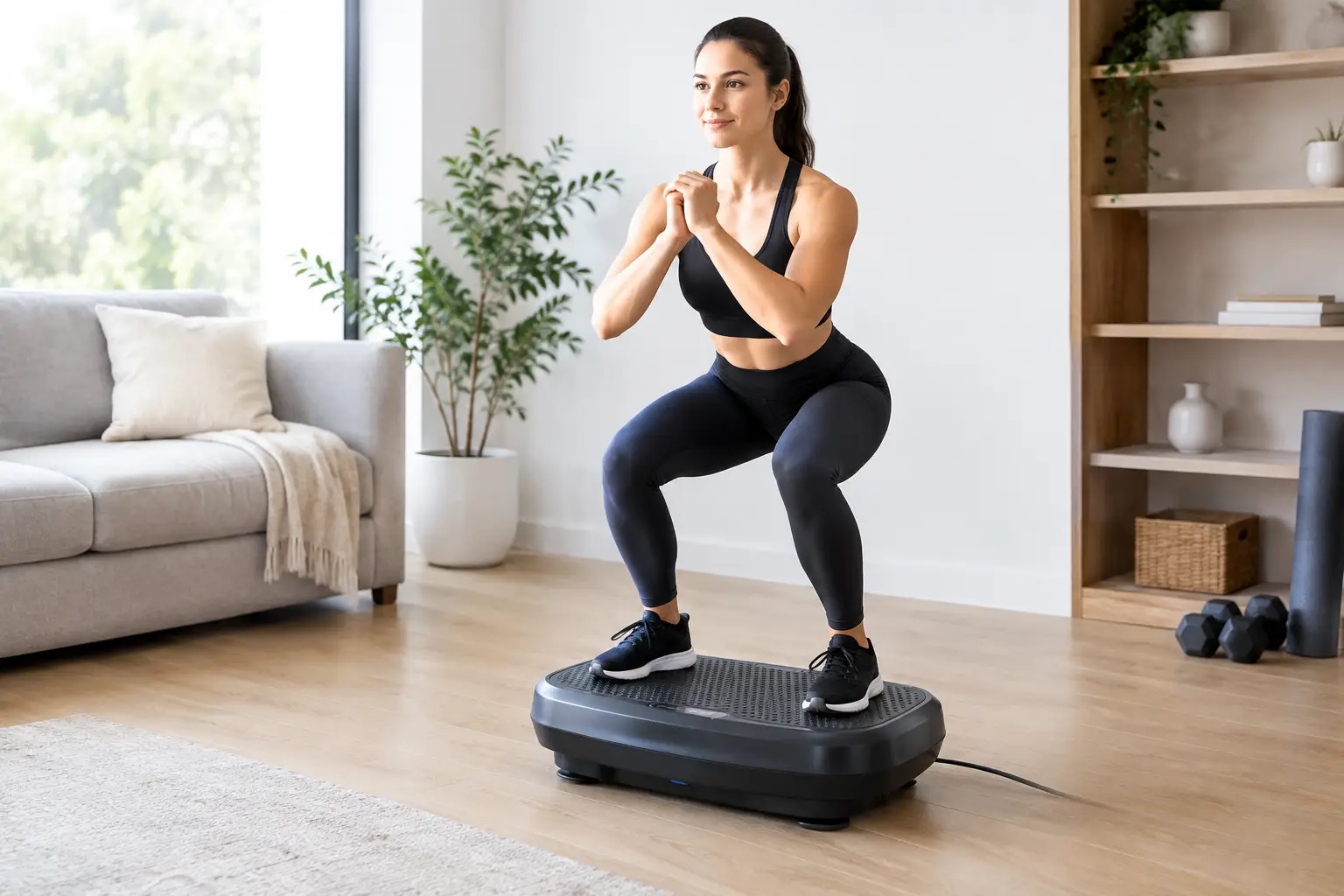
Vibration platforms use a moving plate to create rapid oscillation, usually while you stand in a partial squat, hold a position, or perform gentle bodyweight movements. Some people use them as part of a warm-up, mobility routine, or recovery session. They are not a replacement for strength training, walking, or cardio, but they can be a convenient tool for adding movement to a short home routine.
What Makes a Vibration Platform Quiet?
A quiet platform is not silent. The motor will create some hum, and the moving plate can transmit vibration into the floor. The goal is to limit the sounds that travel: motor noise, loose-part rattling, and impact vibration through hardwood, tile, or an upstairs floor.
The platform's weight and build quality are the first clues. A lightweight unit may be easy to store, but a very light base can shift or buzz at higher speeds. A heavier platform with a rigid frame generally stays planted better. That stability often makes it feel quieter, even when the motor is producing the same amount of power.
Rubber feet also make a real difference. Wide, grippy feet help isolate the machine from the floor, while thin plastic feet can amplify vibration. The surface underneath matters just as much. On carpet, a platform may sink or feel unstable. On hard flooring, it may transmit more noise. A dense equipment mat is usually the simplest fix for both situations.
Motor type and tuning are harder to judge from a product page, but user feedback can help. Look for comments about a smooth hum rather than clicking, grinding, squeaking, or a high-pitched whine. A few reports of noise may reflect an uneven floor or a loose bolt. Repeated reports at low settings are a stronger warning sign.
Features That Matter When Choosing a Quiet Platform
When comparing the best quiet vibration platforms, start with your home and routine rather than the highest advertised speed. A compact model may be the smarter choice for a small bedroom workout area, while a larger platform can offer more secure footing for taller users or anyone wanting a more stable stance.
Stable base and realistic weight capacity
Choose a platform with a base wide enough for a comfortable, shoulder-width stance. The listed weight capacity should exceed your body weight with room to spare. Capacity alone does not guarantee quality, but it is a useful starting point. A platform that feels solid underfoot is less likely to wobble, slide, or create unnecessary vibration noise.
Be cautious with unusually high capacity claims on a very small, ultra-light machine. Check the platform's actual product weight, base dimensions, and feedback about stability. For many households, a unit in the moderate-weight range is easier to move than a heavy commercial-style platform while still feeling secure during use.
Adjustable speed with a usable low end
A broad speed range sounds appealing, but quiet use often happens at lower to mid-level settings. Those settings are enough for gentle standing, calf raises, supported squats, or mobility work without turning the session into a disturbance for everyone nearby.
Look for small speed increments. Finer adjustment lets you find a setting that feels productive without causing the platform to shake, creep across the floor, or become louder than you expected. A remote control can be helpful because it lets you change settings without bending down while the plate is moving.
A non-slip deck and simple controls
A textured, non-slip deck supports better footing, especially if you are using the platform after a workout when your shoes or socks may be damp. Simple controls are equally valuable. A clear display, start-stop button, and straightforward timer are more useful than a long list of confusing programs.
Some platforms include resistance bands. They can add light upper-body work, but they should not be the reason you buy a machine. Band anchors are often best for gentle pulls, not heavy resistance training. If strength is a priority, adjustable dumbbells, bands, or a compact cable setup will offer more progression.
Storage that matches your space
Measure where the platform will live, not just where you plan to use it. Many quiet vibration platforms are low enough to slide under a bed or couch, but confirm the total height, including feet and handles. A machine you can store easily is more likely to become part of your weekly routine.
If you need a unit with a handle or upright support, measure ceiling clearance and storage height too. Handle-equipped models may feel more comfortable for balance-focused users, but they take up more room and can be harder to move between rooms.
Match the Platform to Your Home Setup
The right choice depends heavily on where and when you plan to use it. For an upstairs apartment, prioritize a compact, stable platform, lower settings, and a thick rubber mat. Avoid using it directly on bare wood or laminate flooring. Even a relatively quiet motor can become noticeable when the floor acts like a speaker.
For a garage gym or ground-floor room, you can consider a larger platform with more power and a wider deck. The extra size may be worth it if multiple people will use it or if you prefer standing exercises with a more athletic stance. Still, place it on a mat to protect flooring and reduce movement.
For recovery or gentle movement, you likely do not need the largest machine or the highest speed. A basic, low-profile platform with easy controls may deliver the better value. Spending more makes sense when it buys a sturdier base, smoother operation, useful support features, or a warranty that gives you confidence in the motor.
How to Reduce Noise After You Buy
Even a well-built platform needs a good setup. Place it on a dense rubber mat designed for exercise equipment, then make sure all four feet contact the floor evenly. If the floor is uneven, moving the platform a few inches can solve a surprising amount of rattling.
Before each session, check that the remote, power cord, and any resistance bands are not striking the base. Keep the platform clean, especially around the edges of the deck and feet, since trapped dust can affect how it sits on the floor. Follow the manufacturer's maintenance instructions and stop using the unit if you hear grinding, sharp knocking, or a sudden change in motor sound.
Use it with soft, controlled movement. Jumping, stomping, or aggressively shifting side to side adds impact noise and may exceed what a compact platform is designed to handle. Most home users get a quieter, more comfortable experience by keeping knees slightly bent and using short sessions at a setting they can control.
Claims to View Carefully
Vibration-platform marketing can make big promises about calorie burn, rapid weight loss, circulation, muscle tone, and recovery. Treat those claims with caution. A platform can add variety and encourage you to move, but results still come from consistent training, daily activity, nutrition, sleep, and a plan you can maintain.
If you have osteoporosis, a joint condition, cardiovascular concerns, an implanted medical device, are pregnant, or are managing an injury, check with a qualified clinician before using vibration equipment. The same applies if standing balance is a challenge. A handle may offer support, but it does not remove the need for appropriate guidance.
A quiet vibration platform earns its spot in a home gym when it fits your floor, schedule, and training habits. Choose stability over gimmicks, protect your floors with a proper mat, and start at a manageable setting. That approach gives you a tool you will actually use without making your home workout space harder to live with.
What to check before you buy
Use this checklist to compare models side by side. No single feature makes a platform quiet; the combination of base, motor, feet, mat, and room matters.
- Platform size: check the usable deck area and stance width, not just the outer dimensions.
- Weight capacity: treat it as a check, and confirm whether the figure covers the user alone or user plus added load.
- Speed settings: look for a usable low end and small increments, plus a remote you can reach mid-session.
- Stability: check base weight, frame rigidity, and whether all feet contact the floor evenly.
- Floor and noise: check rubber feet, mat compatibility, and user reports of hum versus rattling on your floor type.
- Storage: measure height with feet and any handle, and the space where it will actually live.
- Controls and support: check deck grip, simple controls, handle options, warranty, and returns.
Safety: start low and stop if something feels wrong
Start at the lowest setting for short sessions, and build up slowly. Keep a wall, rail, or handle within reach, keep the area and cord clear, and stop if you feel pain, dizziness, or numbness. If you have osteoporosis, a joint condition, cardiovascular concerns, an implanted medical device, are pregnant, or are managing an injury or balance difficulty, check with a qualified clinician before you start.
How to judge a quiet claim without a decibel figure
Listings sometimes quote a noise figure, but figures measured at different distances, on different floors, and under different loads are not directly comparable. Do not rank models by a single number. Instead, look for repeated user reports on your floor type, check the return policy, and test the platform on a mat at its lowest setting first.