A fitness mirror can look like a clean piece of home decor until the screen turns on and a trainer starts counting down your first set. That appeal is real: fitness mirrors put instructor-led strength, cardio, mobility, yoga, and boxing-style workouts in the room you already have. But a sleek screen is not automatically the right upgrade for every home gym.
For the right household, it can remove the friction of choosing a workout and getting started. For the wrong setup, it can become an expensive wall-mounted screen with a monthly membership you rarely use. The best decision comes down to your available wall space, training habits, budget, and whether guided programming will actually help you stay consistent.
What Fitness Mirrors Actually Do
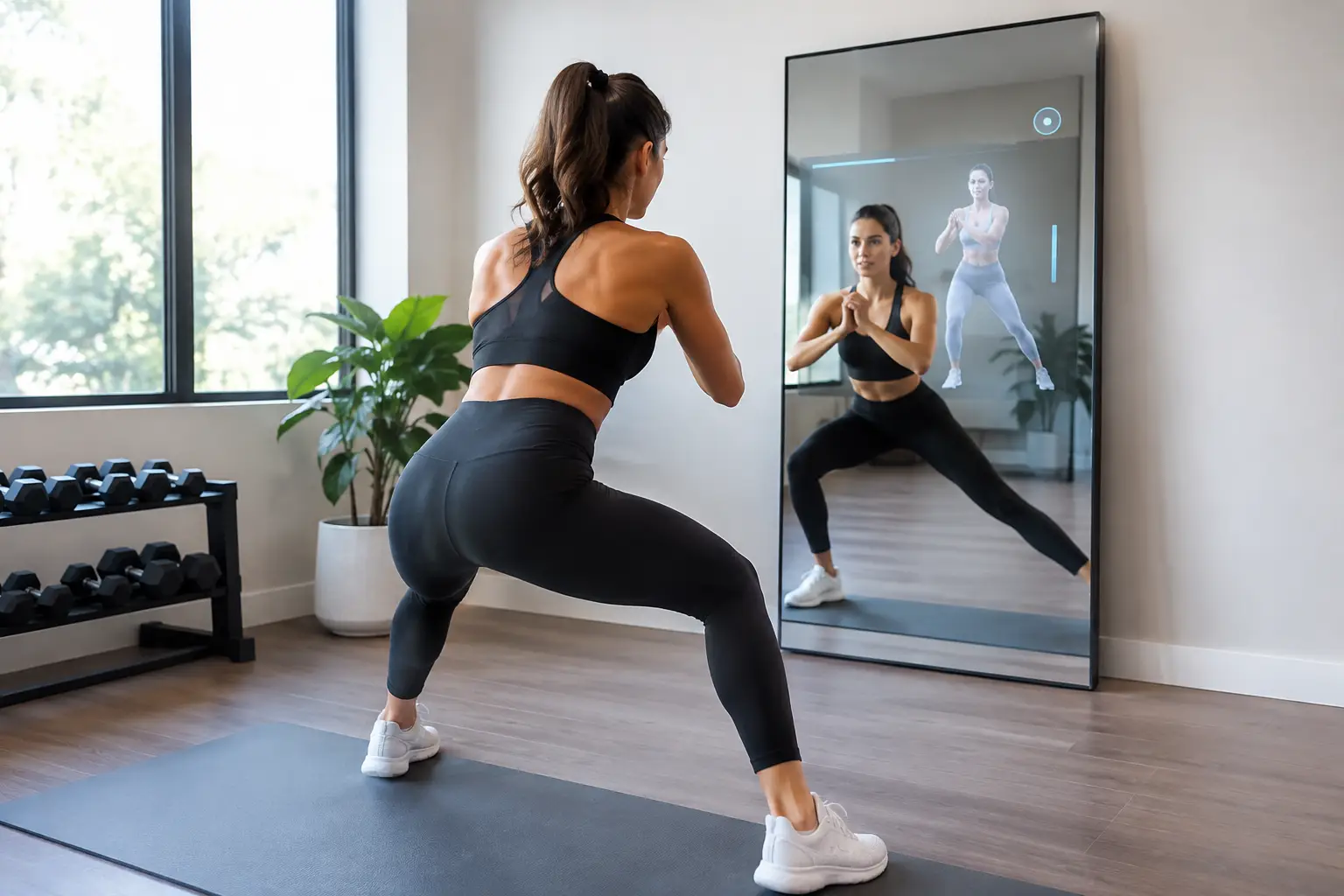
Fitness mirrors are full-length display systems designed for guided at-home workouts. When inactive, many resemble a standard mirror. When powered on, they stream live or on-demand classes, show a trainer, track workout metrics, and may use a camera or sensors to offer form feedback.
Most platforms offer a broad class library rather than focusing on one training method. You may find bodyweight circuits, dumbbell strength sessions, Pilates, dance cardio, stretching, meditation, and recovery work in the same membership. Some systems also pair with heart rate monitors or smartwatches, while others include basic equipment such as resistance bands, a mat, or light weights.
The main product is not really the mirror. It is the training experience and accountability built around it. If you enjoy following a plan, prefer short classes, or tend to skip workouts when you have to program them yourself, that experience can be valuable. If you already follow a lifting plan, run outdoors, or use free workout videos consistently, the premium display may add less to your routine.
When a Fitness Mirror Makes Sense
A fitness mirror is often a strong fit for someone who wants variety without filling a room with machines. It takes up far less floor space than a treadmill, rowing machine, or cable trainer. A clear section of wall and enough open floor area for a mat are usually the starting point.
It also works well in shared households. One person might take a 20-minute yoga class before work, while another uses the same system for a dumbbell workout in the evening. A single membership with multiple workout styles can be easier to justify than buying separate gear for several different exercise preferences.
Beginners may benefit from the structure, too. Choosing a class by time, difficulty, trainer, and equipment can feel much more manageable than building a full weekly program from scratch. A good platform makes it easier to learn movement patterns and build a regular habit before investing heavily in a rack, barbell, bench, and plates.
That said, fitness mirrors are not just for beginners. Experienced home exercisers can use them as a supplement to a more complete setup. They can be especially useful for warm-ups, conditioning, mobility days, and guided sessions when you do not want to think through every detail of the workout.
The Trade-Offs to Consider Before Buying
The purchase price is only part of the cost. Many fitness mirrors require an ongoing membership for classes and full features. Add the hardware cost and subscription fees over several years before comparing models. A lower-priced mirror with a higher monthly fee may cost more over time than a premium model with broader household access.
Space deserves more thought than the mirror's footprint suggests. You need room to step, lunge, lie down, and move your arms freely. A crowded bedroom corner may accommodate the screen but not a safe workout. Measure the clear training area, ceiling height for overhead movements, and the path around furniture before you buy.
Form feedback is another area where expectations matter. Camera-based movement tracking can be a helpful prompt to slow down, square your hips, or adjust your range of motion. It does not replace an in-person coach, physical therapist, or qualified assessment for pain and injuries. Treat it as extra guidance, not a guarantee that every rep is technically perfect.
Privacy is worth checking carefully. If a model includes a camera, review how it is used, whether it can be physically covered or disabled, and what settings control data sharing. For a device placed in a bedroom or family room, those details should be easy to understand before installation.
Compare Fitness Mirrors by Your Training Style
Start with the workouts you will realistically repeat. A mirror with thousands of classes is not necessarily better if most of them do not match your goals.
For strength-focused home gyms
Look for progressive dumbbell programs, clear exercise demonstrations, adjustable class lengths, and instructors who explain load selection. Check whether the platform supports the equipment you already own. If your home gym includes adjustable dumbbells and a bench, you want programming that uses them well instead of treating every class as a bodyweight circuit.
A mirror is less likely to replace a serious barbell setup. Lifters training for maximum strength need enough load, a stable bench or rack, and programming built around progressive overload. In that case, the mirror may be a useful conditioning and mobility tool, not the center of the gym.
For cardio and variety
Prioritize class variety, music style, trainer options, and convenient filters for 10-, 20-, and 30-minute sessions. These features matter because the goal is repeat use. If you like switching between boxing, dance, HIIT, and low-impact cardio, a mirror can make an otherwise simple workout area feel much more flexible.
People with joint concerns should also check for low-impact classes and modifications. High-energy marketing can make every session look intense, but a platform is more useful when it provides options you can sustain.
For yoga, Pilates, and mobility
Screen size and visual clarity matter here. You want to see full-body demonstrations from several feet away without craning your neck. A mirror can be particularly practical for these workouts because it lets you see both the instructor and your own positioning.
Still, a quality mat, open floor space, and a few small accessories may deliver more value if yoga or Pilates is your only goal. The mirror earns its place when you want regular instruction, progression, and enough class variety to keep the practice fresh.
Installation and Home Gym Setup Details
Before ordering, confirm wall-mounting requirements, electrical needs, Wi-Fi expectations, and whether professional installation is included or recommended. A heavy screen needs secure mounting into appropriate wall support. Do not assume it can hang like a lightweight decorative mirror.
Place it where glare will not interfere with the display. Direct afternoon sun, bright windows, and overhead lights can make a reflective screen harder to use. You also need adequate flooring. For hard floors, a non-slip exercise mat protects both your joints and the surface beneath you. If you use dumbbells near the mirror, rubber flooring or a dedicated workout mat can reduce noise and protect against accidental drops.
Keep nearby equipment intentional. A pair of adjustable dumbbells, resistance bands, a mat, and a compact storage solution can support a large share of mirror workouts without crowding the room. Build from the classes you plan to take most often instead of buying every accessory listed in a promotional bundle.
A Smarter Way to Decide
Before committing, test your interest in guided training for two weeks. Follow structured workout videos on a device you already own and notice what happens. Do you enjoy being coached through a session? Do you finish more workouts when someone else sets the pace? Are you willing to use the same floor area several times a week?
If the answer is yes, a fitness mirror may be a space-efficient way to make home training more consistent. If not, put the budget toward equipment that directly supports the workouts you already enjoy, whether that is adjustable dumbbells, a walking pad, a rowing machine, or a well-organized strength setup.
The best home gym is not the one with the most impressive screen. It is the one that makes it easier to move on an ordinary Tuesday, with enough room, useful gear, and a routine you will want to return to.