A pair of adjustable dumbbells can replace a crowded rack of weights, but adjustable dumbbell deals are only a win when the set fits the way you actually train. A steep discount on a 50-pound pair is not much help if you need room to grow, while a premium 90-pound set can be unnecessary for someone focused on light strength circuits. Start with your workouts, your space, and the full price of ownership - then compare the sale.
What Makes an Adjustable Dumbbell Deal a Good One?
The percentage off is useful, but it should not make the decision for you. A 40% discount can still leave a set overpriced for its weight range, build quality, or warranty. On the other hand, a smaller discount on a dependable system with the right increments may save money over years of home training.
Look first at the price per usable pound, not simply the headline price. Divide the total sale price by the maximum combined weight of the pair. This is not a perfect comparison because selector design, included storage trays, and durability matter too, but it gives you a fast way to spot obvious mismatches. A pair that adjusts from 5 to 52.5 pounds has a very different long-term value than a fixed 25-pound pair, even if the upfront prices are close.
Also check whether the displayed price is for one dumbbell or a pair. This is one of the easiest mistakes to make when shopping. If a listing seems unusually inexpensive, confirm what is included before treating it as a true deal.
Match the Weight Range to Your Training Plan
The right maximum weight depends less on your experience level than on the movements you want to load. Presses, rows, deadlifts, split squats, and goblet squats tend to outgrow lighter sets quickly. Lateral raises, curls, triceps work, and many beginner routines do not require nearly as much weight.
For general home fitness, a pair that reaches 50 to 55 pounds per dumbbell is a practical middle ground. It supports a wide range of full-body strength work without requiring a large storage footprint. Lifters who already use heavier weights for rows, presses, squats, or Romanian deadlifts may be better served by a set that reaches 80, 90, or 100 pounds per hand, or by adjustable dumbbells paired with a barbell setup.
Do not buy the heaviest option by default. Higher-capacity models cost more, take up more room, and can feel bulky at low weights. If your current routine uses 10- to 30-pound dumbbells, a compact 50-pound system may offer better value than paying extra for capacity you will not use for years.
Pay attention to weight increments
Adjustment increments matter as much as the maximum load. Smaller jumps, often 2.5 or 5 pounds per dumbbell, make progressive overload easier. That is especially helpful for upper-body exercises, where jumping from 15 to 25 pounds can be too large.
Some systems use fixed jumps as weight increases. That can be perfectly workable for lower-body training, but consider whether the available settings match your program. If you follow strength workouts that call for precise loads, check the full adjustment chart rather than relying on the product name.
Compare Adjustment Systems Before You Buy
Most adjustable dumbbells fall into two broad groups: selector-style models and plate-loaded models. Neither is automatically better. The right choice comes down to training pace, budget, and how much hands-on setup you are willing to do.
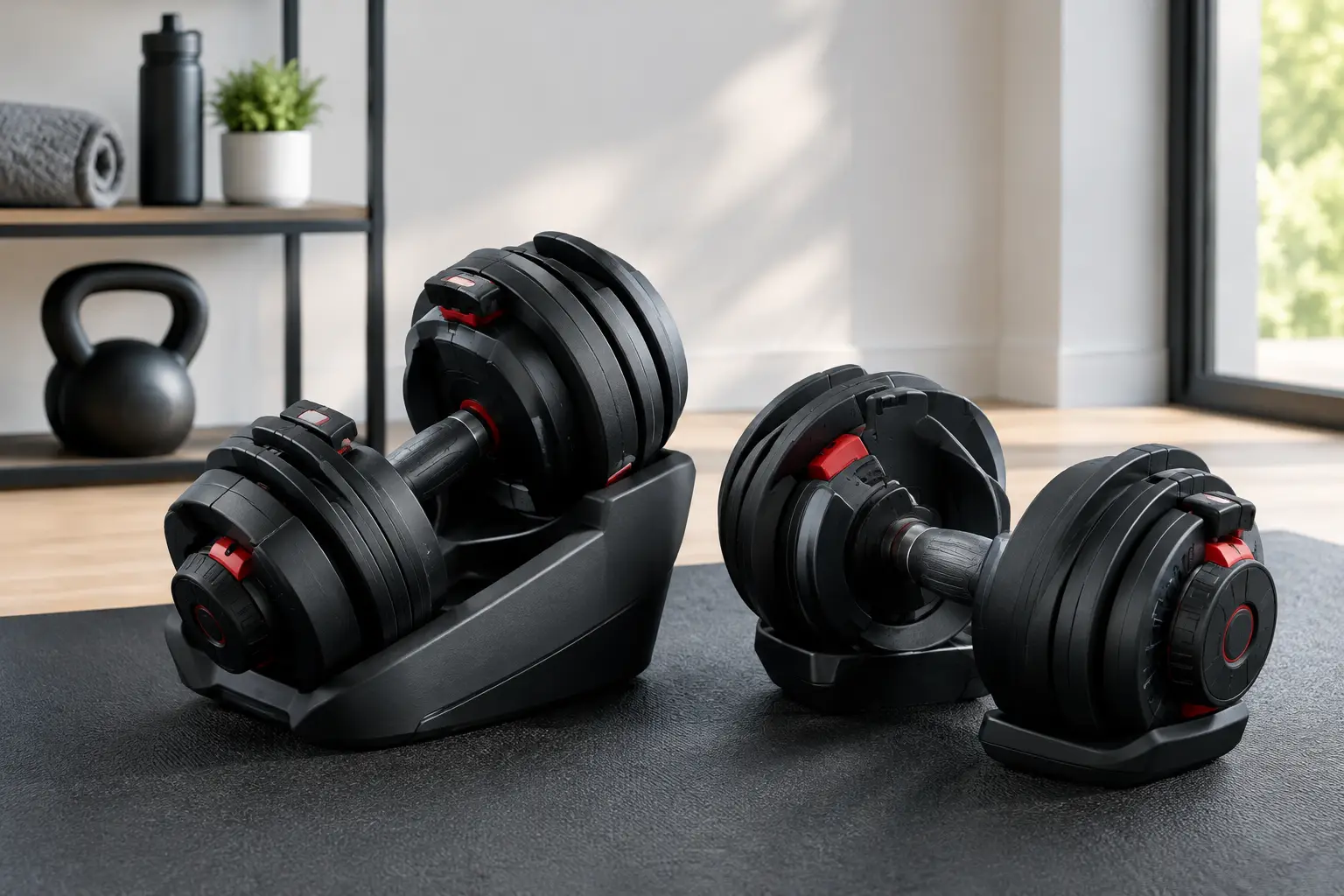
Selector dumbbells use a dial, pin, handle mechanism, or similar system to choose a weight quickly. They are especially convenient for supersets, interval workouts, and shared households where more than one person uses the equipment. Their main trade-off is complexity. Moving parts need careful handling, and some models should not be dropped or tossed after a hard set.
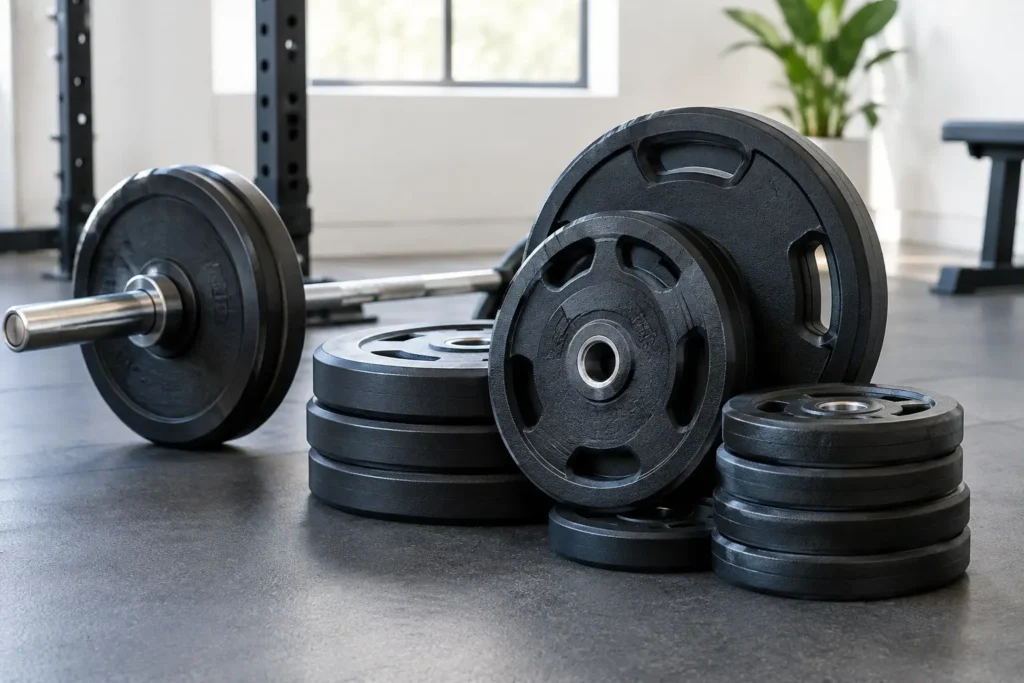
Plate-loaded dumbbells use removable plates secured with spin-lock collars or quick-release mechanisms. They usually cost less per pound and may feel more like traditional dumbbells. They can also accommodate heavier training in some designs. The downside is transition time. Changing plates between sets is slower, and loose plates and collars require dedicated storage.
For a fast-paced living-room workout, a selector system may justify a higher sale price. For a garage gym where you lift at a slower pace and want maximum weight for the dollar, plate-loaded options can be the smarter deal.
Look Beyond the Sale Price
A good listing gives you enough detail to judge the equipment, not just the markdown. Check the materials, handle shape, dimensions, warranty terms, and replacement-part availability. Adjustable dumbbells are more mechanical than a basic fixed weight, so support after the sale has real value.
Handle comfort deserves more attention than it gets. A grip that is too thick, too slick, or sharply textured can make presses and rows unpleasant. If possible, compare handle diameter and user feedback about comfort, especially if you have smaller hands or train without gloves.
Length is another practical concern. Some adjustable dumbbells remain long even when set to lighter weights because their empty plate sleeves stay in place. That can make curls, presses, and movements near your shoulders feel awkward. Compact selector models are often easier to use for these exercises, though they may have stricter handling requirements.
Factor in shipping, sales tax, and any accessories you will need. A floor mat, storage stand, or compact rack may not be mandatory, but each can make the setup safer and easier to keep organized. The best deal is the total cost of equipment that you will use consistently, not the lowest number on the product page.
When to Watch for Adjustable Dumbbell Deals
Major holiday promotions can produce meaningful discounts, particularly around New Year fitness campaigns, Memorial Day, Independence Day, Labor Day, Black Friday, and year-end clearance periods. Retailers may also lower prices when a newer model arrives or when they are clearing a specific finish, bundle, or weight range.
Still, waiting for a huge sale is not always the best move. Popular models can sell out during major events, and a small price drop on the exact set you need may be worth taking. If a product has the right capacity, solid warranty, and a price that fits your budget, avoid letting the possibility of a future sale delay months of training.
Set a realistic target price before you shop. Compare current prices across comparable capacities and note whether a stand, tray, or accessory bundle is included. That helps you recognize a legitimate discount instead of reacting to a large percentage-off label.
Avoid These Common Deal Traps
First, do not assume two sets with the same maximum weight offer the same value. One may provide more useful increments, a more comfortable grip, a longer warranty, or a sturdier cradle. Those differences affect daily use.
Second, be cautious with used selector dumbbells if you cannot test the adjustment mechanism. Cosmetic wear is usually manageable, but cracked housings, damaged locking parts, missing cradles, or inconsistent weight selection can turn a bargain into an expensive replacement. Used plate-loaded dumbbells are simpler to inspect, but confirm that collars thread properly and that all plates are included.
Third, skip bundles that add equipment you do not need. A set that includes resistance bands, a bench, or a rack may look compelling, but only count those extras as value if they fit your space and routine. HealthGearSpot's practical rule applies here: buy gear that solves a training need, not gear that merely fills a cart.
Build a Setup That Keeps the Weights Useful
Adjustable dumbbells work best when they are easy to reach and easy to put away. Keep them on a stable surface or purpose-built stand, with enough clearance to change settings safely. If you train on hard flooring, a protective mat can reduce noise and protect both the floor and the equipment.
You do not need a full gym around them. A bench expands your exercise options, but a clear patch of floor, a supportive mat, and a simple routine are enough to start building strength. Choose a set you can lift with confidence now, leave room for gradual progress, and let a real deal support your routine rather than dictate it.