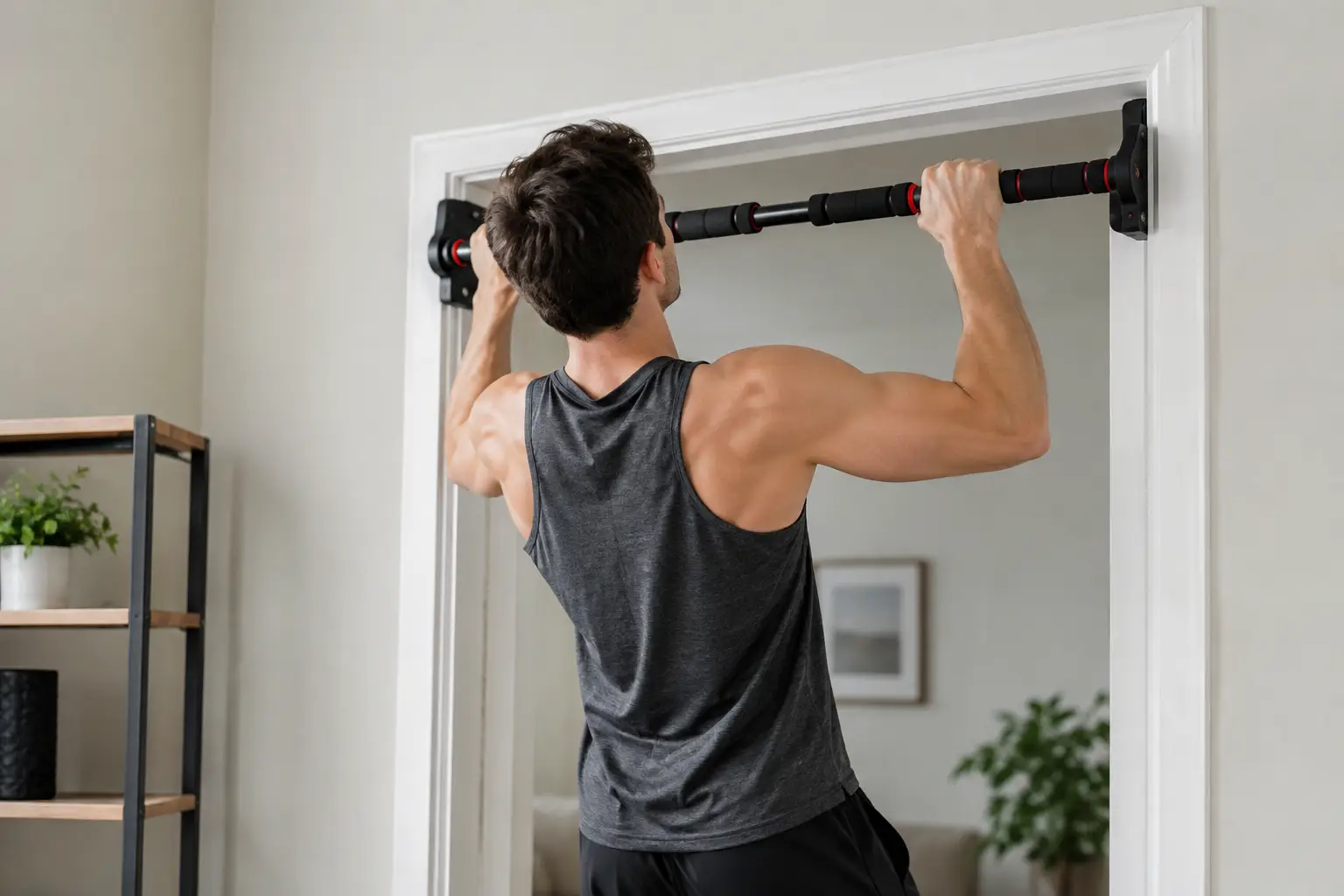
A doorway pull up bar is one of the few strength-training tools that can turn a spare doorway into a useful workout station without claiming a square foot of floor space. That makes it appealing for apartments, small home gyms, and anyone who wants to build pulling strength without committing to a rack or cable machine. The catch is that not every bar fits every frame, and a poor match can damage trim, feel unstable, or simply make you avoid using it.
The right choice starts with your doorway, not your workout plan. Measure carefully, understand how the bar stays in place, and buy for the exercises you will actually do each week.
Start With Your Doorway Measurements
Before comparing foam grips, weight capacities, or included accessories, measure the inside width of the doorway where the bar will sit. Most doorway bars fit a stated range, often around 24 to 36 inches, but you should never assume a standard opening will work. Measure between the inside edges of the frame at the exact height where you plan to install it.
Next, look closely at the trim. A leverage-style bar hooks over the top of the doorway trim and uses your body weight to create pressure against the opposite side of the frame. This style needs sturdy, projecting trim with enough depth for its support pads and hook. Flat, narrow, damaged, or decorative molding may not provide a safe contact point.
Also check the wall clearance above the frame. Some multi-grip models sit high and extend outward, which can be a problem in a tight hallway, near a ceiling, or beneath a light fixture. A bar may technically fit the doorway yet leave too little room for a comfortable pull-up.
Doorway Pull Up Bar Types and How They Differ
Most shoppers will choose between a leverage-mounted bar and a tension-mounted bar. They solve the same space problem, but they suit different doorframes and training needs.
Leverage-mounted bars
Leverage bars are the familiar over-the-door models with several handles. Their curved frame rests against both sides of the doorway and becomes more secure as you hang from it, provided it is installed on a compatible frame. They are usually quick to set up and remove, and many offer wide, narrow, neutral-grip, and angled hand positions.
This is the better option for most people who want regular pull-ups, chin-ups, hanging knee raises, or assisted reps with a resistance band. The trade-off is bulk. It may need to come down before closing the door, and the contact pads can leave marks or compress softer trim over time.
Tension-mounted bars
Tension bars extend across the doorway by twisting or adjusting the tube until it presses tightly against the sides. They are compact and can be convenient for light exercise, but installation quality matters more here. The bar must sit level, use the manufacturer’s required mounting hardware if provided, and remain within its stated weight limit.
For dynamic training, kipping movements, or frequent heavy use, a tension bar is generally the less confidence-inspiring choice. Even a properly installed model demands routine checks for slipping or loosening. If you want a bar for strict, controlled pull-ups and your frame supports it, a leverage model often offers more security and more grip options.
Treat Weight Capacity as a Practical Limit
A listed capacity is helpful, but it is not a promise that every doorway can handle that load. The rating applies when the bar is installed correctly on a compatible, sound frame. Your door trim, wall structure, installation method, and movement style all affect the real-world setup.
Choose a model with a capacity comfortably above your current body weight. If you weigh 190 pounds and expect to use a 25-pound weighted vest later, a 200-pound-rated bar leaves no useful margin. Controlled pull-ups are easier on the setup than jumping to the bar, swinging, or fast hanging leg raises, which can create extra force.
Be especially cautious with rental properties, older homes, repaired trim, and lightweight interior frames. If the frame moves when you press against it, has cracks, or appears loosely attached, do not treat it as a pull-up station. A wall-mounted bar or freestanding power tower may be a better investment for that space.
Choose Grips That Match Your Training
More handles are not automatically better, but multiple grip positions can make a doorway bar more useful over time. A standard straight grip works well for traditional pull-ups. An underhand grip shifts emphasis toward the biceps and can help beginners perform their first full repetitions. Neutral grips, where palms face each other, are often more comfortable for people with sensitive wrists, elbows, or shoulders.
Pay attention to handle width and the distance between the bar and the doorway. Very wide grips can feel awkward in narrow frames, while a shallow bar may cause your knees or feet to contact the wall behind you. Taller users often need to bend their knees throughout each rep, which is normal, but they still need enough clearance to hang without twisting.
Foam padding can improve comfort, particularly during longer hangs, but it should not be the deciding feature. Dense, securely attached grips tend to hold up better than thin foam that rotates or tears after a few months. For a simple bar you will use three times a week, a stable frame and comfortable neutral handles are usually worth more than an oversized collection of grip angles.
Plan for the Exercises You Can Do Safely
A doorway bar is not just for full pull-ups. In fact, it can stay useful while you build the strength to do your first rep. Resistance-band-assisted pull-ups, slow negatives, scapular pull-ups, and dead hangs all help develop grip strength and control.
Once you are comfortable with the setup, you can use it for chin-ups, neutral-grip pulls, hanging knee raises, and controlled leg raises. Some leverage bars can also rest on the floor for push-ups or sit-ups, although a dedicated push-up handle or exercise mat may be more convenient if those are major parts of your routine.
Avoid treating a doorway bar like a gymnastics rig. Kipping pull-ups, swinging, muscle-ups, and abrupt jumps increase stress on both the equipment and the frame. They are poor fits for most over-the-door setups, even when the advertised capacity looks generous. Strict reps may feel less flashy, but they are effective, easier to track, and friendlier to a home environment.
Installation Checks That Take Two Minutes
Read the manual before the first workout, including the fine print about compatible trim dimensions and prohibited movements. Then test the bar gradually. Pull down firmly with your hands, place partial body weight on it, and listen for shifting, creaking, or trim movement before hanging fully.
Recheck the contact points before every workout for the first few weeks, then periodically after that. Sweat, dust, repeated removal, and seasonal changes in wood can affect how a setup feels. If a bar slips, tilts, or leaves deep indentations, stop using it and reassess the fit rather than tightening or improvising beyond the manufacturer’s instructions.
If floor protection matters, place a workout mat below the doorway for comfort during mobility work and as a reminder to keep the area clear. It will not make a failing bar safe, but it does create a cleaner training zone and makes post-workout stretching easier.
When a Doorway Bar Is the Right Buy
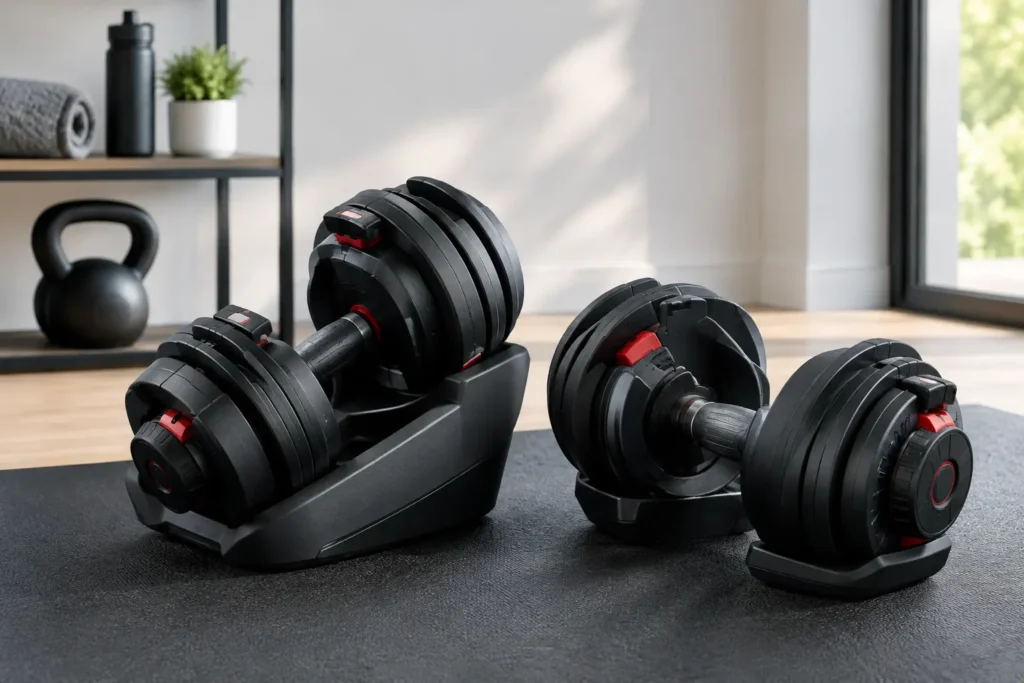
A doorway pull up bar is a strong value when you need upper-body training in a small space, can use a compatible frame, and prefer simple bodyweight workouts. It pairs especially well with a set of resistance bands, a mat, and adjustable dumbbells, giving you a capable full-body routine without filling a room with equipment.
It is less ideal if you want to train with heavy added weight, perform explosive calisthenics, or avoid removing equipment from the doorway. In those cases, a wall-mounted unit, squat rack with a pull-up attachment, or compact power tower may cost more and take more room, but it better matches the job.
Choose the bar that fits your frame as carefully as it fits your budget. A stable setup you use for a few controlled sets several times a week can do far more for your home routine than a larger piece of gear that never quite fits your space.