Most beginners: pick a weight you can control for 8–15 clean reps
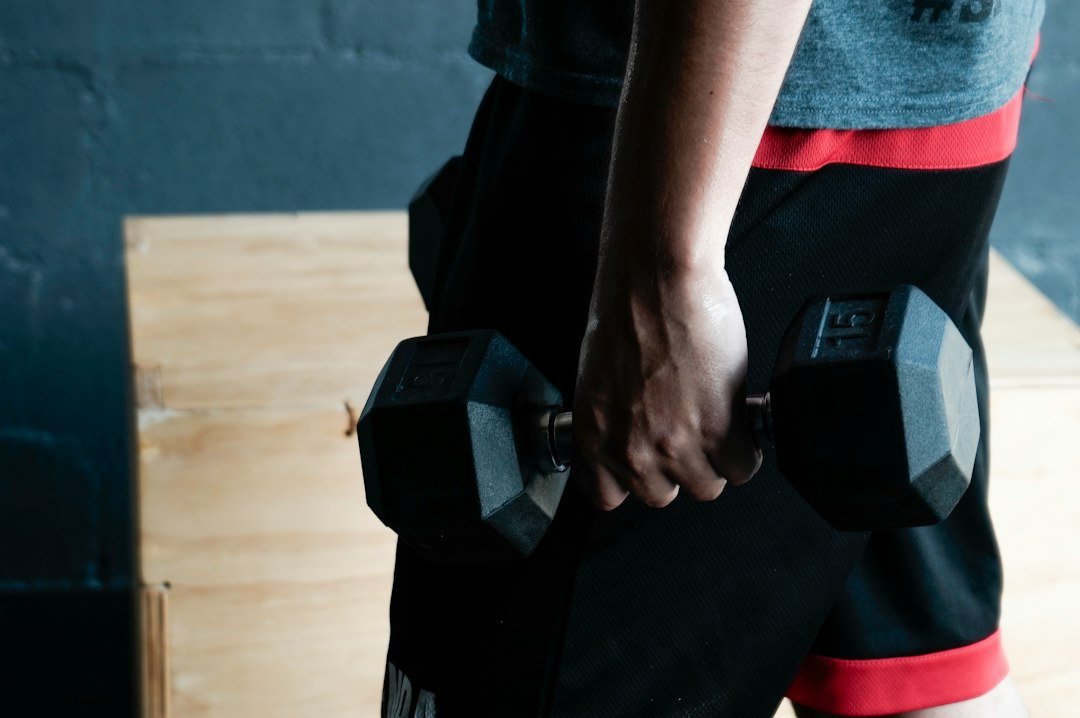
The short answer: choose dumbbell weight for beginners so you can complete 8–15 strict repetitions with good form, where the last 2–3 reps feel challenging but doable. If you can do more than 15 easily, the weight is too light; if you fail before 6 with poor form, it’s too heavy.
Why that rep range matters and how it maps to goals
For most people starting strength training, the 8–15 rep range balances strength and muscle growth while allowing focus on technique. Lower reps (4–6) require heavier loads and more coaching to keep form safe; higher reps (16+) become more about muscular endurance. Begin with a moderate range so you learn movement patterns without risking injury.
Suggested starting weights by common beginner exercises
These are rough starting points for adults with no recent resistance training; adjust down for smaller frames, older adults, or injury recovery, and up for athletic backgrounds. Start each exercise with a warm-up set at ~50% of the working weight.
- Biceps curl: 5–15 lb per hand
- Lateral raise: 3–8 lb per hand (focus on control)
- Overhead press: 8–20 lb per hand
- Chest press (floor or bench): 15–40 lb per hand <liBent-over row: 10–30 lb per hand
- Goblet squat: 15–40 lb (single dumbbell held at chest)
- Romanian deadlift: 20–50 lb per hand depending on posterior chain strength
- Farmer carry: 20–60+ lb per hand depending on grip and conditioning

How to test a weight safely (quick protocol)
- Warm up with bodyweight movement and a light set.
- Choose a candidate weight and perform 8 reps with full range and steady tempo.
- Assess form: do hips, back, shoulders or knees compensate? If yes, lower weight or fix technique.
- If 8 reps felt easy, try 2–5 lb heavier; if form breaks before 6 reps, drop 5–10 lb.
- Record the working weight and target rep range for the next session.
When adjustable dumbbells make sense
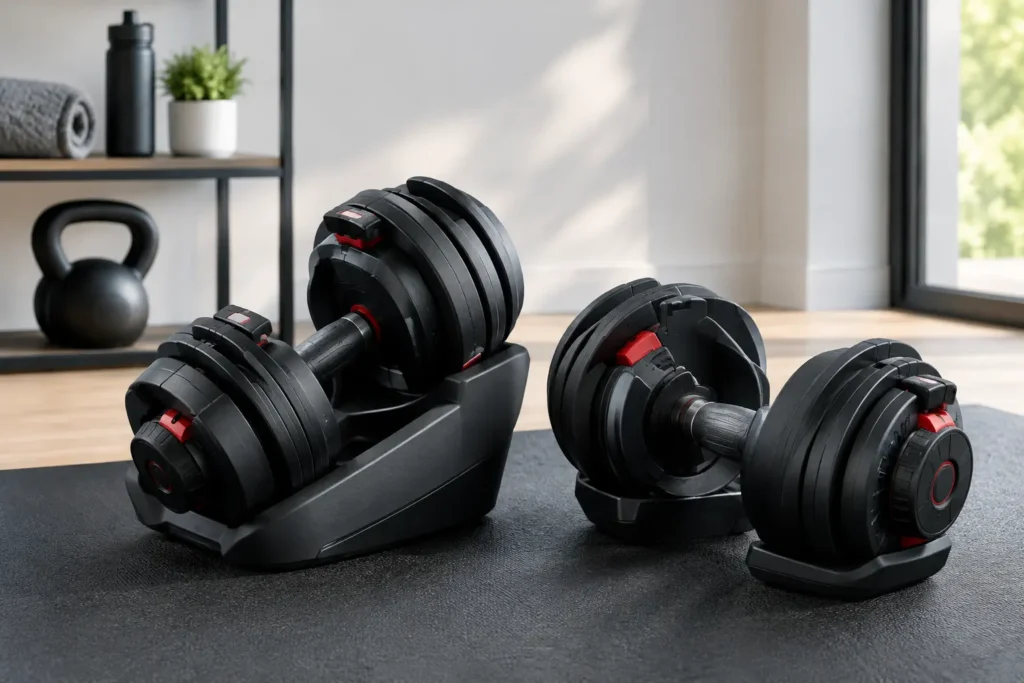
If you’re buying for a small home gym or expect to progress quickly, adjustable dumbbells are usually the best single purchase. They let you increment weight in small steps and save space. Buy fixed-weight pairs if you only need a narrow range (e.g., just light weights for rehab or heavy pairs for advanced lifts).
Recommended product option when you want a compact, progressive set:
Progression rules that keep you moving forward
Follow simple, consistent progression rather than arbitrarily increasing weight:
- When you can complete the top of your rep range (e.g., 15 reps) for two workouts in a row, increase weight by the smallest available step.
- Use microloading (1–3 lb increments) for upper-body lifts; legs can jump 5–10 lb.
- Prioritize form over heavier numbers—losing technique reduces transfer and raises injury risk.
Exceptions and special situations
Older adults, post-injury clients, or those doing rehab should start with lighter weights and possibly higher repetitions under supervision. Athletes with prior training may begin at heavier loads and lower rep ranges. If your goal is pure endurance (e.g., conditioning for sports), lighter weights and higher reps are acceptable.
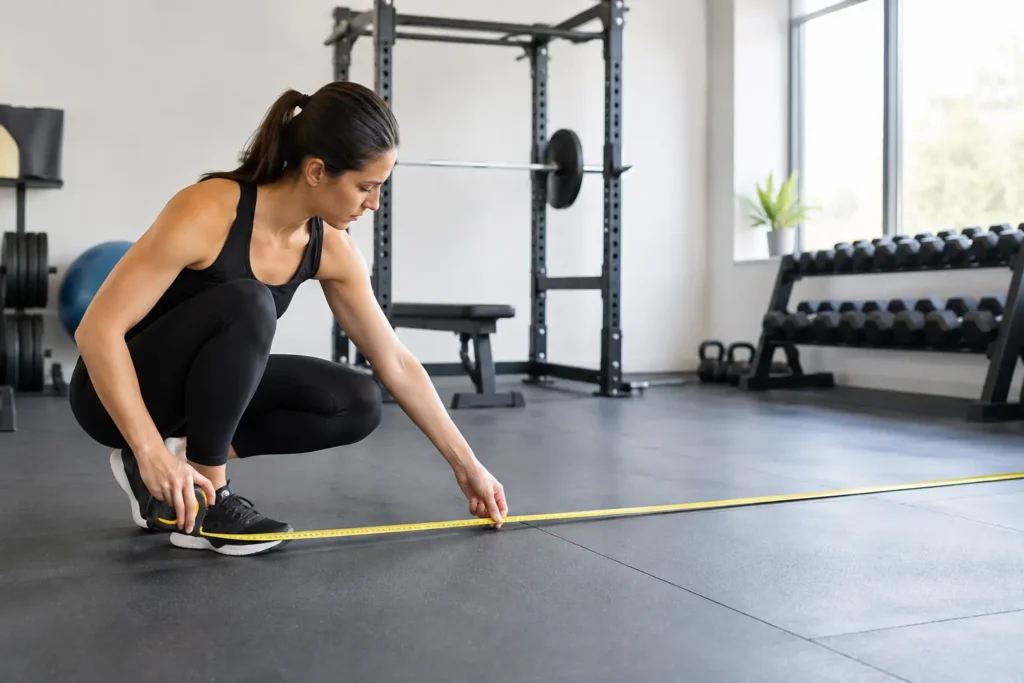
Practical gym setup and pacing for beginners
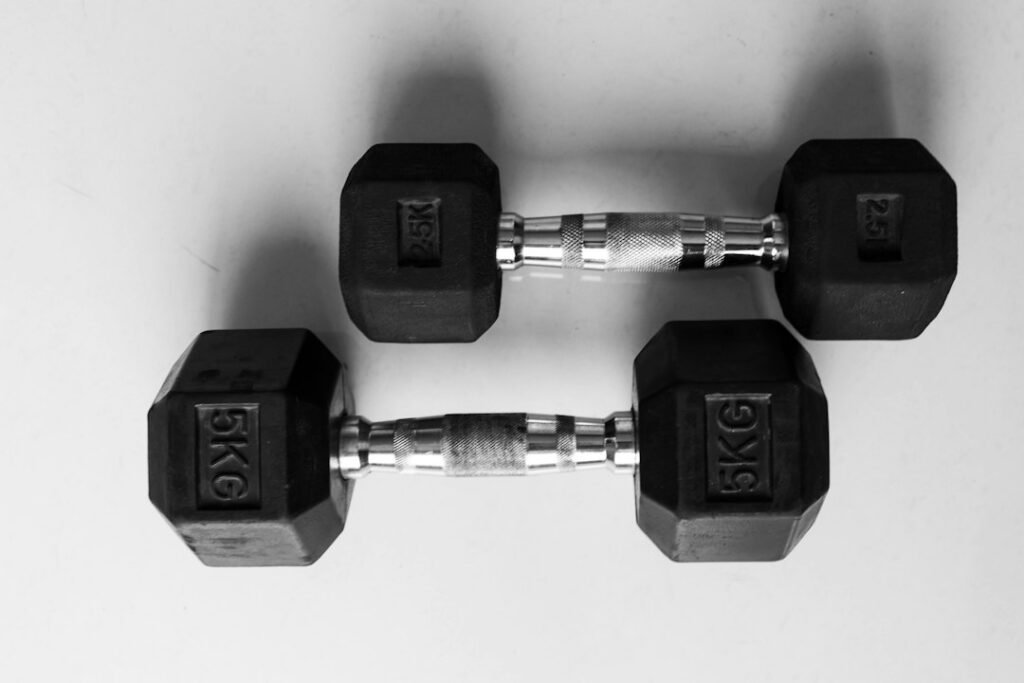
Buy or choose equipment that lets you progress in sensible steps. If you have space and budget, a pair of adjustable dumbbells will cover most needs. If choosing fixed sets, aim for multiple pairs in roughly 5–10 lb increments for lower body and 2.5–5 lb increments for upper body.
Plan two to three full-body sessions per week, using compound moves (press, row, squat, hinge) as the training foundation and smaller isolation exercises for accessory work.
How to avoid common mistakes
- Don’t chase numbers—focus on controlled repetitions and full range of motion.
- Avoid very large weight jumps between sessions; they stall progress and increase injury risk.
- Don't skip warm-ups or practice unloaded movement patterns before adding weight.
- Record weights and reps so progression is objective, not subjective.
- Test candidate weight with 8 controlled reps and a warm-up set.
- Choose adjustable dumbbells if you need multiple incremental weights.
- Increase weight only after hitting your rep target for two sessions.
- Keep at least one lighter pair for technique-focused warm-ups.
- Record your working weights and rep ranges each session.
Start with weights that let you complete 8–15 strict reps with the last reps challenging; progress in small increments and favor adjustable sets for space and flexibility. Prioritize technique and consistent tracking to keep improving safely.
How quickly should beginners increase dumbbell weight?
Increase when you can hit the top of your rep range for two consecutive workouts—typically every 2–6 weeks, depending on exercise and recovery.
Can men and women use the same starting weights?
Starting weights depend more on individual strength and experience than sex; use the rep-based test rather than gender rules.
Are lighter dumbbells bad for muscle growth?
No—progressive overload matters most. You can build muscle with lighter weights if you increase reps, reduce rest, or add load over time.
Is it OK to mix fixed and adjustable dumbbells?
Yes. Use fixed pairs for frequently used weights and adjustable dumbbells to bridge gaps and add progressive increments.
How do I choose weight for compound vs isolation moves?
Compound lifts (press, row, squat) generally use heavier weights than isolation (lateral raise, curl). Use the same rep-based test for both, but expect smaller jumps for isolation exercises.