A barbell can be one of the most useful pieces of home gym equipment you own, but it is the weight plates that determine what you can actually do with it. The right set lets a beginner make steady progress, gives an experienced lifter room to train hard, and fits the space without turning a spare room or garage into a cluttered obstacle course.
Buying plates sounds simple until you start comparing iron, bumper, rubber-coated, urethane, standard holes, Olympic holes, pound markings, plate diameters, and price differences. You do not need every style. You need the type that matches your barbell, floor, training style, and realistic strength goals.
Start With Your Barbell and Your Training
Before comparing materials, check your barbell sleeve diameter. Most home gym barbells use 2-inch Olympic sleeves and require Olympic weight plates with a 2-inch center hole. Standard bars often use 1-inch plates. These systems are not interchangeable, so this is the first detail to confirm.
Then consider how you plan to train. If your workouts center on squats, deadlifts, presses, rows, and controlled strength work, iron or rubber-coated plates can be a cost-effective choice. If you expect to perform Olympic lifts, power cleans, or any movement where loaded plates may contact the floor from height, bumper plates are the safer fit.
Your available space matters just as much. A compact apartment setup may benefit from a smaller starter set and adjustable loading options. A garage gym with a rack, lifting platform, and dedicated storage can justify a larger plate collection built for long-term progression.
The Main Types of Weight Plates
Cast Iron Plates
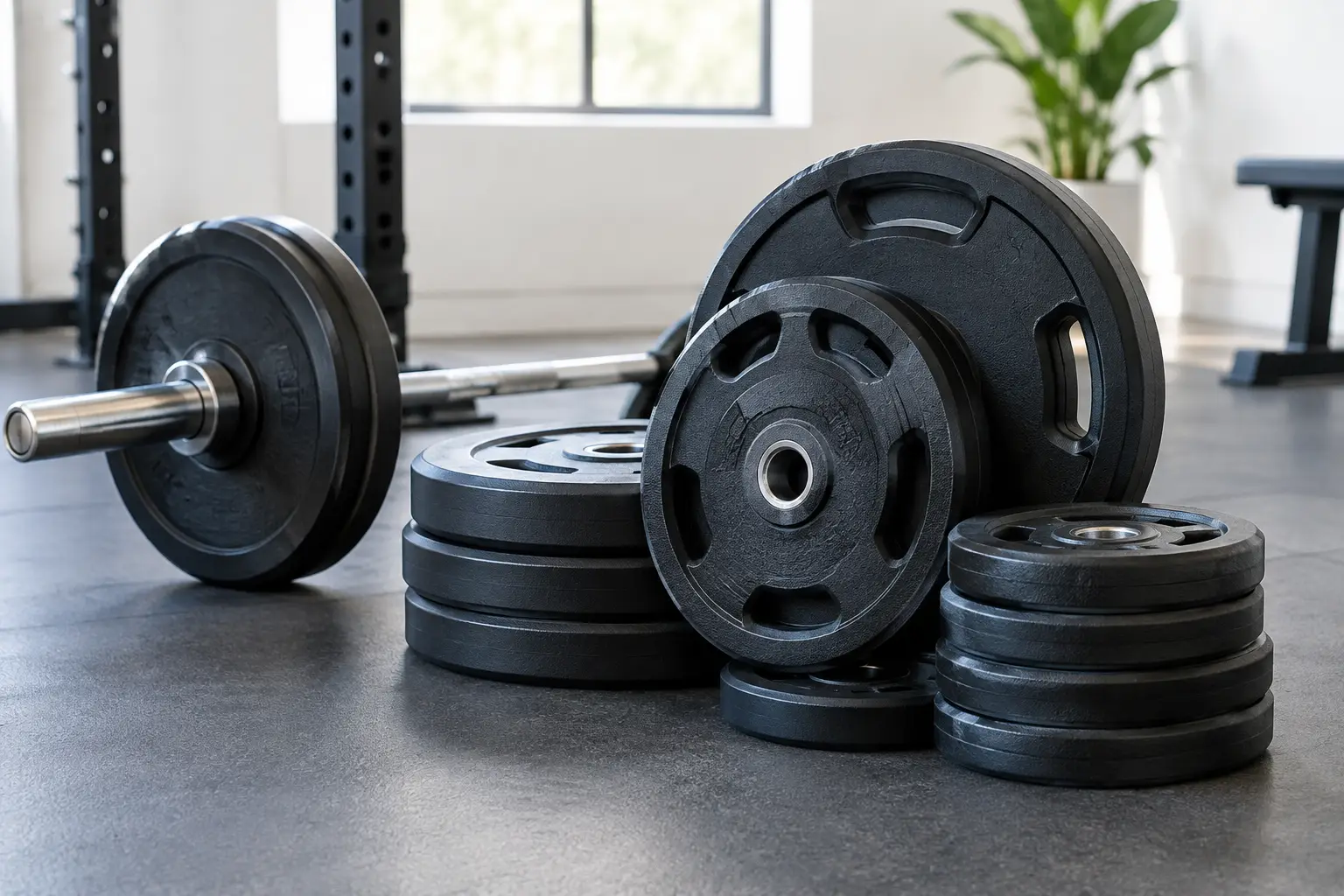
Cast iron plates are the classic option. They are usually the most affordable way to add significant loading capacity to a home gym, and their slim profile means more weight can fit on a barbell sleeve. This is especially useful for heavy deadlifts, where thick plates can run out of sleeve space before you reach your target load.
The trade-off is noise and floor protection. Bare iron can chip, rust in humid garages, and damage flooring if it is dropped. Iron plates work best when lifts are controlled and your setup includes sturdy rubber flooring. Look for plates with clear markings and grip handles if you will frequently carry them from storage to the bar.
Rubber-Coated Plates
Rubber-coated plates offer a practical middle ground. They retain much of iron's compact shape while adding a protective outer layer that reduces noise, protects the plate finish, and is easier on nearby equipment. They are a strong choice for general home strength training, particularly if you share walls, train early in the morning, or simply want your gym to feel less industrial.
They are not true drop plates, however. A rubber coating does not make them suitable for repeated drops from overhead or knee height. Think of them as iron plates with better protection, not as an alternative to bumpers for Olympic lifting.
Bumper Plates
Bumper plates are made from dense rubber and have the same outside diameter across most full-size weights. That uniform diameter allows the plates, rather than the barbell sleeves, to absorb impact when a loaded bar reaches the floor. They are the go-to choice for Olympic lifting, CrossFit-style training, and home lifters who want more forgiveness during deadlifts.
Bumpers cost more and take up more room on the bar. Budget bumper sets can also have a noticeable rubber smell when new, though airing them out in a ventilated garage usually helps. If you buy bumpers, pay attention to the plate's width, stated tolerance, warranty, and whether the center insert is designed to hold up to frequent use.
Urethane and Competition Plates
Urethane plates are premium bumper-style plates known for durability, lower odor, and a cleaner finish. Competition plates are highly calibrated and often color-coded, with tighter weight accuracy standards. Both are excellent, but they are not necessary for most home gyms.
They make sense for serious Olympic lifters, competitive athletes, or buyers who place a high value on long-term durability and consistent feel. For general lifting, a well-made rubber bumper set or rubber-coated iron set usually delivers better value.
How Much Weight Do You Need?
A plate set should support your current workouts while leaving room to progress. Buying only enough weight for day one often leads to a second purchase sooner than expected, sometimes with mismatched plates or higher shipping costs.
For many beginners, 160 to 230 pounds of plates, plus the barbell, provides a useful starting range. That can cover learning barbell movements, building strength through moderate reps, and loading lower-body exercises beyond what dumbbells may allow. Stronger beginners, couples sharing a gym, and anyone planning to prioritize squats and deadlifts may be happier starting closer to 250 to 350 pounds.
Experienced lifters should work backward from the heaviest movements they expect to perform. Add the barbell's weight, then account for a realistic training target rather than a personal best from years ago. A 45-pound bar with four 45-pound plates reaches 225 pounds. Six 45s reaches 315 pounds. Those reference points make it easier to see why plate packages with only two 45-pound plates can feel limiting.
Smaller change plates matter, too. A pair of 2.5-pound plates allows 5-pound jumps, which is often the most practical increase for presses, rows, and many accessory lifts. Pairs of 5s, 10s, and 25s make loading more flexible. If you are focused on gradual barbell progression, fractional plates can help you add even smaller increases when 5 pounds feels like too large a jump.
Plate Diameter, Thickness, and Accuracy
Full-size Olympic bumper plates are typically about 17.7 inches in diameter. That keeps the barbell at a standard pulling height for deadlifts. Smaller iron plates, especially 10s and 25s, may sit lower to the floor. Using them alone for deadlifts changes the starting position and can make the lift feel awkward.
Thickness is easy to overlook. Thick bumper plates may limit the total amount you can load, especially on shorter barbells. If heavy deadlifts are a priority, compare plate width and your bar's loadable sleeve length before committing to a set.
Most home gym plates have a stated weight tolerance, meaning the actual plate can be slightly heavier or lighter than its label. That is normal. Tighter tolerances generally cost more. Unless you compete in a setting where exact calibration matters, consistent pairs and durable construction are usually more valuable than chasing laboratory-level precision.
Do Not Forget Flooring and Storage
Plates are only part of the purchase. A loaded bar can create noise, dents, and floor damage quickly, especially on concrete or hardwood. Dense rubber flooring, lifting tiles, or a simple platform can protect both your home and your equipment. If you use bumper plates for dynamic lifts, this is not optional protection.
Storage also makes a home gym safer and easier to use. A vertical plate tree has a small footprint and keeps plates off the floor. Horizontal storage can make loading faster but usually takes more wall space. For a compact room, choose plates with grip openings and a storage solution that lets you move them without carrying them across the training area.
Avoid leaving plates stacked directly on carpet or bare concrete for long periods. Moisture can encourage rust on iron, while constant pressure can leave marks on softer floors. Wiping down metal hubs and keeping the area dry goes a long way toward preserving your investment.
A Smarter Way to Build Your Set
If budget is tight, start with the plates that create the most useful loading options: pairs of 45s, 25s, 10s, 5s, and 2.5s. Add more 45s as your lower-body strength grows. This approach is often more practical than buying novelty plate sizes or paying for a huge matched set before you know how consistently you will train.
There is also no rule requiring every plate to match. Many effective home gyms mix bumper 45s for deadlift height and floor protection with iron or rubber-coated change plates for compact loading. The key is balancing both sides of the bar equally and using plates appropriate for how you lift.
Choose weight plates that make it easier to train consistently, not plates that only look impressive on a rack. A well-sized set, protected floor, and simple storage plan can support years of stronger, more convenient workouts at home.