A lifting belt can be one of the smallest pieces of gear in a home gym and one of the most misunderstood. It is not a shortcut to better form or a replacement for smart loading. Used well, lifting belts give your midsection something firm to brace against during demanding lifts, helping you create more trunk stiffness when the weight gets heavy.
For many home lifters, the question is not whether a belt is "good" or "bad." It is whether it matches the way you train. Someone doing light dumbbell circuits in a spare bedroom has different needs than someone pulling heavy deadlifts from a barbell setup in the garage. Choosing with confidence starts with knowing what a belt does, when it earns its place in your setup, and which design will feel right every time you train.
What Lifting Belts Actually Do
A belt supports bracing, not your back by itself. Before a heavy squat, deadlift, overhead press, or strongman-style lift, you take a deep breath and tighten the muscles around your torso. This creates pressure and stiffness through your midsection. A properly fitted belt gives your abs and obliques a firm surface to push into, which can make that brace more effective.
That distinction matters. Wearing a belt without learning to brace will not fix a rounded deadlift, a squat that shifts forward, or a load that is simply too heavy for your current strength. Think of it as performance equipment for high-effort sets, not protective armor you need for every exercise.
A belt is most useful when you are training with a barbell, working close to challenging weights, or doing low-rep strength work that makes a strong brace harder to maintain. It can also be helpful for experienced lifters who need consistent setup cues. If your home workouts focus on walking, yoga, bodyweight exercise, resistance bands, or lighter adjustable dumbbell sessions, it is probably not a priority purchase.
Decide Whether You Need a Belt Yet
Beginners can use a belt, but they do not need to rush into one. Early training is a good time to learn controlled breathing, solid body positioning, and how to create tension without external support. Those skills still matter after you buy a belt.
Consider adding one when your training regularly includes barbell squats, deadlifts, front squats, overhead presses, cleans, or heavy carries. It may also make sense if you train in a power rack at home and want to progress systematically with heavier loads. You do not need to wear it for warm-ups, mobility work, machine exercises, or every moderate set.
If you have current back pain, a history of injury, or uncertainty about returning to loaded lifting, a belt is not the first answer. Get guidance from a qualified healthcare or rehabilitation professional, then build your training load gradually. Equipment should support a sensible plan, not cover up a problem.
Choose the Right Belt Style
The best style depends on your lifts, body shape, comfort preferences, and how much adjustment you want between exercises. A simple belt that you will wear consistently is usually a better buy than a stiff, expensive model that stays on a storage hook.
Leather belts for heavy barbell work
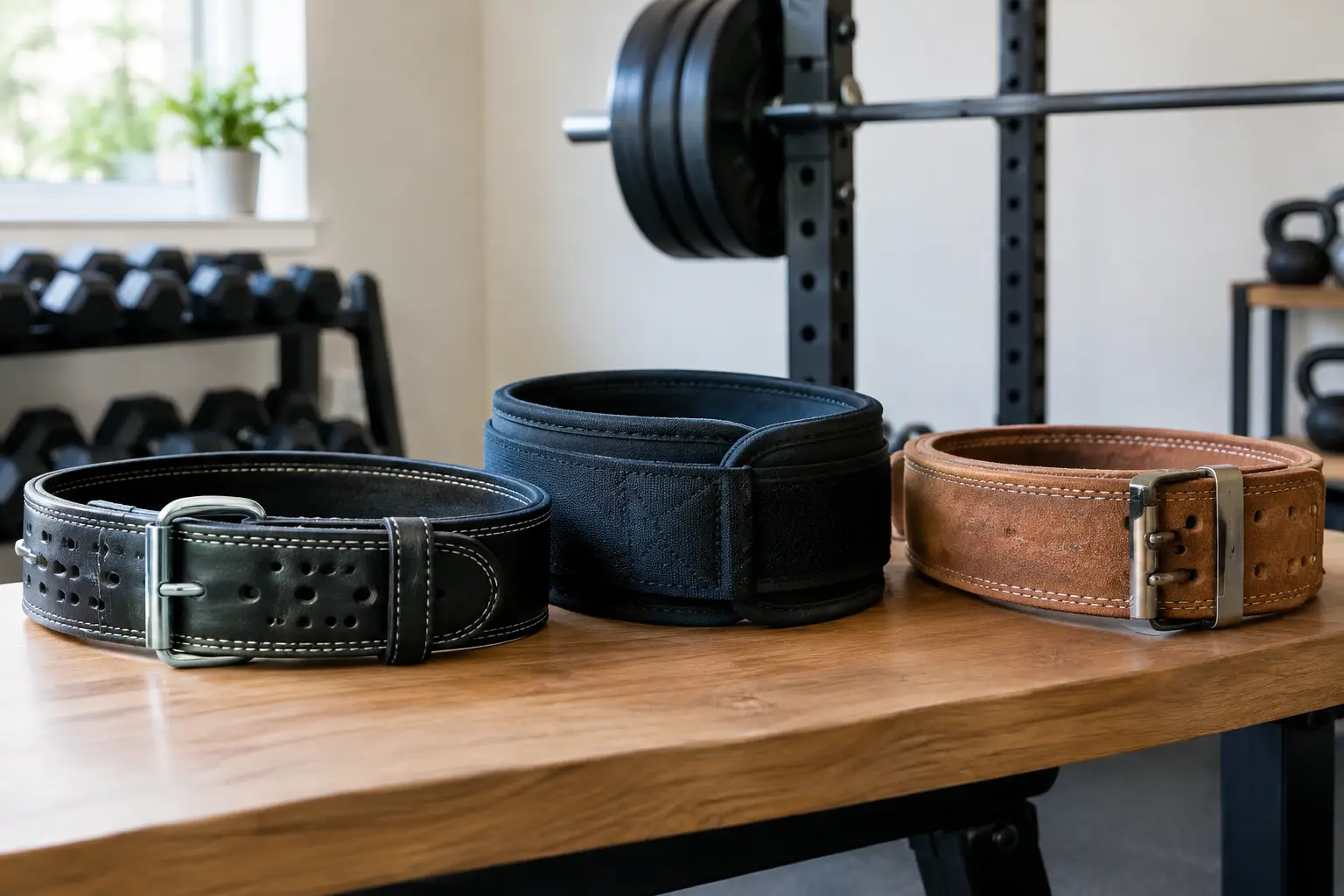
Leather belts are firm, durable, and common in powerlifting-focused training. Many are the same width all the way around, often 4 inches, which provides a broad and stable surface for bracing during squats and deadlifts. They can take time to break in, especially thicker models, but quality leather holds its shape for years.
A uniform-width leather belt is a strong choice if your home gym training centers on heavy barbell lifts. The trade-off is comfort. Some lifters find a wide, rigid belt digs into their ribs or hips, particularly in a deep squat or when they have a shorter torso.
Nylon belts for versatile training
Nylon belts tend to be lighter, more flexible, and easier to adjust than leather. Many use a hook-and-loop closure, making them convenient when you switch quickly between exercises or share equipment with another household member. They work well for functional training, Olympic-lifting variations, moderate-to-heavy compound movements, and general strength sessions.
They usually do not feel as solid as a thick leather belt under maximum loads. Still, that flexibility can be an advantage for home exercisers who want one belt for squats, deadlifts, kettlebell work, and conditioning sessions rather than a specialized powerlifting tool.
Tapered belts for comfort and movement
Tapered belts are wider across the back and narrower at the front. This design can feel less restrictive for people who want support without a thick front section pressing into the stomach. They are often comfortable for recreational lifting, though the narrower front provides less surface to brace against than an even-width belt.
If your goal is serious strength progression, a uniform-width belt is generally the more dependable option. If comfort has kept you from using belts in the past, a tapered model can be a reasonable middle ground.
Pick a Closure You Can Use Reliably
The closure affects both convenience and how tightly you can secure the belt. Traditional single-prong and double-prong buckles are simple, durable options often found on leather belts. A single-prong buckle is usually easier to fasten while still providing plenty of security for most lifters. Double-prong models can feel more secure, but they are slower to adjust and can be frustrating when you are tired after a hard set.
Lever belts use a locking lever for a fast, very consistent fit. They are popular with powerlifters because you can set the tightness once and close the belt quickly. Their limitation is adjustability. If your waist measurement changes during a cut, bulk, or even a large meal, moving the lever position takes more work than changing a buckle hole.
Hook-and-loop closures are the fastest to adjust. They are practical for training that includes varied movements and changing tightness needs. Look for strong stitching and a wide closure panel, since low-quality hook-and-loop systems can lose grip over time.
Get the Fit Right Before You Buy
Do not use your pants size to select a belt. Measure around your midsection where you expect to wear it, usually around the navel or slightly above it. Follow the brand's sizing chart, and choose a size that puts you near the middle of its adjustment range rather than at the tightest or loosest setting.
Placement is personal. Many lifters wear a belt around the navel for deadlifts, then move it slightly higher or lower for squats depending on their torso length and comfort. It should feel snug enough that you can brace hard into it, but not so tight that you cannot take a full breath. You should be able to create pressure against the belt, not merely cinch it down.
Test the fit in the positions you actually use. Hinge forward as if setting up for a deadlift, squat to depth, and take several deliberate breaths. If the edge jams into your ribs or pinches at the hips, try a different placement, width, or belt style before assuming belts are not for you.
Width and Thickness Matter More Than Marketing
For most adults training at home, a 4-inch belt is the standard starting point for heavy barbell strength work. It offers a stable bracing surface without becoming overly specialized. Lifters with shorter torsos may prefer a narrower 3-inch belt or a tapered shape because it is less likely to overlap the ribs and pelvis.
Thickness is commonly measured in millimeters. Thinner leather belts, around 6.5 to 10 mm, are easier to break in and often feel more comfortable for general strength training. Thicker 13 mm belts are extremely rigid and built for serious powerlifting use, but they are not automatically better. For a home lifter building strength through regular sessions, a 10 mm leather belt or well-made nylon belt is often the practical sweet spot.
Avoid paying extra for decorative details that do not improve fit, construction, or usability. Reinforced stitching, durable edges, a dependable closure, and an honest sizing chart matter more than logos or flashy colors.
Make a Belt Part of Good Training
Put your belt on for your heaviest working sets, not the moment you enter the gym. Continue practicing beltless warm-up sets so you keep developing bracing skill. When it is time for a challenging set, set the belt in place, breathe deeply into your belly and sides, tighten your trunk, then perform the rep with the same controlled technique you use without it.
Keep expectations realistic. A belt may help you feel more secure and produce a stronger brace, but it does not add strength overnight. Progress still comes from manageable weight increases, enough recovery, sound programming, and equipment that fits your space and training style.
The right belt should fade into the background once your set begins. Choose one that fits your body, works with the lifts you actually perform, and supports the home training routine you can stick with week after week.