A good exercise bike can turn the corner of a spare bedroom, basement, or living room into a reliable cardio spot. The wrong one can become an expensive clothes rack within a few weeks. The difference usually is not about buying the most advanced model. It is about choosing a bike that feels comfortable, fits your available space, and makes sense for the way you actually plan to work out.
For most home exercisers, an exercise bike is a practical starting point because it delivers low-impact cardio without requiring much floor space. But there is a big gap between a basic upright bike for 20-minute rides and a heavy indoor cycling bike built for hard intervals. Learn what matters before you buy, and you can avoid paying for features you will not use.
Start With the Type of Exercise Bike
The first decision is simple: What kind of ride do you want? Bike categories overlap, but each one serves a different home workout style.
Upright bikes for everyday cardio
An upright bike has a traditional seated position, with pedals below your body and handlebars in front. It is often the best fit for beginners, casual riders, and anyone who wants simple, steady cardio in a compact footprint.
Many upright bikes include preset programs, a basic display, and adjustable resistance. They are usually easier to step onto than indoor cycling models and can be a smart choice for apartments or multipurpose rooms. The trade-off is that they may feel less stable during standing efforts and may not satisfy riders who want a studio cycling experience.
Recumbent bikes for added support
A recumbent bike places you in a reclined position with a larger seat, backrest, and pedals out in front. This design can be more comfortable for people who prefer extra back support, have balance concerns, or simply dislike a narrow bike saddle.
Recumbent models are generally larger than upright bikes, so measure carefully. They also tend to be better for relaxed, longer rides than high-intensity training. If comfort is the reason you will use the bike consistently, that is a worthwhile trade-off.
Indoor cycling bikes for harder training
Indoor cycling bikes are built around a more forward-leaning riding position and a heavier, more performance-focused feel. They are a strong option for people who enjoy spin-style classes, interval sessions, hill climbs, and out-of-the-saddle riding.
Look for a sturdy frame, adjustable seat and handlebars, and enough resistance range to keep workouts challenging over time. These bikes often take up more room and can be heavier to move, but that added weight usually improves stability. Some use clip-in compatible pedals, while others offer toe cages that work with regular athletic shoes.
Folding bikes for limited rooms
A folding exercise bike can be useful when your workout area has to disappear after each session. It is not designed for all-out sprinting, but it can provide dependable low-impact movement in a small apartment, office, or shared living space.
Pay close attention to the listed user weight capacity and the bike's folded dimensions. A compact frame is useful only if it is still stable and comfortable enough for you to ride several times a week.
Choose Resistance That Matches Your Routine
Resistance affects how the bike feels, how quiet it is, and how much maintenance it may need. It also changes the type of workout you can do.
Friction resistance uses a pad that presses against the flywheel. It can create a challenging ride and is common on some value-focused cycling bikes, but it may be noisier and require occasional pad replacement. Magnetic resistance is often the better fit for home use because it is quieter, smoother, and typically lower maintenance.
If you live above someone else, work out early in the morning, or plan to ride while others watch TV nearby, quiet magnetic resistance deserves priority. If your main goal is demanding cycling workouts, check that the resistance increases enough for hard climbs, not just light pedaling.
Do not get too focused on the number of resistance levels. A bike with 100 levels is not automatically better than one with 16. What matters is whether the changes feel useful, the top end is challenging enough, and the controls are easy to adjust during a ride.
Fit and Comfort Matter More Than a Big Screen
A bike can have a large display, built-in workouts, and app compatibility, but none of that fixes a poor fit. Before comparing tech features, check the adjustment range for the seat and handlebars.
Your knee should maintain a slight bend at the bottom of each pedal stroke. A seat that is too low can make pedaling inefficient and uncomfortable, while a seat that is too high can force you to reach and strain. If multiple people will use the bike, choose a model with quick, clear adjustment points rather than one that takes several tools and several minutes to change.
Saddle comfort is personal. Wide padded seats can feel better for easy upright or recumbent riding, while indoor cycling saddles are often narrower to support a more active position. If you are new to cycling, give yourself time to adapt, but do not assume persistent discomfort is something you have to accept. A compatible seat cover or replacement saddle may make a good bike work much better for your body.
Also look at the pedal setup. Adjustable straps help keep regular sneakers secure. If you want cycling shoes later, dual-sided or clip-in compatible pedals can give you room to grow without forcing that purchase on day one.
Measure Your Space Before Comparing Features
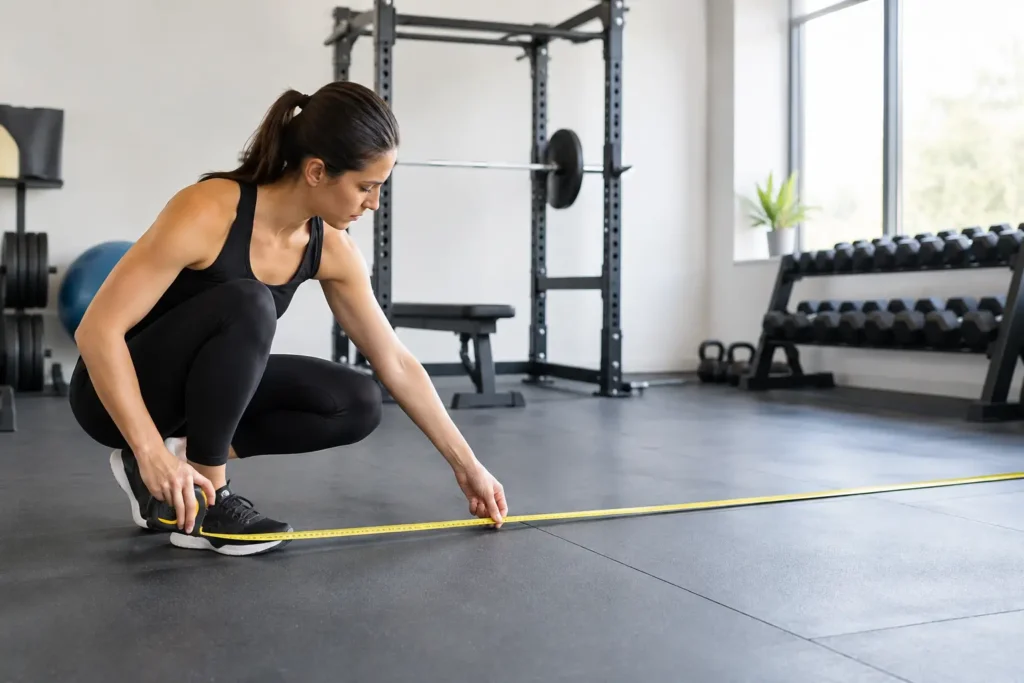
A home exercise bike needs more than its listed footprint. You need enough clearance to mount it safely, adjust the seat, and pedal without hitting furniture or walls.
Start by measuring the floor area where the bike will live. Then compare it with the assembled dimensions, not the shipping box dimensions. Indoor cycling bikes need room for the handlebars and your body position when you lean forward. Recumbent bikes may need extra length behind the seat. If you plan to roll the bike away after use, make sure the route to storage is clear too.
A protective exercise mat is a practical addition, especially on carpet, hardwood, or vinyl flooring. It helps reduce vibration, catches sweat, and protects the surface below. For upstairs rooms, a mat can also help control some noise, although it will not completely eliminate vibration from intense rides.
Check the bike's product weight as well as its user weight capacity. A heavier bike is often more stable, but it may be difficult to carry upstairs or relocate. Transport wheels help on flat floors, but they do not make a 120-pound bike easy to move over stairs.
Decide Which Features You Will Actually Use
Modern bikes can include workout subscriptions, touchscreen displays, Bluetooth, heart rate tracking, speakers, fans, and scenic ride programs. These can add motivation, but they are not essential for effective cardio.
A basic console that shows time, distance, speed, cadence, and resistance may be enough if you prefer your own music, videos, or training plan. A tablet holder can be more useful than a built-in screen because it lets you use the device you already own.
Connected fitness features make the most sense if live or on-demand classes are a proven part of your routine. Before paying more for a proprietary screen, consider whether there is a required monthly membership, whether the bike works well without it, and who will use the subscription. A lower-priced bike plus a separate tablet can be the better value for many households.
Heart rate monitoring can help you pace steady rides and interval sessions, but it is not a must-have for every buyer. If it matters to you, confirm whether the bike connects to a chest strap or smartwatch, since handlebar pulse sensors are convenient but not always precise during movement.
Set a Budget Around Long-Term Value
The least expensive bike is not always the best deal, especially if it wobbles, has a limited adjustment range, or feels unpleasant to ride. At the same time, a premium studio-style bike can be unnecessary if you only want gentle cardio a few times a week.
As you compare options, prioritize a stable frame, suitable fit range, comfortable riding position, and resistance that supports your goals. After that, look at extras such as screens and speaker systems. Warranty coverage is also worth comparing, particularly for the frame, moving parts, and electronics.
Think about the total setup, not just the bike price. You may want a floor mat, a fan, a water bottle holder, cycling shoes, or a nearby storage basket for headphones and a towel. Building a useful home cardio area does not require buying everything at once. Start with the gear that helps you ride consistently.
Make the First Month Easy
A new bike is most valuable when it becomes part of your week. Place it where you will realistically use it, not necessarily where it looks most hidden. Keep shoes, a towel, and water nearby so a short ride does not turn into a setup project.
Begin with rides you can repeat. Twenty minutes of comfortable pedaling three times a week is a more durable habit than forcing a tough hour-long session and avoiding the bike afterward. As your fitness improves, add resistance, cadence work, or longer rides based on how your body feels.
Choose the exercise bike that removes the most barriers between you and your next workout. When the fit is right, the space works, and the controls feel simple, getting on for a ride becomes the easy part of your day.