A cardio machine can become the most-used piece of equipment in your home gym - or the largest thing collecting laundry in the corner. The elliptical vs treadmill decision comes down to more than calories displayed on a console. Your joints, available floor space, preferred workout style, and willingness to use the machine consistently matter far more.
Both machines can support weight management, heart health, endurance, and convenient at-home training. The better pick is the one that makes it easier to show up for your next workout, whether that means a quiet incline walk before work or a low-impact session while watching a show.
Elliptical vs Treadmill: The Core Difference
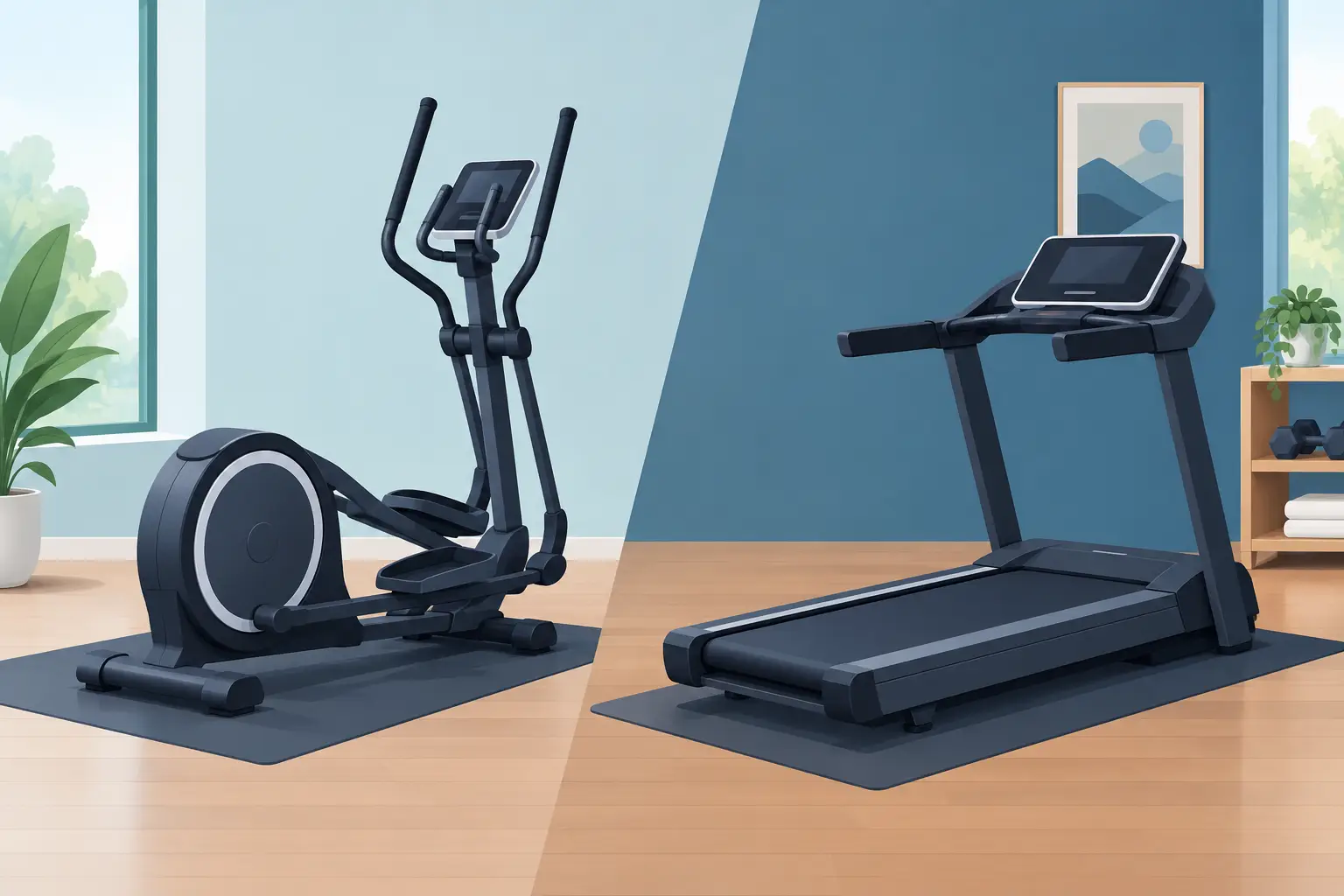
A treadmill recreates walking, jogging, and running on a moving belt. It is straightforward, familiar, and well suited to people who want to build a walking or running routine without relying on the weather, daylight, or a nearby trail.
An elliptical uses foot pedals that travel in an oval path. Your feet stay in contact with the pedals throughout the motion, which removes the repeated impact of landing on a running surface. Many ellipticals also include moving handlebars, giving you the option to involve your upper body.
Neither design is automatically better. A treadmill generally feels more natural and offers a clearer path for improving walking and running performance. An elliptical often feels easier on sore knees, hips, and ankles while still allowing a challenging cardiovascular workout.
Calorie Burn and Workout Intensity
Calorie burn is often the first comparison shoppers make, but it is not a fixed number. It changes with your body size, fitness level, workout duration, resistance or incline settings, and how hard you actually work.
Treadmills can make it simple to create high-intensity workouts. Increasing speed, adding incline, or combining intervals with recovery walks can raise effort quickly. Runners may also find it easier to reach and sustain higher intensity on a treadmill because the movement closely matches their usual training.
Ellipticals can be equally demanding when you use enough resistance and maintain good form. Pushing and pulling the moving handles can spread effort across the lower and upper body. The catch is that many people let momentum do too much of the work. If the pedals are gliding easily and your posture is slouched, the workout may feel longer than it needs to.
For steady calorie expenditure, the machine itself matters less than the routine you can repeat. A brisk 35-minute walk performed five days a week will usually outperform an ambitious running plan that gets abandoned after two sessions. Choose a machine with controls and programs you will realistically use.
Treadmill advantage: walking and running specificity
If you are training for a 5K, trying to increase your daily steps, or simply enjoy walking, a treadmill has the practical edge. It lets you practice the exact movement you want to improve. Incline walking is especially useful for home exercisers who want a tough, low-speed workout that targets the legs without needing to run.
Elliptical advantage: low-impact conditioning
For people managing joint discomfort, returning to exercise, or building cardio capacity without repeated pounding, an elliptical is often the more comfortable choice. Low impact does not mean low effort. A resistance-focused elliptical session can leave your legs and lungs working hard without the impact associated with jogging.
Joint Impact, Comfort, and Injury History
The biggest physical difference between these machines is impact. Walking on a treadmill is low impact compared with running outdoors, but each step still involves loading and landing. Running increases that demand. Many people tolerate it well, while others notice discomfort in their knees, shins, hips, feet, or lower back.
An elliptical keeps the feet supported on the pedals, which can reduce the jarring sensation of each stride. That makes it a sensible option for adults who want regular cardio but have old injuries, arthritis concerns, or recovery needs. It can also be a helpful cross-training tool for runners who want to maintain conditioning on easier days.
Comfort depends on fit as well as machine type. On an elliptical, stride length, pedal spacing, handle position, and smoothness affect whether the motion feels natural. Taller users may feel cramped on a compact model with a short stride. On a treadmill, belt cushioning, deck stability, handrail placement, and a motor that handles your intended pace all influence comfort.
If you have a diagnosed injury, persistent pain, or recent surgery, use guidance from a qualified health professional before starting or changing an exercise program. A machine is not a substitute for addressing pain that keeps returning.
Space, Noise, and Home Setup
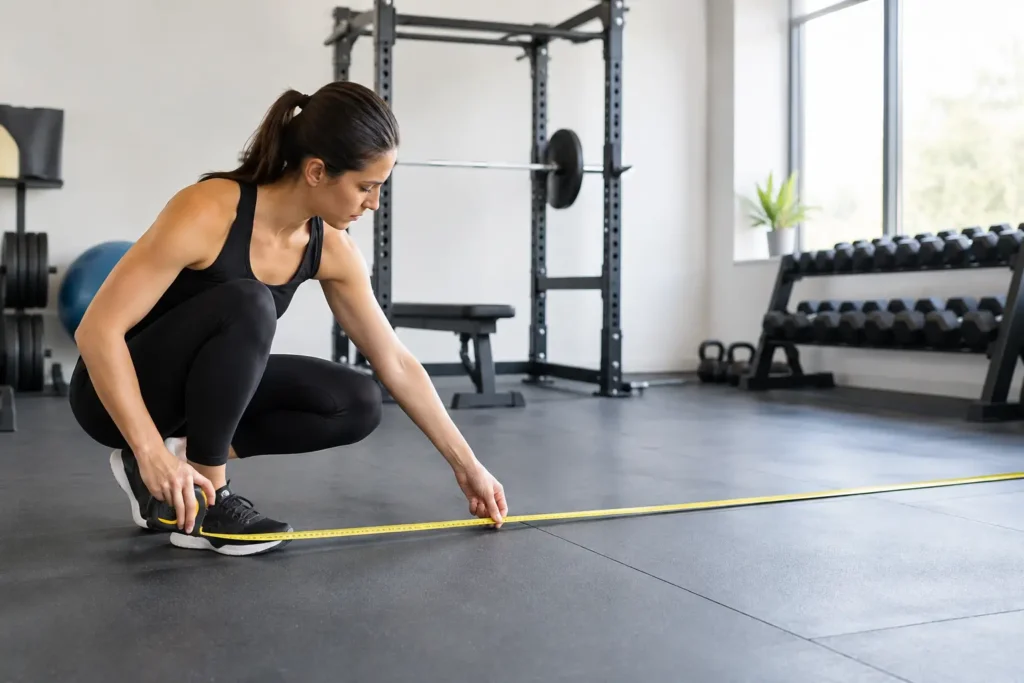
A treadmill often has a more predictable footprint: a long, narrow deck. Many folding treadmills can reduce the amount of floor space they occupy between workouts, though they still need clearance behind the deck for safe use. Measure the fully open machine, not just the folded dimensions listed on a product page.
Ellipticals are frequently wider and can have a longer overall footprint than buyers expect, especially front-drive models. The pedals and handles also create moving clearance around the frame. Rear-drive and compact ellipticals may fit differently, but a small footprint can sometimes mean a shorter stride or fewer adjustment options.
Ceiling height deserves attention. Treadmill users remain close to floor level, while elliptical pedals lift the user higher during the stride. If your workout area is in a basement or has a low ceiling, measure your height plus the machine’s maximum pedal height before you buy.
Noise is another real-world factor. A well-built treadmill is usually manageable for walking, but running creates more deck and footfall noise for people below or next to you. Ellipticals tend to be quieter because there is no repeated foot strike, although lower-quality models can develop squeaks or clunks over time. A protective equipment mat can help reduce vibration, protect flooring, and keep dust from building up under the machine.
Features That Matter More Than a Big Screen
Shopping specs can get crowded fast. Focus first on the features that affect safety, fit, and workout quality.
For a treadmill, look at user weight capacity, deck size, motor performance, speed range, incline range, and whether the frame feels stable at your expected walking or running pace. Walkers may not need a high top speed, but they should still avoid undersized belts and unstable frames. Runners should prioritize a longer deck, dependable motor, and a machine designed for frequent impact.
For an elliptical, pay close attention to stride length, resistance range, pedal comfort, maximum user weight, and the quality of the drive system. Fixed handlebars are fine for balance, while moving handles add upper-body involvement. Incline capability can add variety, but it is worth paying for only if you will use it.
Programs, Bluetooth connectivity, speakers, and large displays can be enjoyable extras. They should not outweigh core build quality. A solid machine with simple controls is usually a better long-term buy than a feature-heavy model that does not fit your body or space.
Which Machine Fits Your Goal?
Choose a treadmill if your routine is built around walking, jogging, running, hill workouts, or step goals. It is also the better choice for households where multiple people want a familiar, easy-to-understand machine. For many beginners, starting with regular walking can be one of the most approachable ways to create a home cardio habit.
Choose an elliptical if low-impact training is your priority, you want optional upper-body movement, or you need a quieter cardio option for an apartment or shared home. It can be a strong fit for longer steady-state workouts and for people who dislike running but still want a challenging sweat session.
If you have room and budget for only one machine, do not buy based on the hardest workout you imagine doing. Buy for the workout you are most likely to complete on a busy Tuesday. That practical choice is what turns a piece of equipment into part of your routine, rather than another oversized purchase competing for space.