A pair of ankle weights can make a short home workout feel more challenging without taking up any real storage space. The best ankle weights are not necessarily the heaviest pair on the shelf. They are the pair that stays put, feels comfortable against your skin, and adds resistance without changing the way you move.
For most home exercisers, ankle weights work best as a small progression tool. Use them to add load to mat workouts, standing leg exercises, low-impact cardio, and controlled walking sessions. They are less useful when you expect them to replace dumbbells, kettlebells, or a full lower-body strength setup. Choose with that distinction in mind, and this compact accessory can earn a regular spot in your routine.
What Makes the Best Ankle Weights?
Fit comes first. A loose ankle weight swings with every step, which can become annoying quickly and may put extra stress on your knees, hips, or ankles. Look for a wide adjustable strap with a secure hook-and-loop closure. The cuff should wrap snugly around your ankle without pinching, bunching, or sliding toward your shoe.
Weight distribution matters just as much. A cuff filled with several small weight pockets usually sits more evenly than one bulky, rigid block. Evenly distributed weight feels more natural during leg lifts, glute kickbacks, and marching movements. It is also easier to control if you are new to resistance training.
Materials affect whether you will actually use them. Soft neoprene-style padding is generally comfortable for bare legs, while a durable outer fabric can better handle frequent use. If you sweat heavily or plan to use weights outdoors, choose a pair that is easy to wipe down and dries quickly. Rough seams and stiff edges are small details that can turn a good workout tool into something that stays in a drawer.
Finally, buy a weight range that matches your current training. More load is not automatically more effective. With ankle weights, movement quality usually matters more than the number printed on the cuff.
Choose Ankle Weight Load by Workout Type
For Pilates-inspired mat work, barre, rehab-style exercises, and beginners, 1- to 2-pound weights per ankle are usually enough. That may sound light, but it can noticeably change the difficulty of slow side leg raises, clamshells, donkey kicks, and straight-leg lifts. Starting lighter helps you feel the target muscles instead of compensating with your lower back or momentum.
For walking, a light pair is also the practical choice. Most people should stay around 1 to 3 pounds per ankle, particularly if they are walking for longer periods. Heavier cuffs can alter your stride and increase the repeated impact on your joints. If your goal is general daily movement, increasing pace, distance, or hill work is often a better next step than adding more ankle weight.
For strength-focused lower-body accessory work, adjustable ankle weights with a maximum of 5 pounds per side offer more room to progress. They can add useful resistance to controlled floor exercises when dumbbells are awkward to hold. Still, they are not the best tool for heavy squats, deadlifts, or lunges. For those movements, dumbbells, resistance bands, or a weighted vest tend to load the body more naturally.
If you are returning to exercise after an injury, have joint pain, or have balance concerns, check with a qualified clinician or physical therapist before adding wearable weight. An ankle cuff changes the leverage of your leg, even at a low load.
Fixed vs. Adjustable Ankle Weights
Fixed-weight cuffs are simple: you put them on and start moving. They are often compact, affordable, and a good fit for someone who wants one reliable resistance level for walking or short mat workouts. A 2-pound fixed pair can be a sensible choice if you know that is the load you will use most often.
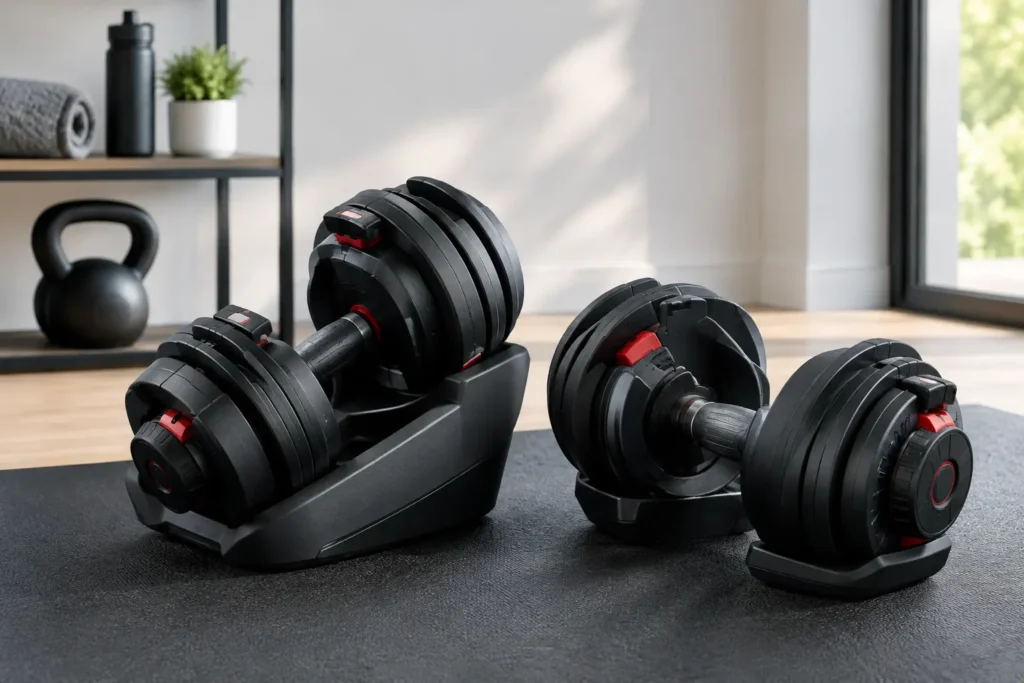
Adjustable ankle weights are more flexible because they use removable weighted inserts. You can begin with a lighter setup, then add resistance as movements become easier. This makes them a stronger value for a shared home gym or for a beginner who expects to build strength over time.
The trade-off is bulk. Adjustable models can feel thicker around the ankle, especially at their heaviest setting. If you mainly do Pilates, yoga sculpt, or exercises where your ankles touch each other, a slimmer fixed cuff may be more comfortable. If gradual progression is your priority, the adjustable design is usually worth the extra size.
Match the Design to Your Home Routine
The right ankle weights depend on when and how you plan to use them. For walking, prioritize a low-profile cuff, a dependable strap, and a load light enough to preserve a normal gait. Test the fit indoors before committing to a long neighborhood walk. The cuff should not rotate, slide, or hit your shoe collar.
For Pilates and floor workouts, choose soft cuffs with smooth edges and balanced weight. You will spend more time lying on your side, kneeling, or moving through a smaller range of motion, so comfort against the skin matters. A pair that feels fine while standing may feel too bulky during side-lying leg work.
For glute and leg accessory training, adjustable cuffs provide the most options. They work well for kickbacks, fire hydrants, hamstring curls, and seated knee lifts. These exercises are controlled and targeted, which is where ankle weights tend to shine.
For cardio routines, be selective. Short, low-impact intervals such as marching, step touches, or dance-based movement can work with a light pair if your form stays clean. Avoid using heavy ankle weights for jumping, sprinting, fast lateral drills, or high-rep kickboxing. Those activities already create fast forces through the joints, and extra weight can make technique break down.
How to Use Ankle Weights Without Overdoing It
Start with two or three exercises rather than wearing ankle weights through an entire workout. For example, add them to 10 to 15 controlled repetitions of side leg raises, glute kickbacks, and standing hip abductions. Use a slow tempo and stop when you can no longer keep your torso steady.
For walking, treat ankle weights as an occasional variation instead of an everyday requirement. Begin with 10 to 15 minutes on a flat surface and pay attention to your stride. If you notice knee discomfort, shin pain, hip tightness, numbness, or a tendency to drag your feet, take the cuffs off. More effort is not a useful trade if it comes from poorer mechanics.
Avoid the common mistake of using ankle weights to make every lower-body workout harder. Their resistance is placed far from your hip, which creates a long lever and can fatigue smaller stabilizing muscles quickly. That is helpful for certain exercises, but it is not always appropriate. Keep your heavier strength work centered on equipment designed for bigger loads.
A Quick Buying Checklist
Before buying, confirm the stated weight is per cuff or for the pair. Product listings can describe this differently, and the difference matters. Also check the ankle circumference range, strap length, and whether the cuff can be worn over leggings if that is how you train.
Look closely at closure quality and stitching. A wide strap generally feels more secure than a narrow one, while reinforced stitching is useful if you plan to use the weights several times each week. If storage is tight, choose a pair with a compact shape that can fit in a basket, drawer, or small accessory bin.
Price should reflect the features you need, not the promise of a more intense workout. A basic fixed pair may be enough for light walking and Pilates. Spending more makes sense when you want removable weights, extra padding, a broader fit range, or a tougher design for regular use.
When Another Tool Is the Better Buy
Ankle weights are excellent for targeted, low-load work, but they are not the most versatile first purchase for every home gym. If you have limited equipment budget and want to train your full body, adjustable dumbbells or resistance bands will usually give you more exercise options. They can be used for rows, presses, squats, hinges, and upper-body movements that ankle weights cannot cover.
A weighted vest is often a better option for walking, stair climbing, and bodyweight circuits because it keeps the load closer to your center of mass. Resistance bands may be better for hip and glute training if ankle cuffs irritate your skin or pull on your joints. The best choice depends on the gap in your current setup, not on what happens to be trending.
Choose ankle weights when you want a compact way to make controlled leg work more demanding. Start lighter than you think you need, prioritize a secure fit, and let clean, steady movement decide when it is time to add more resistance.