
Introduction
Choosing between kettlebells and dumbbells for home workouts is a common question for people building a practical routine. Both tools are excellent — the decision comes down to goals, space, movement preferences and progression options.
This guide compares the two across mechanics, programming, safety and home-gym logistics so you can pick the best option for your situation and stick with it.
How kettlebells and dumbbells differ mechanically
Kettlebells have an offset center of mass and a handle that encourages swinging, hinging and rotational patterns. That makes them excellent for ballistic moves (swings, snatches, clean and jerk variants) and dynamic full-body conditioning.
Dumbbells have a centered load and symmetric grip, so they’re ideal for strict pressing, rows, unilateral strength work and controlled hypertrophy movements. They allow for a wider range of isolated strength exercises with steady loading.
Muscle activation and range of motion
Kettlebell swings and cleans emphasize posterior chain power (hamstrings, glutes, low back) and require hip hinge mechanics. Many kettlebell moves also recruit the core and stabilizers because of the shifting load.
Dumbbells let you target muscles more directly—chest, shoulders, biceps, triceps and quads—while also supporting safe unilateral work (single-arm rows, Bulgarian split squats). If your goal is symmetrical strength and muscle-building, dumbbells offer predictable loading patterns.
Learning curve and safety considerations
Kettlebells can teach great motor patterns but require attention to technique, especially for swings and snatches. Poor hip hinge mechanics or attempting heavy ballistic variations too early increases injury risk.
Dumbbells are more forgiving for beginners: strict presses, controlled rows and goblet squats are easy to learn and scale. Use supportive accessories if you’re lifting heavier: quality wrist wraps for pressing and knee sleeves for loaded lower-body work.
Space, storage and equipment cost
For small spaces, a few kettlebells can cover a wide variety of movements with minimal footprint. If you plan to grow a strength area, dumbbells—especially adjustable sets—offer compact versatility without needing many pairs. A well-chosen adjustable dumbbell set is a common cost- and space-saving choice for homes.
When storing dumbbells, plan for organization to keep the area safe and tidy; a proper dumbbell storage rack makes training easier and protects floors.
Programming and progression: which scales better?
Dumbbells scale linearly for most strength goals: increase load, reps, or sets. They’re easier to use for progressive overload with strict tempo and controlled ranges.
Kettlebells excel when you want to combine conditioning and strength—progression may involve more reps, higher complexity (one-arm variations, longer sets), or heavier single kettlebells for ballistic power. If you want both cardiovascular conditioning and posterior-chain power in short sessions, kettlebells are efficient.
Flooring, noise and home logistics
Both tools can damage floors if dropped. Use protective surfaces: an extra-thick exercise mat or interlocking tiles help reduce impact, protect flooring and cut down noise from dropped or set-down weights.
Keep workouts considerate of roommates and neighbors: controlled dumbbell movements are quieter than ballistic kettlebell swings, but proper mats and technique reduce disturbances from either tool.
Accessories, recovery and cross-training
Complement strength work with accessories and recovery tools to maintain longevity. Weighted vests can add load to bodyweight kettlebell or dumbbell circuits—use weighted vests for progressive conditioning rather than only increasing load on complex lifts.
For recovery, a handheld device like a mini massage gun can help relieve tightness after intense sessions and speed return-to-training.
Finishing mobility and recovery on a stable surface improves comfort—consider quality yoga mats for stretching and cooling down.
Practical recommendations by goal
- General fitness and fat loss: kettlebell circuits for metabolic conditioning and posterior-chain emphasis.
- Pure strength and hypertrophy: dumbbells (or an adjustable set) for controlled progressive overload.
- Limited space/flexible budget: an adjustable dumbbell set covers both strength and some kettlebell-style movements if it converts or includes a handle.
- Sport-specific power and conditioning: kettlebells for power-endurance and explosive hip drive.
Sample short home workouts
Two mini-sessions to illustrate how each tool might be used.
- Kettlebell conditioning (15–20 min): warm-up hip hinge → 5 rounds: 20 kettlebell swings, 10 goblet lunges, 8 single-arm rows each side. Rest 60s.
- Dumbbell strength circuit (30 min): warm-up → 4 sets: dumbbell bench press 6–8, single-arm row 8–10, Bulgarian split squat 8/leg, farmer carry 30s. Increase weight or reps over time.
Checklist: Choosing between kettlebells and dumbbells
- Goal: power/conditioning (kettlebell) vs. hypertrophy/strict strength (dumbbell).
- Space: limited = kettlebell or adjustable dumbbells.
- Budget: adjustable dumbbell set often gives best value per pound.
- Noise/flooring: use a thick mat and controlled movements.
- Safety: invest in basic protective gear like wrist wraps and knee sleeves when lifting heavy.
Conclusion: practical takeaway
Both kettlebells and dumbbells are excellent for home training. Choose kettlebells if you want dynamic power, conditioning and compact gear. Choose dumbbells—ideally an adjustable dumbbell set—if your focus is progressive strength, muscle balance and straightforward programming. Plan storage and flooring (use a dumbbell storage rack and protective mat) and add recovery tools like a mini massage gun to keep training consistent.
FAQ
- Can I use kettlebells instead of dumbbells for all exercises?
You can adapt many dumbbell exercises to kettlebells, especially unilateral and goblet-style movements, but strict presses and some isolation lifts are easier and safer with dumbbells.
- Do I need both kettlebells and dumbbells?
Not necessary. Start with the tool that matches your primary goal; you can add the other later if you want more movement variety.
- How much weight do I need to start?
Beginners often start with lighter weights to learn technique. For many, a moderate kettlebell (12–16 kg) and a pair of adjustable dumbbells that allow progression are sensible starting points.
- How should I protect my floors and reduce noise?
Use a dense exercise mat or flooring tiles and avoid dropping weights. An extra-thick exercise mat is a good investment for home setups.
- What accessories help at home?
Storage racks, wrist wraps, knee sleeves, a weighted vest for conditioning and recovery tools like a mini massage gun support safer, more consistent training.
Products Featured in This Article

Fitgriff® Wrist Wraps for Weightli…
Product description FITGRIFF Wrist Wraps: Embrace Protection and Performance “Unlock your potential with FITGRIFF Wrist Wraps…
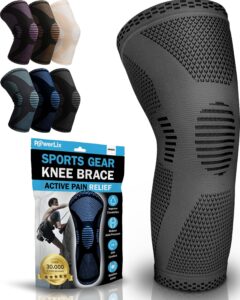
POWERLIX Knee Compression Sleeve &#…
From the brand Top-quality & Dependable Designed in the USA Established in 2014 Best Knee Brace…
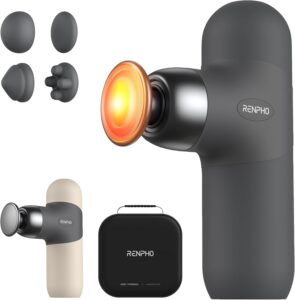
RENPHO Mini Thermal Massage Gun wit…
Product description The video showcases the product in use.The video guides you through product setup.The video…
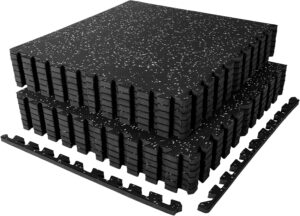
SUPERJARE 1″ Extra-Thick Rubb…
Product description 1 Non-Toxic & Safe for Use 2 Train with Superjare 【1 Inch Thicken Gym…

Adjustable dumbbell set,20/35/45/55…
Adjustable dumbbell set,20/35/45/55/70/90lbs Free Weights set with upgraded nut, 5 in 1 Weight Set Used as…
