
Rowing Machine Buying Guide: What to Look for Before You Buy
Rowing machines are an efficient, low-impact way to build cardio fitness and full-body strength. A good rower builds consistency into your routine: it’s quiet enough for home use, scalable for beginners to advanced athletes, and compact enough for smaller spaces if you choose wisely.
This guide walks through the key features, types, and setup considerations so you can pick the right rowing machine for your goals and space. I’ll also highlight accessories and practical tips to get the most from your purchase.
Why Choose a Rowing Machine?
Rowing trains legs, core, back, and arms while delivering high-calorie cardio in a short time. It’s lower impact than running, and the movement pattern improves posture and posterior chain strength. If you need a single piece of equipment that supports endurance, strength, and rehabilitation-friendly training, a rower is a smart choice.
Types of Rowing Machines
Rowers differ mainly by resistance type. Knowing the trade-offs helps match a machine to your priorities.
- Air resistance: Smooth, dynamic feel. Resistance scales with stroke power and is preferred by athletes but can be noisy.
- Water resistance: Realistic rowing feel, aesthetically pleasing, moderate noise from water movement.
- Magnetic resistance: Quiet, low maintenance, often with programmable workouts. Great for apartments and multi-user households.
- Hydraulic / piston: Compact and budget-friendly but can feel less natural for long sessions.
If you want a quiet, space-friendly option with modern features, consider a magnetic model like the Merach Q1S Magnetic Rowing Machine, which balances smooth resistance with a compact footprint.
Key Features to Evaluate
Focus on features that affect comfort, durability, and progression.
- Resistance range and smoothness: Look for steady progression and minimal dead spots at low or high settings.
- Rail length and seat travel: Taller users need longer rails to reach full extension comfortably.
- Monitor and metrics: Basic stroke rate, distance, and time are essential; advanced rowers offer wireless connectivity and structured workouts.
- Build quality and weight capacity: Steel frames, solid welds, and at least 250–300 lb capacity are good benchmarks for durability.
- Noise level: Magnetic units are typically quiet; air and water rowers are louder but more dynamic.
- Footrests and straps: Adjustable, secure footrests are important for power transfer and safety.
Space, Storage and Footprint
Measure your intended space and the rower’s assembled dimensions. If floor protection and stability matter, plan for a dedicated mat or flooring under the machine.
To protect floors and reduce vibration, consider an exercise equipment mat under your rower; it also reduces sliding on smooth surfaces.
If you’re tight on space, look for foldable or vertically storable models and consider organizing the area with home gym storage organizers to keep accessories tidy and accessible.
Flooring and Protection Options
Rowers concentrate load in small contact areas; proper flooring improves machine stability and protects your subfloor.
For heavy-duty protection and shock absorption, a thick rubber mat like the SUPERJARE extra-thick rubber mat is a durable option that handles repeated use and heavier machines.
If you prefer a thinner, widely compatible protector, a specialized bike mat can also serve under a rower—an option like the Bike Mat Compatible with Peloton Bike works well for smooth floors and keeps grips tidy.
Comfort, Ergonomics and Durability
Test or closely inspect the seat, handle, and footplate design. A contoured, padded seat and a handle with a comfortable diameter improve long sessions. Check bearings on the rail—metal or sealed bearings last longer than exposed sliding components.
Consider the warranty and availability of replacement parts; reputable brands offer easy access to chains, straps, or monitor replacements.
Noise, Maintenance and Longevity
If you live in an apartment or train early/late, noise matters. Magnetic rowers are quietest. Air rowers create a “whoosh” that some users enjoy but may disturb others.
Maintenance is usually minimal: wipe sweat off after use, keep rail lubricated if required, and periodically check bolts. If recovery tools are part of your routine, a muscle roller can speed up soreness relief—consider adding a muscle roller stick to your kit.
Cross-Training and Accessories
Rowing pairs well with strength and mobility work. Use short high-intensity intervals on the rower then shift to bodyweight or resistance exercises for a balanced session. For complementary conditioning, battle ropes offer a different metabolic stimulus and pair well with rowing workouts; they’re a useful tool for circuit training days.
Consider adding lighter accessories for a full home setup, like battle ropes for power and core work: Battle Ropes can round out conditioning sessions.
Budget, Warranty and Buying Tips
Set a realistic budget: entry-level hydraulic and basic magnetic models are affordable; mid-range magnetic or air rowers offer better feel and durability; premium water rowers excel in feel and design but cost more. Always read warranty details—frame, parts, and electronics coverage differ widely.
If possible, demo at a store or watch video reviews focusing on noise, handle comfort, and monitor responsiveness. Check return windows and delivery/assembly options.
Checklist: Quick Buying Summary
- Measure space and rail length for your height.
- Choose resistance type based on noise tolerance and feel (magnetic = quiet; air/water = dynamic).
- Confirm monitor features you’ll use (Bluetooth, programs, metrics).
- Protect floors with an exercise mat or thick rubber mat.
- Check weight capacity, warranty, and parts availability.
- Plan storage and organization for accessories and small equipment.
FAQ
- Q: What resistance type is best for beginners?
A: Magnetic rowers are easiest to use and quiet, making them a great starter option while offering progressive resistance. - Q: How much space do I need for a rower?
A: Allow for the machine’s length plus a few feet at each end for clearance; measure assembled dimensions and your height to ensure full leg extension. - Q: Can I use a rower in an apartment?
A: Yes—choose a magnetic model for low noise and put an exercise mat underneath to protect the floor and reduce vibration. - Q: Do I need Wi‑Fi or Bluetooth on the monitor?
A: Not required, but connectivity unlocks structured workouts, app tracking, and easier progress monitoring if you care about long-term metrics. - Q: How often should I maintain the rower?
A: Basic upkeep: wipe down after use, check bolts monthly, and follow the manufacturer’s lubrication schedule to keep the rail and moving parts smooth.
Conclusion — Practical Takeaway
Pick the resistance type and features that match your environment and training goals: magnetic for quiet convenience, air/water for rowing feel, and hydraulic for tight budgets. Protect your floor, plan storage, and prioritize a long rail and supportive footplate if you’re taller. With those choices in place, a rowing machine becomes a durable, high-return investment in full-body fitness.
Products Featured in This Article
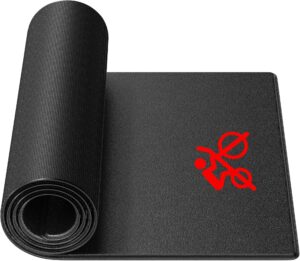
Bike Mat Compatible with Peloton Bi…
Bike Trainer Accessories, Under mat Protect Hardwood Floor Carpet , for Cycling Home Gym Exercise Treadmill…
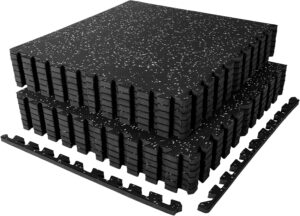
SUPERJARE 1″ Extra-Thick Rubb…
Product description 1 Non-Toxic & Safe for Use 2 Train with Superjare 【1 Inch Thicken Gym…
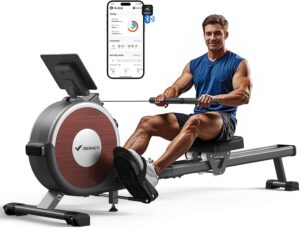
Merach Q1S Magnetic Rowing Machine …
From the brand Founded in 2018, MERACH aims to make home fitness fun for global users….
