Choosing the right yoga mat for home workouts makes practice safer, more comfortable, and more consistent. The right mat reduces joint strain, improves balance, and gives you a dedicated space that helps you commit to regular sessions.
This guide walks through the key decisions—thickness, material, grip, size, care—and pairs your mat with useful accessories so your home practice feels professional and supported.
Why your mat matters
Your yoga mat is more than a surface: it affects alignment, traction, and joint protection. A mat that’s too thin will transmit hard floors to your knees and wrists; one that’s slippery can force you out of poses and increase risk of strain. If you’re still exploring options, start by browsing the range in the site’s Yoga Mats category to see formats, materials, and price points available for home practice.
Thickness & density: finding the balance
Thickness and density are separate but related. Thickness (measured in mm) affects cushioning; density (how firm the material is) affects stability.
- Travel/training mats (1–2 mm): ultralight and packable, but minimal cushioning—best as a backup.
- Standard studio mats (3–4 mm): a good balance of grip and cushioning for most home practices.
- Thick mats (6 mm): better for sensitive knees and restorative work; may reduce sense of grounding in balance poses.
- Extra-thick pads (10–12+ mm): suited to low-impact stretching, seated practices, or if you prefer a cushioned floor routine.
If knee comfort is a priority, consider adding targeted padding like the ProsourceFit Extra Thick Yoga Knee Pad for kneeling sequences rather than choosing an overly soft mat that compromises balance.
Material and grip: PVC, TPE, rubber, cork and more
Material determines feel, traction, durability, and environmental footprint.
- PVC (synthetic): very sticky and durable but not eco-friendly; great grip for many users.
- Natural rubber: excellent traction and eco-friendly—check for latex sensitivity.
- TPE (thermoplastic elastomer): lightweight, low-odor, and recyclable options exist; moderate grip.
- Cork or jute top layers: improve dry-grip and age well, often paired with rubber bases.
Grip depends on surface texture and how a material performs when sweaty. If you use hot or vigorous practices, test for wet traction or choose mats that pair well with absorbent props. Blocks can help you maintain alignment when grip is marginal; see the Microdry Sure-Grip Yoga Blocks Collection for compact, non-slip support options.
Size, shape, and portability
Standard mat sizes are about 68″ long by 24″ wide. Taller practitioners often prefer 72″+ length and wider widths for more comfort in long stretches and wide stances.
If you travel or have limited storage, consider rollability and weight. A thin, lightweight mat or a strap helps transport a full-size mat; a strap like the Tumaz Yoga Strap for Stretching doubles as a carry option and a practice tool for flexibility work.
Cleaning, odor, and maintenance
Maintenance extends mat life and preserves hygiene. Basic steps:
- Wipe after use with a mild detergent or a 1:10 vinegar/water mix; avoid harsh solvents that break down material.
- Air-dry flat or hung away from direct sun to prevent warping or fading.
- For deep cleaning, follow manufacturer instructions—some foam mats can be hand-washed, others cannot.
If meditation or restorative practice is part of your routine, pairing the mat with a supportive cushion makes longer sittings more comfortable—consider the Yoga Meditation Cushion for reliable support and posture alignment.
Special needs: joints, injuries, and allergies
Adapt your mat choice to your body. If you have wrist, knee, or lower-back sensitivity, prioritize thicker, more cushioned options or layer a mat with an additional pad. For targeted joint support consider neoprene knee sleeves such as the Rehband 3mm Neoprene Knee Sleeve to protect joints during weight-bearing poses.
If you have latex allergies, avoid natural rubber mats; look for TPE or cork options instead. For pregnancy, choose stable, slightly thicker mats that help with balance while providing cushioning.
Pairing your mat with the right accessories
Accessories extend the usability of your mat and support varied practices:
- Blocks and straps for alignment and flexibility.
- Knee pads and bolsters for restorative or prenatal work.
- Balance tools, like small Pilates balls, for core and stability training.
A compact tool such as the ProBody Pilates Ball Small enhances balance drills and can be used on the mat for gentle core engagement.
How to test a mat before you commit
If possible, try these checks in-store or order from a retailer with a clear return policy:
- Roll it out and stand in a few basic poses—Down Dog, Warrior II, Plank—to assess grip and stability.
- Check edge durability by running a finger along seams; flimsy edges often show early wear.
- Smell test: heavy chemical odor indicates off-gassing—let it air out for a day or two if possible.
- Evaluate weight and portability: pick it up and carry it like you would to class or storage.
If you’re exploring cross-training tools for a multifunctional home studio (yoga plus strength or pilates), consider integrating equipment designed for low-impact strength work—browse the Pilates Reformers to see complementary setups that support reformer-style conditioning alongside mat practice.
Checklist: quick decision guide
- Practice type: gentle/restorative vs hot/flow vs travel.
- Thickness: 1–2 mm (travel), 3–4 mm (standard), 6+ mm (extra cushion).
- Material: PVC (sticky), rubber (grip, eco), TPE (low-odor), cork (dry-grip).
- Size: length 68″–72+”; width 24″–26+ for extra space.
- Allergies: avoid rubber if latex-sensitive.
- Care: wipe clean, air dry; check manufacturer wash instructions.
- Accessories: blocks, strap, knee pad, bolster as needed.
FAQ
Q: What thickness is best for daily home yoga?
A: For most home practices 3–6 mm offers good balance of cushioning and stability. Choose thicker if you prioritize joint comfort.
Q: Can I use a yoga mat for floor strength training?
A: Yes for bodyweight and core work. For heavy weights or dynamic plyometrics, use a dedicated thicker exercise pad or protective flooring designed for impact.
Q: How often should I replace my mat?
A: Replace when traction deteriorates, visible wear appears, or cleaning no longer restores hygiene—typically 1–3 years depending on use and material.
Q: How do I remove strong odors or off-gassing?
A: Air the mat outside or in a ventilated room for several days and clean with a mild solution; persistent chemical smell may indicate lower-quality materials.
Q: Is a natural rubber mat eco-friendly?
A: Natural rubber is more sustainable than PVC but may trigger latex allergies. Check sourcing and manufacturing claims for full environmental impact.
Conclusion
Choose a mat that matches your practice style, body needs, and space: aim for the right mix of grip, cushioning, size, and material. Start with a balanced 3–6 mm mat for general use, add targeted accessories for joints or alignment, and maintain the mat with regular cleaning—those small choices will make your home workouts safer and more enjoyable.
Products Featured in This Article
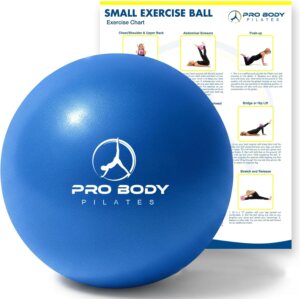
ProBody Pilates Ball Small — 9 In…
From the brand AS RECOGNIZED BY We work hard to create superior products ESSENTIAL SMALL EXERCISE…
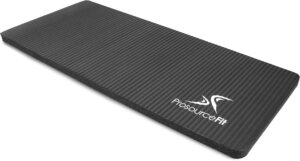
ProsourceFit Extra Thick Yoga Knee …
Enjoy a pain-free yoga practice with the ProsourceFit Yoga Knee Pad to protect your sensitive pressure…

Microdry Sure-Grip Yoga Blocks Coll…
Microdry Sure-Grip Yoga Blocks are designed to support safer, more effective movement at every stage of…
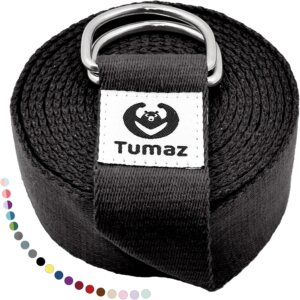
Tumaz Yoga Strap for Stretching wit…
Tumaz Yoga Strap/Stretch Bands [15+ Colors, 6/8/10 Feet Options] with Extra Safe Adjustable D-Ring Buckle, Durable…

Yoga Meditation Cushion, 25″ …
Whether you are new to yoga or looking to deepen your practice, beginners and advanced yogis…

Rehband 3mm Neoprene Knee Sleeve fo…
From the brand Explore REHBAND TOPSELLER REHBAND – SUPPORTING YOU SINCE 1955 Regardless of how you…
