
Starting a home gym can feel overwhelming: equipment choices, space limits, and budget all compete for attention. The good news is you don’t need a warehouse of gear to get strong, fit, and consistent.
This guide cuts through the noise and lays out the genuinely useful pieces to buy first, how to fit them into your space, and which accessories will give you the most value for money.
Set your goals and measure your space
Decide whether your primary focus is strength, conditioning, mobility, or a hybrid. A small apartment needs different choices than a garage gym. Measure floor space, ceiling height, and where you’ll place equipment—this simple step avoids wasted purchases and awkward returns.
Flooring: protect your floors and gear
Good flooring reduces noise, protects your subfloor, and gives you a stable surface for lifts and cardio. For compact home gyms, a durable rubber underlay is a solid first buy; it minimizes shock and keeps equipment from sliding. Consider a product like 0.6″ Thick 48 Sq Ft Rubber Top Gym Flooring Mats if you anticipate dropping weights or want a long-lasting floor solution.
Essential strength gear: start with adjustable dumbbells
Dumbbells are the most versatile and space-efficient strength tool. They cover pressing, rowing, lunging, and unilateral work without requiring racks or complicated setups. An adjustable set lets you progress in small increments while saving space compared to multiple fixed pairs. A well-reviewed option to consider is the Rendpas Adjustable Dumbbell Set.
Adding bars, plates, and wall storage
If you plan to advance to heavier compound lifts, a barbell and plates make sense—but storage becomes critical in a home setting. Wall-mounted bar holders free floor space and keep your bar accessible and off the floor. A compact choice is the JNIHEEP Barbell Wall Holder, which is practical for garages and basements where space is tight.
Cardio options that actually fit home
Cardio doesn’t have to mean a large treadmill. For apartments or under-desk options, compact machines deliver real value: walking pads, foldable treadmills, or compact rowers. If you want minimal footprint and quiet operation, look at the WalkingPad Z1 Foldable Walking Pad—it tucks away neatly and supports steady-state conditioning without monopolizing space.
Recovery and mobility you shouldn’t skip
Recovery is part of training. A foam roller and simple myofascial tools speed up warm-ups and reduce soreness so you can train consistently. A dependable, high-density foam roller like the Amazon Basics High-Density Foam Roller is inexpensive, durable, and effective for most users.
Storage and organization keep you consistent
Clutter kills motivation. A dedicated rack for dumbbells or kettlebells keeps the space tidy and safe, and it makes workouts faster because you spend less time searching for gear. If you have adjustable dumbbells or a few fixed sets, a low-profile rack such as the Jusgym Dumbbell Rack Stand helps organize equipment without a large footprint.
High-impact accessories for progression
Small accessories let you increase intensity and add variety without bulky gear. Weighted vests are excellent for bodyweight progressions, adding load to walking, push-ups, and lunges. The APEXUP Weighted Vest is a convenient option for progressive overload.
On heavy lifting days, a sturdy belt improves stability and safety when used properly. For those ready to load up on squats or deadlifts, consider a reliable option like the Genuine Leather Weight Lifting Belt. Belts aren’t mandatory, but they’re useful once you lift heavier and want more core support.
How to prioritize purchases on a budget
Start with multipurpose items that match your goals and space. If strength is primary: adjustable dumbbells, a mat/flooring, and a rack or roll-away storage come first. For conditioning: compact cardio followed by a few resistance tools. Add recovery tools and accessories as you progress.
- Measure your space and budget before buying.
- Buy multipurpose, adjustable equipment first.
- Prioritize flooring and storage to protect gear and keep consistent.
- Add recovery and safety items early to avoid setbacks.
Checklist: What to buy first
- Adjustable dumbbells or a basic set of dumbbells
- Protective flooring or exercise mat (rubber mats)
- Compact cardio option (e.g., WalkingPad)
- Small recovery kit: foam roller and massage ball (foam roller)
- Storage solution (dumbbell rack or wall holder)
- One progressive accessory like a weighted vest
FAQ
- Do I need a bench to start? No. Many pressing and core exercises can be done on the floor or with adjustable dumbbells. Add a bench once you need more pressing range or incline variations.
- How much space do I need? For a basic setup you can work in a 6–8 ft square area. Cardio machines need additional clearance; check machine specs before buying.
- Are adjustable dumbbells worth it? Yes for most home users—they save space and money versus multiple fixed pairs and cover a wide weight range.
- What flooring should I get if I won’t drop heavy weights? Thick interlocking rubber tiles or an exercise equipment mat protect floors and reduce noise. If you will be lifting heavier, opt for denser rubber like the 0.6″ mats linked above.
- Which accessory helps the most for bodyweight progressions? A weighted vest provides scalable overload for push-ups, lunges, and walking variations.
Practical takeaway: start with a few multipurpose pieces—adjustable dumbbells, protective flooring, and tidy storage—and add targeted accessories (cardio, recovery, belts, vests) as your goals and space evolve. Thoughtful prioritization saves money and keeps you consistent.
Products Featured in This Article

APEXUP Weighted Vest Men Women, Wei…
Are you ready to take your workout to the next level? Look no further than the…

Genuine Leather Weight Lifting Belt…
From the brand WEIGHT TRAINING GEAR WEIGHT TRAINING GEAR WEIGHTLIFTING BELT FOR LADIES LEATHER BACK SUPPORT…

Amazon Basics High-Density Foam Rol…
Amazon Basics High-Density Round Foam Roller for Exercise and Recovery – 18-Inch, Black High-density foam roller…
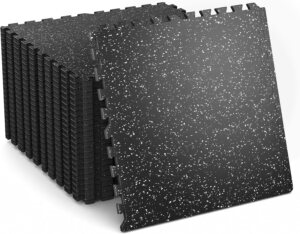
0.6″ Thick 48 Sq Ft Rubber To…
From the brand Vivaluz Your Ultimate Home Gym Floor Expert VIVALUZ is a customer-centric brand dedicated…
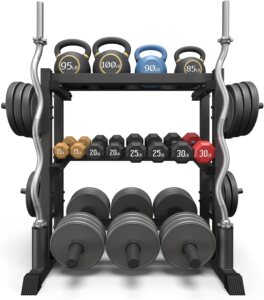
Jusgym Dumbbell Rack Stand Only, 3 …
dumbbell rack 1100LB CAPACITY ALL-IN-ONE RACK: This heavy-duty H-frame stand supports dumbbells, kettlebells, barbells, and 1″…

JNIHEEP Barbell Wall Holder,Olympic…
Heavy Duty ConstructionMade of elastic steel –bearing heavy weight and black powder coated to add durability…

WalkingPad Z1 Foldable Walking Pad …
Folds in Half – Easy to Store, Easy to Love. This walking pad folds completely in…
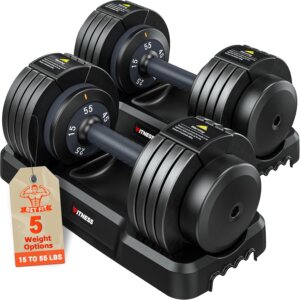
Rendpas Adjustable Dumbbell Set, 25…
Rendpas Adjustable Dumbbells Set of 2, 1 Hand Adjustable Weights Dumbbells Set, 5 in 1/10 in…
